RemontS.bg
Finishing works

Self-levelling screed in Sofia

We level floors with self-levelling compound before laminate flooring, parquet, vinyl or tiles – with measured levels, a primed base and one common floor level for all rooms.

Reply to your enquiry
24 h
Written warranty
2 yrs
Site visit and quote
Free

5.0 on Google · 15 reviews

Scope and approach

What you get

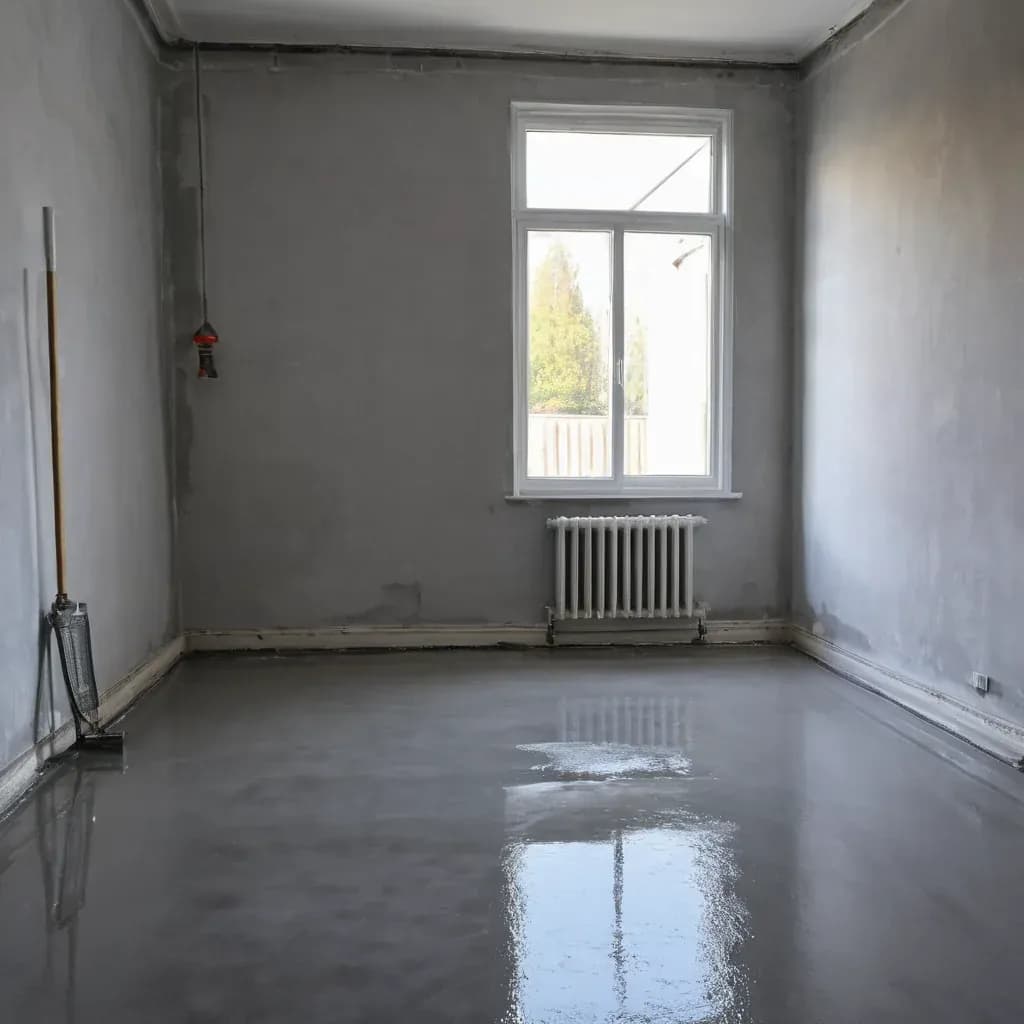
Self-levelling screed is the fine levelling layer: a liquid mix that flows out by itself into a horizontal surface. It does not replace ordinary cement screed where the level has to be raised significantly or a slope has to be formed.

The result depends on the preparation – a sound, clean base, primer against absorption and bubbles, perimeter tape and drying without draughts. Before wooden floors, we also check the residual moisture.

Technical detail: residual moisture

A screed can be hard on top and still hold moisture deeper down. Before parquet and other wooden floors, the moisture is measured, because wood absorbs it and warps.

  • Measuring levels with a laser in all rooms and setting the common floor level
  • Cleaning, removing dust, and filling cracks and holes in the base
  • Primer that reduces the absorbency of the base and prevents bubbles
  • Perimeter tape along the walls, and expansion joints carried over from the base
  • Spreading with a gauge rake and de-aerating with a spiked roller
  • Checking flatness, and guidance on drying before the floor covering goes down
When to call us

From the problem to the solution

The most common situations people call us about, and how we approach them.

Common problems

  • Steps and level differences between the rooms and the hallway
  • Waves and humps in the old screed that show through the laminate
  • A cracked or crumbling base after old floor coverings have been removed
  • Laminate or parquet that gives and creaks because the base is uneven
  • Bubbles, cracks and a crumbling surface where the compound was laid incorrectly
How we approach them

  • Where level differences are large, we first raise the floor with ordinary screed, and the self-levelling layer goes on last
  • We grind down humps and fill hollows before pouring the compound
  • We repair or break out crumbling areas instead of pouring over them
  • We level the base so that the floor covering lies fully supported everywhere
  • We follow the water ratio and working time specified by the compound manufacturer

A good fit when

  • When laminate, parquet or vinyl is going down, all of which need a flat base
  • When, after old floor coverings have been removed, the floor has holes and level differences
  • When you want the rooms and the hallway on one level, with no steps
  • When the screed in a new home was handed over wavy and uneven

Process

How the work runs

We organise the work around the specifics of the city and the property, planning access, logistics and stages.

  1. Site visit and laser measurement of the levels to determine the thickness needed

  2. Cleaning, repairing cracks and hollow areas, and priming the base

  3. Fitting perimeter tape and marking the final level

  4. Pouring without interruption, spreading with a gauge rake and de-aerating with a spiked roller

  5. Drying without draughts or direct sunlight, and checking flatness before the floor covering goes down

Price

What affects the price

The price is set after measuring the levels, because the average layer thickness determines the amount of compound.

The final cost is confirmed after a site visit and measuring the levels.

See the price list
  • Average layer thickness, based on the level differences
  • Condition of the base – cracks, hollow areas, adhesive residue
  • Need for grinding, milling or a bonding primer
  • Area and number of separate rooms
  • Type of compound, depending on the floor covering and whether there is underfloor heating
  • Floor level and getting the material to the site
Real properties

Completed projects

Our own projects with our own photos – see the level of detail and the finished result.

All projects

A written warranty

Every completed project receives a warranty certificate. This is what it covers and for how long.

2 years on all work
Construction, renovation and finishing work on the property.
6 years on plumbing, electrical and roofing work
Internal plumbing installations, electrical installations, roofing work and roof waterproofing — the areas where a hidden defect shows up late and costs the most.
Written certificate
Issued for every completed project, it sets out what is covered and for how long.

The extended term applies to the installations themselves and to the roofing work. Installed ready-made products — taps, fittings, appliances — carry the manufacturer's warranty.

What clients say

Rated 5.0 on Google

5.015 reviews on Google

Genuine reviews from RemontS clients on our Google profile. The clients wrote them in Bulgarian – the English is our translation.

All reviews on Google(opens in a new window)

Worked with us? Leave a review (opens in a new window) – we would appreciate it.

  • “Reliable guys, easy communication, work done quickly and to a high standard. I recommend them.”

    Mihaela S.January 2026 · Google reviewTranslated from Bulgarian
  • “If you're looking for tradespeople who work quickly, to a high standard and without any drama – these are your people! No ‘We'll come round tomorrow… or the day after…’, no headaches for you. They worked wonders with the renovation we needed and even left the place cleaner than they found it! In short – professionals with a capital ‘P’. I highly recommend them!”

    Vessy N.January 2025 · Google reviewTranslated from Bulgarian
  • “I highly recommend their services. Despite my fussiness, they kept to the deadline they had given and finished the bathroom renovation professionally, cleanly and meticulously.”

    Filip I.February 2025 · Google reviewTranslated from Bulgarian
  • “Great work, an extremely professional attitude, deadlines met and excellent workmanship.”

    Bilyana I.January 2025 · Google reviewTranslated from Bulgarian
  • “If you're looking for tradespeople, these are the right people. Fast, punctual and honest.”

    Ani D.January 2025 · Google reviewTranslated from Bulgarian
  • “I recommend them wholeheartedly! Very honest, fast and skilful!”

    Rosi S.January 2025 · Google reviewTranslated from Bulgarian
  • “Punctual and honest – I recommend them.”

    Tania T.January 2025 · Google reviewTranslated from Bulgarian
Questions and answers

Self-levelling screed in Sofia: questions and answers

Ordinary cement screed builds up the floor in a thicker layer and can form a slope. Self-levelling screed is a liquid mix that flows out by itself into a flat surface and is used for fine levelling before the floor covering.

Every compound has a minimum and maximum thickness specified by the manufacturer. With larger differences, ordinary screed is laid first, and the self-levelling compound is the final levelling layer.

Most compounds can usually be walked on after a few hours, but the floor covering is laid only once the screed has fully dried. For tiles this is sooner, and for parquet and laminate later, depending on the thickness and the manufacturer's data.

Yes, if the tiles are firmly bonded and treated with a bonding primer. Hollow tiles are removed, because they keep moving under the screed.

Yes, with a compound designed for underfloor heating. Before the floor covering goes down, the initial heating-up schedule set by the system manufacturer is followed.

Book a site visit and we will measure the levels in all rooms before the new floor goes down.

You will receive a written quote with the thickness needed, the preparation of the base and the drying time.

  • A site visit and technical clarification before we start
  • A written quote with a structured scope
  • A stage-by-stage work schedule
Call us