Bathroom renovation on a budget: where to save and where not to
A refresh, a partial or a full renovation: what the labour costs, which cheaper choices make sense and which savings end up costing you more.
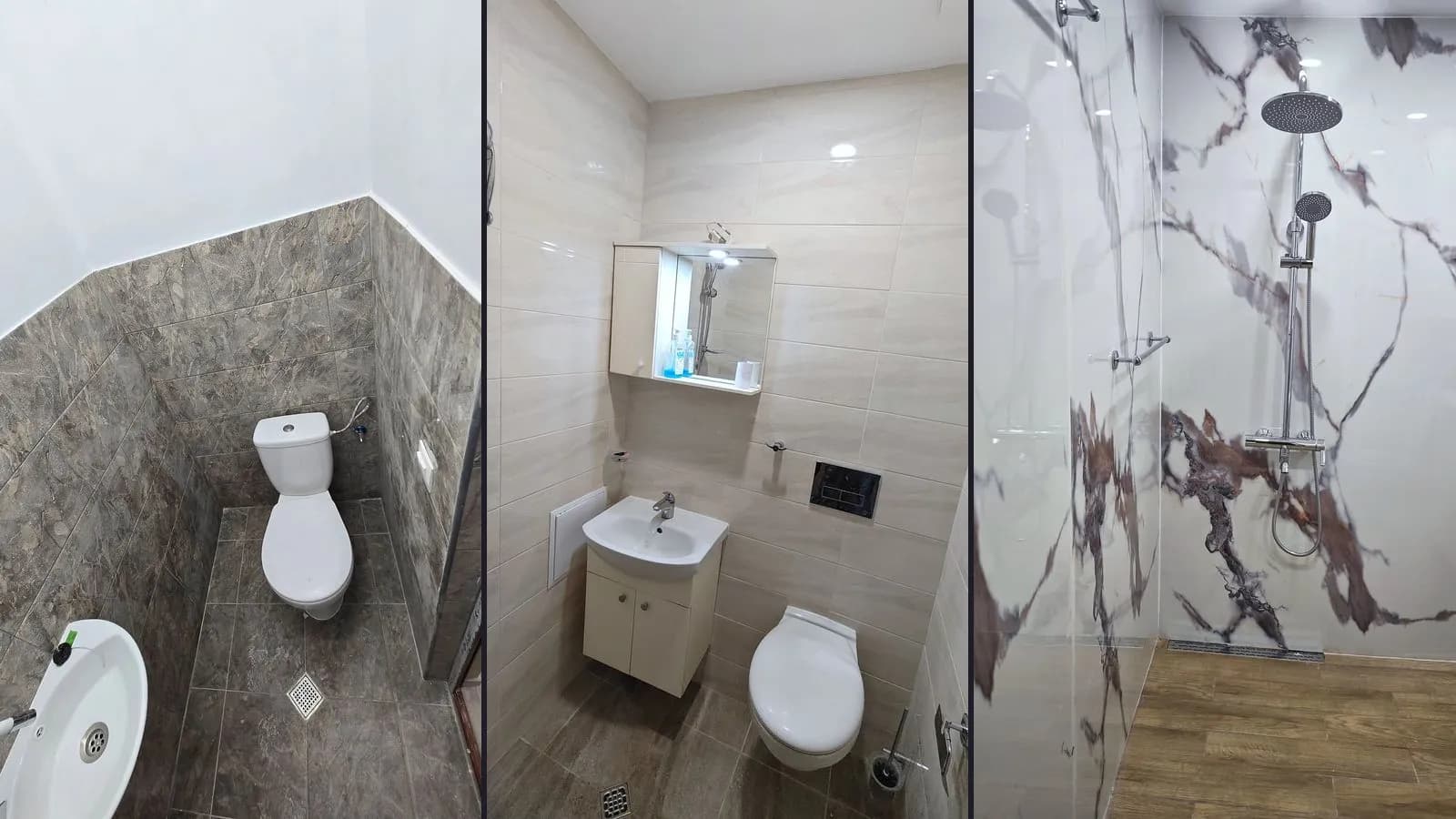
A no-demolition refresh of a bathroom with a 4 m² floor – new grout, silicone, taps, toilet and paint – costs around €470 for labour. The cheapest full renovation of the same bathroom is around €4,280 including the construction materials – the figure the calculator gives at the Basic level. In between is a partial renovation: floor only, shower only or sanitaryware only.
The savings come from complexity: the tile format and laying pattern, how high the tiling goes, and the type of toilet and shower. They should not come from the waterproofing, the pipes, the floor slope, the ventilation or the wall preparation – a saving there ends up costing more than the renovation itself.
The task prices are from our price list as of October 2026, are for labour only and may change. The calculator figures for a full renovation also include the construction materials. The tiles and sanitaryware are not included in any amount – you buy them yourself.
Three routes: a refresh, a partial or a full renovation
First decide which route matches the condition of your bathroom. If you choose the cheaper one when the bathroom needs the more thorough one, you will pay twice.
A refresh without demolition
The grout and silicone, the taps and the sanitaryware are replaced, the ceiling and the wall above the tiles are painted, and an extractor fan is added. This makes sense when the tiles are firmly in place, the bathroom does not leak, the pipes have been replaced in recent years and you are happy with the layout.
A refresh does not fix anything hidden. If there is damp under the tiles or the pipes date from when the block was built, the money spent on it is lost the first time the tiles have to come off. Mould on the grout that keeps coming back is caused by poor ventilation or by moisture behind the tiles – new grout only hides it.
| Job | Quantity | Labour price |
|---|---|---|
| Regrouting – €16.11 per m² | 10 m² (floor and walls around the bath) | €161.10 |
| Silicone sealing in the corners | 1 item | €64.42 |
| Shower mixer: removal (€16.11) + fitting (€48.32) | 1 item | €64.43 |
| Fitting a basin mixer tap | 1 item | €26.84 |
| Close-coupled toilet: removal (€21.47) + fitting (€42.95) | 1 item | €64.42 |
| Painting: primer (€1.34) + 2 coats of paint (€6.44) = €7.78 per m² | 8 m² (ceiling and wall above the tiles) | €62.24 |
| Fitting an extractor fan | 1 item | €26.84 |
| Total | €470.29 |
A partial renovation: floor only, shower only or sanitaryware only
A partial renovation makes sense when the problem really is confined to one place.
- Floor only. The floor tiles and the first row of wall tiles come off so that the waterproofing can be turned up onto the walls (‘Removing floor tiles and the first row of wall tiles’ – €161.06 for labour). The new first row rarely matches the old tiles exactly, and if the screed is cracked or has no slope, the job is no longer a small one.
- Shower area only. A new enclosure in place of the old one (fitting – €144.95 for labour) or new tiles and waterproofing on the shower walls count as a partial renovation. A walk-in shower in place of the bath, however, needs a new slope towards a linear drain and waterproofing across the whole floor – in other words, a new floor.
- Sanitaryware only. A new close-coupled toilet, vanity unit or water heater on the existing connections – fitting costs €42.95, €59.05 and €80.53 for labour respectively. This makes sense if the pipes are new: a new tap does not make an old shut-off valve new.
A full renovation with sensible choices
When the bathroom is old or leaking, or the pipes date from when the block was built, partial fixes only put off the expense. In that case it pays to do everything at once, but more simply: the saving comes from less complex work, not from leaving out layers. The risk here is the temptation to save on what you cannot see – that is what the section ‘Where not to cut corners’ is about.
The calculator shows what complexity costs. For a bathroom with a 4 m² floor, the Basic level comes to around €4,280 and Premium to €5,960, including the construction materials – a €1,680 difference for the same bathroom. Basic assumes an unchanged layout, standard-format tiles and surface-mounted fittings. The Standard level (€5,000, with a range of €4,500–5,500) is the usual renovation of an old bathroom, with new installations and every layer redone.
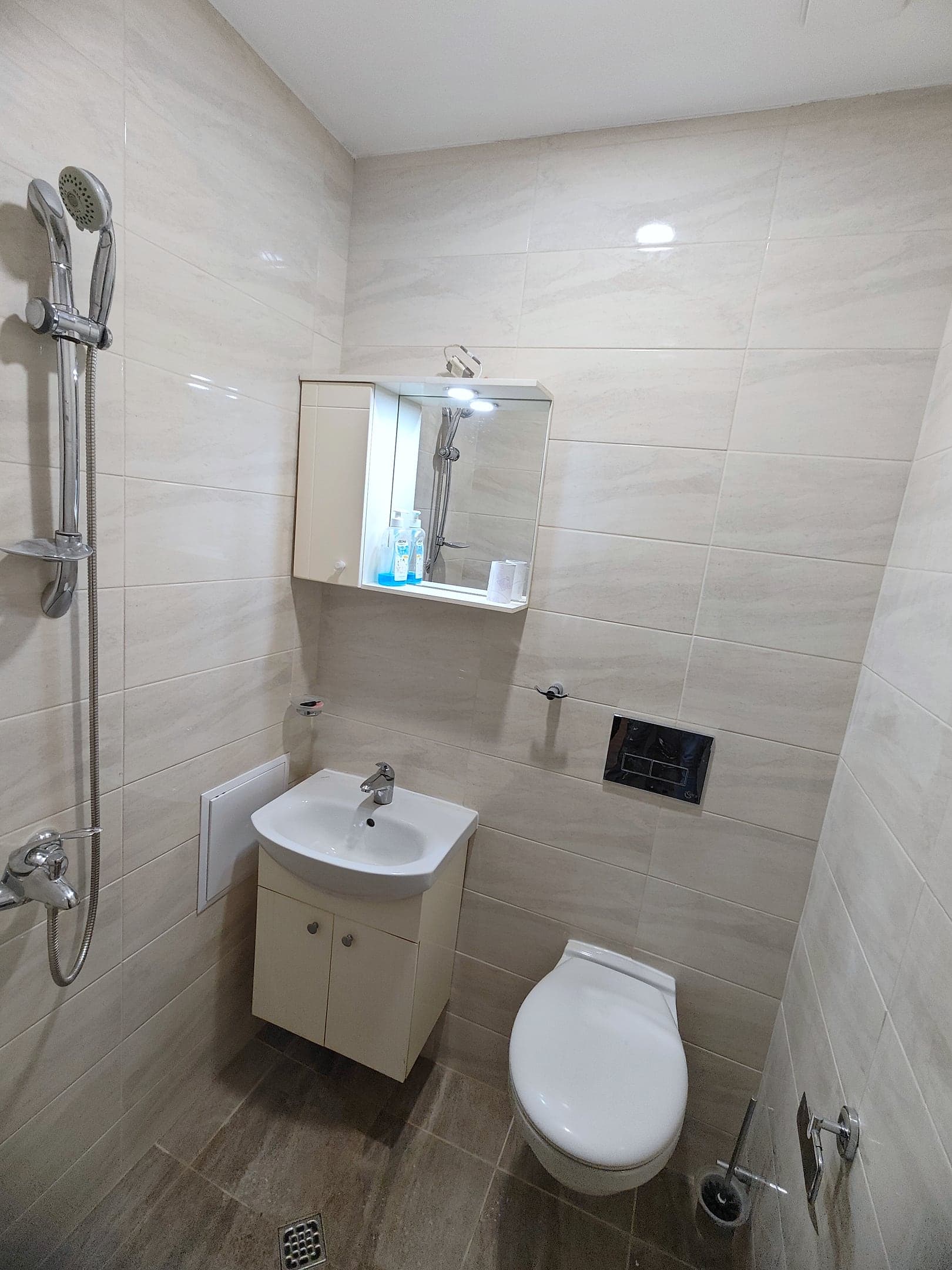
A job-by-job breakdown is in the article on bathroom labour costs, and you can see what the simple solutions look like in the beige bathroom.
Tiling over old tiles: when it works and when it does not
On a tight budget, the question is a natural one: why break the old tiles out if you can tile straight over them? The answer is ‘sometimes’, and the decision is made on site, after tapping the old tiles to check them.
New tiles can be laid over the old ones if:
- the old tiles are firmly bonded – they do not sound hollow and are not cracked;
- the walls and the floor are flat, because the new tiling copies the unevenness of the old;
- there is no damp, staining or mould, and the bathroom has not leaked through to the neighbours;
- the pipes behind them are new or in good condition;
- there is room for the thicker build-up: the door still has to open, and the pipe connections and the drain have to be brought out to the new level.
It is a bad idea when:
- the tiles are hollow or cracked – the new layer will come off along with them;
- there is damp or signs of a leak – the problem gets sealed in under two layers;
- the old pipes run underneath them;
- a new slope towards the drain or a walk-in shower is needed – then the floor gets broken out anyway.
In labour terms, tiling over the top saves the demolition (€16.11 per m²) and usually the plaster and mesh on the walls (€21.47 per m²), but it adds a bonding primer (€3.00 per m²) so that the adhesive grips the glaze. The difference is up to €34.58 per m² for labour (€16.11 + €21.47 − €3.00). The catch is that the next renovation will have to break out a double layer.
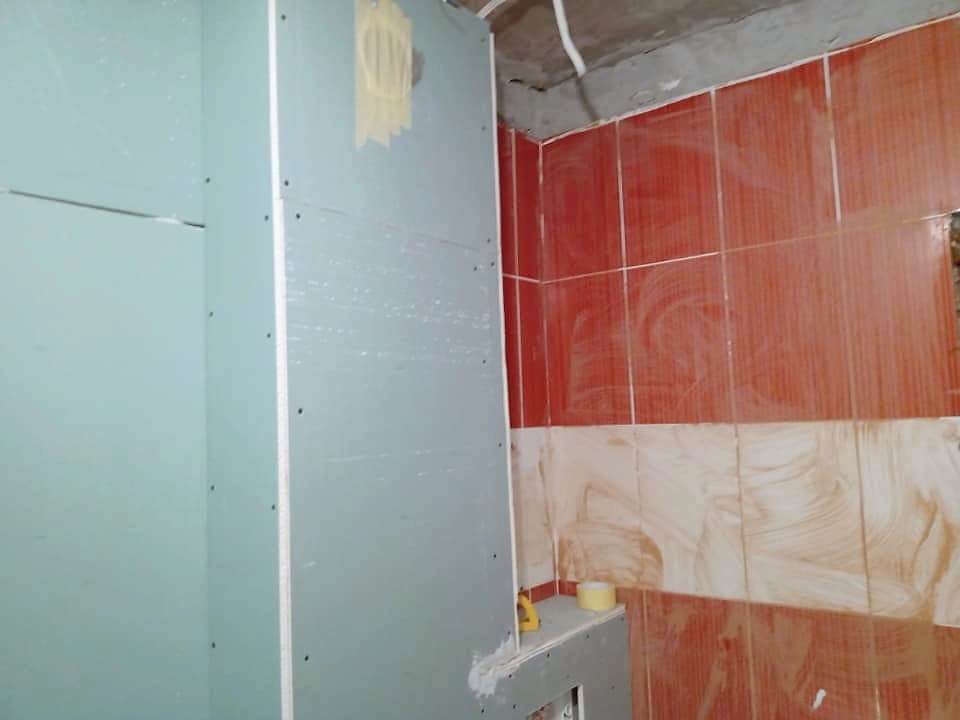
If the walls are crooked but the old tiles are firmly in place, instead of breaking them out you can line the walls with moisture-resistant plasterboard – as in the bathroom in the photo. The wall lining with mineral wool costs €24.16 per m² for labour and is 7.5 cm thick: that is how much space the bathroom loses on each lined wall. In the shower, waterproofing is still applied on top of the plasterboard.
Where you can save
A sensible saving is one where the simpler solution is not worse, just simpler. Here are the differences in labour according to the price list:
| Choice | Lower labour cost | Higher labour cost |
|---|---|---|
| Floor | Tiling and grouting, floor – €48.32 per m² | The same, in a herringbone pattern – €80.53 per m² |
| Wall outside the shower | Primer, skim coat and paint (full process) – €27.92 per m² | Primer (€2.68) + tiling and grouting (€64.42) = €67.10 per m² |
| Toilet | Fitting a close-coupled toilet – €42.95 each | Concealed frame + plasterboard boxing-in (€187.90) + wall-hung toilet (€59.05) = €246.95 |
| Shower mixer | Fitting an exposed shower mixer – €48.32 each | In-wall body for a concealed shower (€241.59) + fitting the concealed shower (€107.37) = €348.96 |
| Shower | Fitting a shower enclosure – €144.95 each | Linear drain (€59.05) + shower screen (€96.63) = €155.68 |
| Shower connections | Stay where they are | Moving the shower connections – €107.37 each |
In terms of labour, the cheapest option is standard-format tiles laid straight. In the calculator, large-format tiles and mosaics are a mark of the Premium level, and they usually cost more as materials too.
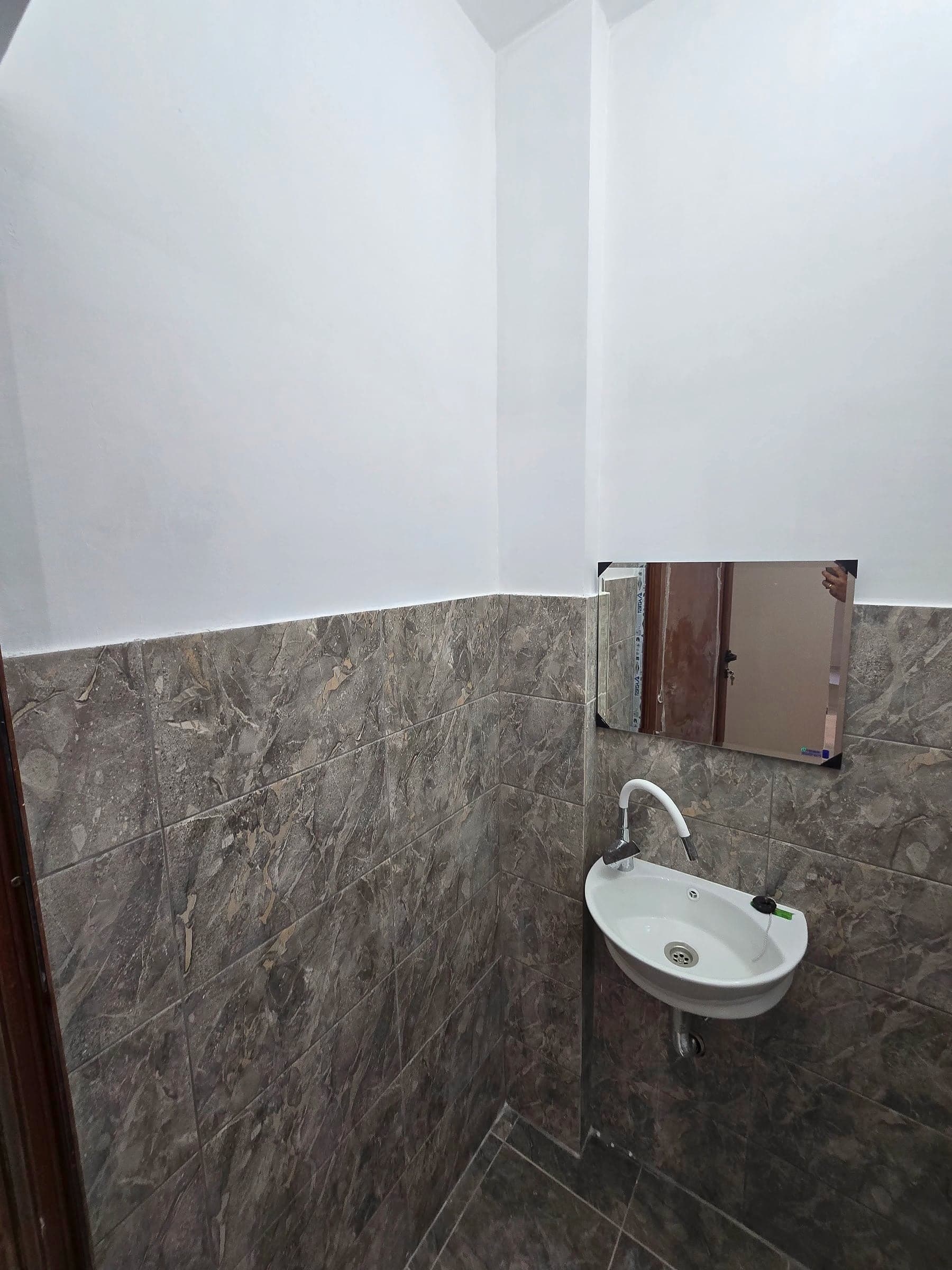
Outside the shower, the tiles can stop halfway up the wall, with paint above them; in the shower they go all the way up. In a bathroom with a 4 m² floor, the upper half of the walls outside the shower is around 8 m². Painting it instead of tiling it means €313.44 less in labour – 8 × (€67.10 − €27.92) – plus the tiles and adhesive you save. That is how the WC in the Druzhba apartment was done.
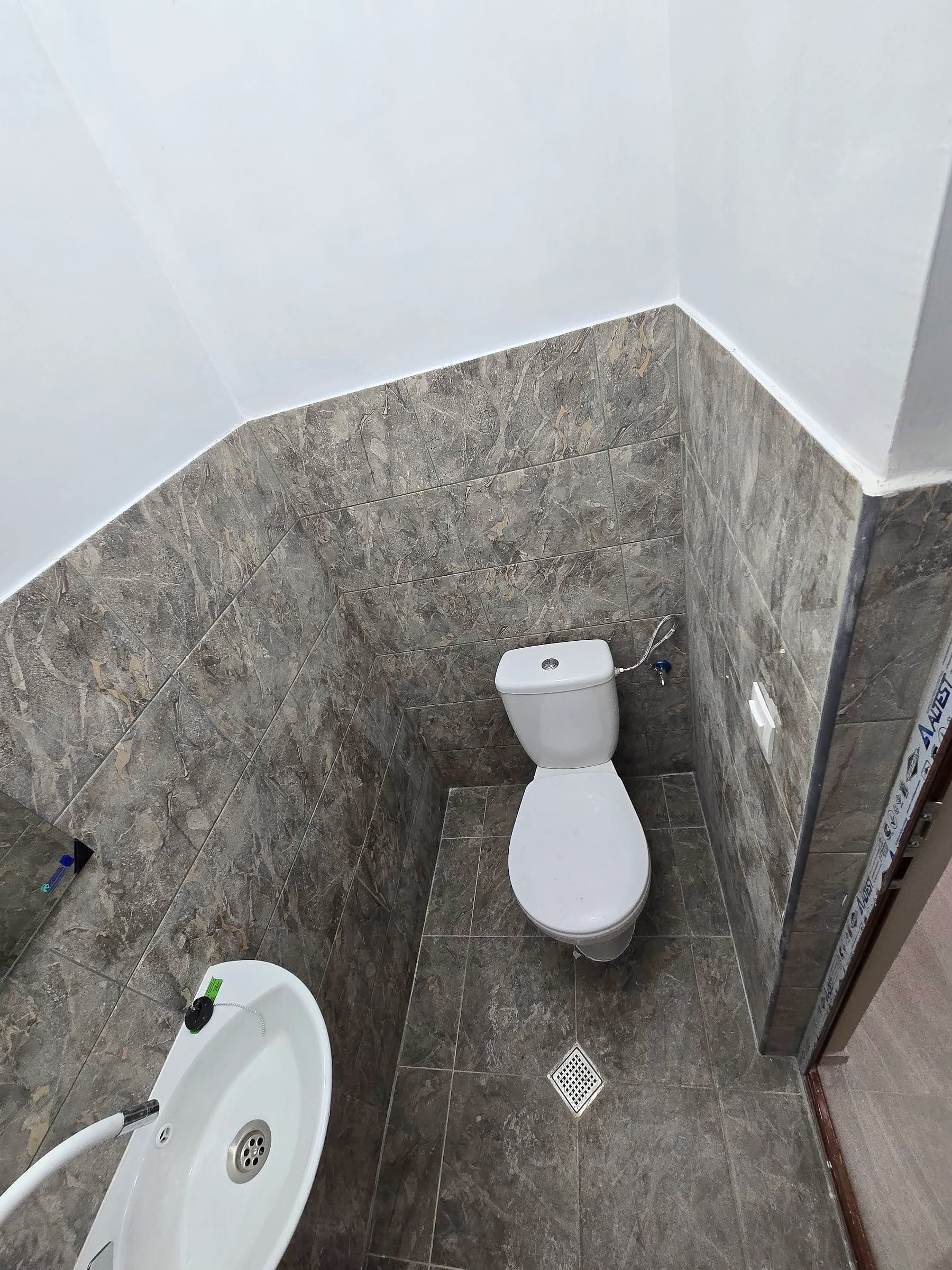
A close-coupled toilet saves €204.00 in labour (€42.95 versus €246.95) and even more in materials: a wall-hung toilet needs a concealed frame with a hidden cistern, which has to be fitted and boxed in. A wall-hung toilet is easier to clean, but a close-coupled one is a perfectly reasonable choice, and its cistern is on the outside if it ever needs repairing.
With the shower, the biggest difference is the mixer: an exposed shower mixer costs €48.32, a concealed shower €348.96 for labour, because its in-wall body is set into the wall before the tiles go on. An enclosure and a linear drain with a shower screen are almost equal in labour (€144.95 versus €155.68) – choosing between them is a matter of materials and convenience. Each niche adds another €247.37 for labour (building it €140.00 + tiling it €107.37), while a shelf in the shower does the same job.
A bath in good condition is worth keeping: you do not buy a new one or rework the connections and the floor, and with a shower screen (fitting – €96.63 for labour) it doubles as a shower. It saves the most in a refresh or a partial renovation, when it stays where it is. In a full renovation it is taken out and refitted (€53.69 and €250.00 for labour), because the floor under it is waterproofed too – so the saving is on materials, not on labour.
Keep the layout as well: every connection point that moves is a separate line in the quote – moving the shower connections costs €107.37 and moving an electrical point €32.21 for labour. The toilet can only be moved if the drainage and its slope allow it.
Where not to cut corners
None of this work is visible after the renovation, which is why it is the easiest to leave out of a cheap quote. Yet it decides whether the bathroom will leak and grow mould.
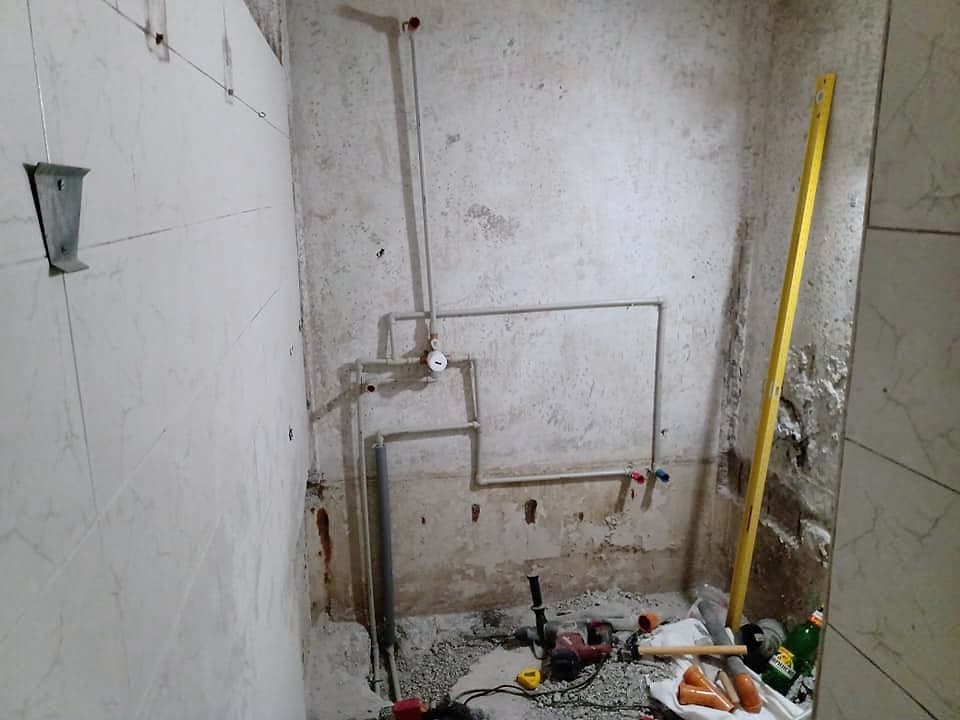
- Waterproofing – across the whole floor and turned up onto the walls, and on the walls of the shower or around the bath, with waterproofing tape in the corners and sealing collars around the pipes. Not just in the shower. We test it with water before the tiles go on; the details are in the article on bathroom waterproofing.
- The pipes in an old block. If they date from when the building was put up, replace them while the wall is open. New pipes are pressure-tested before they are closed in.
- The slope towards the drain. Without it, water sits in the grout lines and gets in under the silicone. If the slope cannot be formed on the old screed, a new one is laid – ‘Bathroom/toilet floor screed’ is €198.64 for labour.
- Ventilation. Fitting an extractor fan is €26.84 for labour if there is an opening and an electrical point; mould treatment is €100.00 for labour – every time the mould comes back.
- Adhesive and wall preparation. On a crooked wall the tiles sit crooked, and with the wrong adhesive they start to sound hollow over time. Plaster with mesh is €21.47 per m² for labour, and the adhesive is in our quote along with the other construction materials.
Putting it right costs far more than the saving. Every square metre of wall that has to be broken out and re-tiled costs €102.00 for labour (demolition €16.11 + plaster and mesh €21.47 + tiling and grouting €64.42) – more than five times the cost of waterproofing it (€18.79). On top of that come the new tiles and, if water leaks through to the neighbours, the repair of their ceiling as well.
How to cut the bill without cutting quality
Part of the saving comes down to organisation.
- Decide everything before work starts: tiles, sanitaryware, where the shower goes, what type of toilet. Any change during the work is approved in writing, with a price, before it begins – and it almost always costs more than the same decision made in good time.
- Buy the tiles and sanitaryware yourself, and in good time – if they arrive late, the work stops. Get all the tiles from one batch, with extra to allow for cutting.
- Do the bathroom in one go if you can. When it is done in stages, the organisation, the waste removal and the joins between old and new are paid for more than once, and the second stage often undoes part of the first.
- Compare quotes job by job, not by the total: a lower total often means a missing line. More on this in the article why a written quote matters more than a low price.
Frequently asked questions
How much does the cheapest full bathroom renovation cost?
For a bathroom with a 4 m² floor, around €4,280 including the construction materials, with a range of €3,852–4,708. That is the Basic level in the calculator, which works from the tiled area: €1,400 + 24 m² × €120 (floor and walls up to 2.5 m). For an old bathroom where the pipes are being replaced, count on €4,500–5,500 instead. The tiles and sanitaryware are extra.
Can I just paint the tiles?
You can, but it is a temporary solution. Paint on glazed tiles wears off wherever there is water and friction, so it is not suitable for the floor or the shower. On a wall away from the wet areas it lasts longer, provided the tiles have been cleaned and primed. The labour price is given in a quote.
Can a bathroom be renovated without demolition?
A refresh, yes. New tiles over the old ones – sometimes, if the old ones are sound, flat and dry. It cannot be done without demolition if the pipes are old, the bathroom has leaked, or you need a new slope or a walk-in shower in place of the bath.
Can I buy the materials myself?
The tiles, sanitaryware and drains – yes, you choose and buy those yourself. The construction materials – adhesives, waterproofing, screeds, profiles, plasterboard, mesh and primers – are in our quote, on a separate line.
If you are not sure which route is right for you, send us photos of the bathroom via estimate from photos and you will get a rough idea of the cost. The site visit is free, and the quote for a bathroom renovation is in writing, with every job described and priced.
More articles
All articles Budget
4 min read
How much does an apartment renovation in Sofia cost – and what drives the price?
What determines the cost of an apartment renovation in Sofia – the condition of the building, the scope and the materials. And why the exact figure only comes after an on-site visit.
Read Budget
2 min read
How much does an apartment renovation cost in Bulgaria in 2026?
A realistic budget for an apartment renovation in Sofia, Plovdiv, Varna and Burgas – what shapes the price, and why two quotes for the same property can differ by ten thousand euros.
Read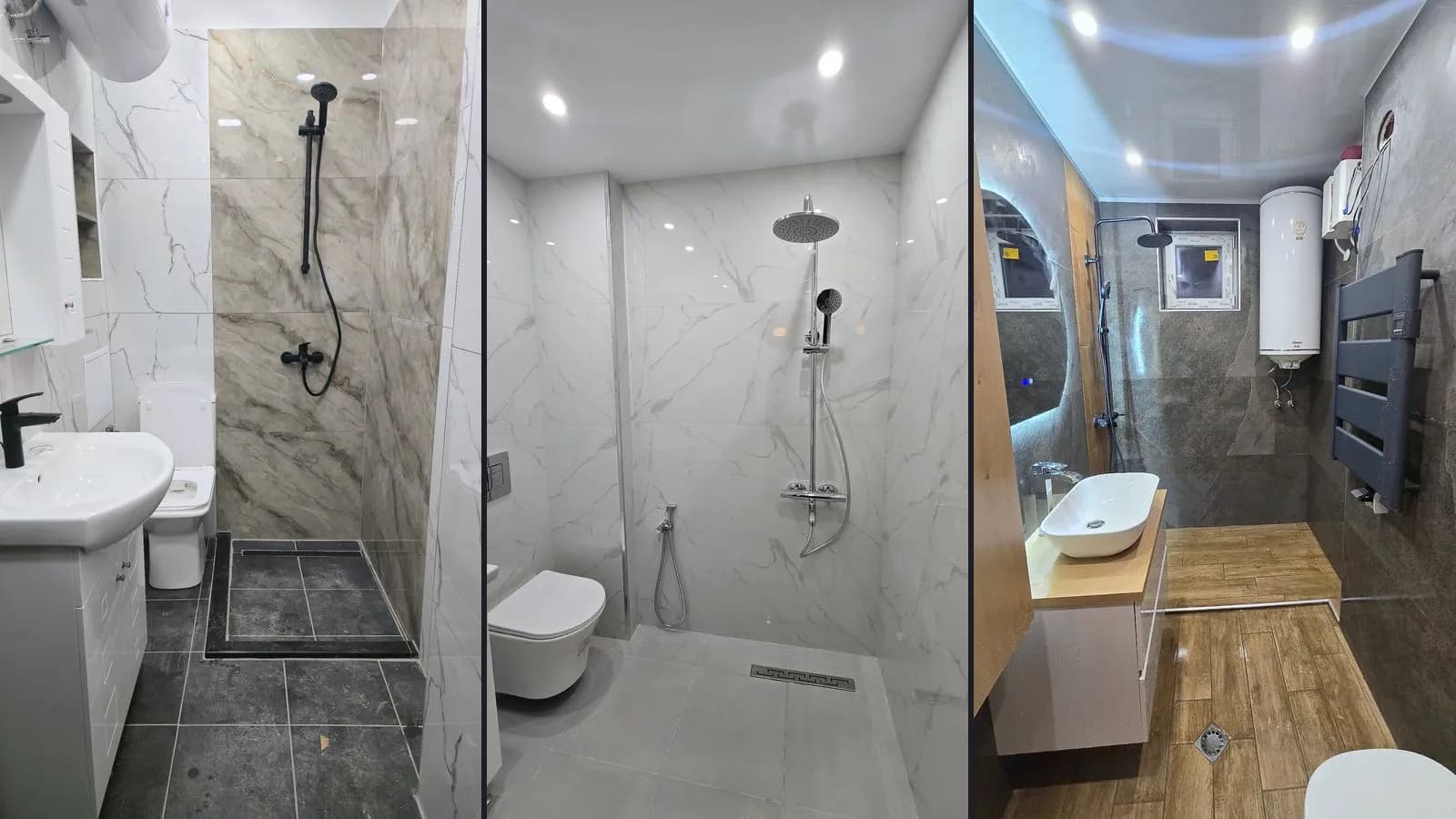 Bathroom
12 min read
Bathroom renovation: labour costs in 2026, task by task
Bathroom labour prices task by task, a worked example for 4 m² and why an old bathroom usually comes to €4,500–5,500 with construction materials.
Read