How long does a major house renovation take?
Renovating a house is one of the most serious undertakings a property owner can face. Whether you are buying an old house to do up or want to modernise the family home, the question ‘How long will the renovation take?’ always comes first. In this article we look in detail at how long a major house renovation takes, what the stages are, which factors affect the timescale and how to speed up the process without sacrificing quality.
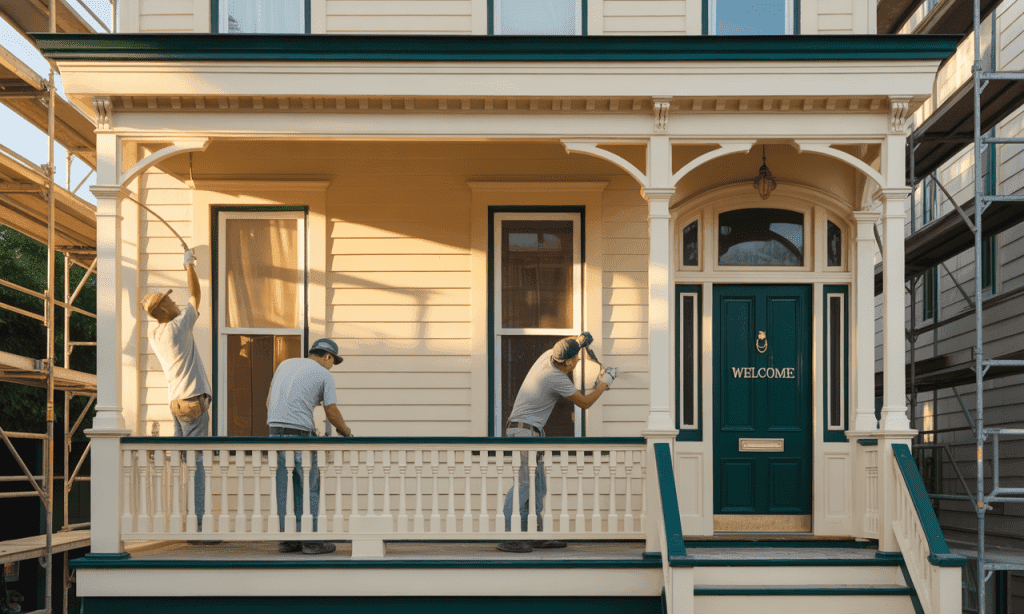
Renovating a house is one of the most serious undertakings a property owner can face. Whether you are buying an old house to do up or want to modernise the family home, the question ‘How long will the renovation take?’ always comes first. In this article we look in detail at how long a major house renovation takes, what the stages are, which factors affect the timescale and how to speed up the process without sacrificing quality.
Table of Contents
What does a major house renovation involve?
Before we talk about timescales, it is important to be clear about what a ‘major renovation’ actually means. It is not just painting the walls or replacing the floors, but a whole set of works that renew the house completely and bring it in line with modern standards of comfort, safety and energy efficiency.
A major renovation usually includes:
- Preparation and demolition – removing old floor coverings, doors, windows and plaster.
- Replacing the plumbing and electrical wiring – upgrading them to meet safety requirements.
- Roof and facade – repairing or replacing the roof, insulation, new windows and doors.
- Interior finishing – skim coating, screed, painting, new flooring.
- Renovating the bathroom and kitchen – the most time-consuming rooms because of their complex services.
- Furnishing and final details – fitting furniture, lighting and accessories.
Together, these steps turn an outdated or run-down house into a modern, comfortable and safe home. That is exactly why a major renovation takes more time, resources and careful planning – but the end result is a long-term investment in your quality of life and in the value of the property.

What determines how long a house renovation takes?
A major house renovation is a complex, multi-stage process. Even when there is an overall plan, the actual timescale often varies depending on specific factors. Each of them can speed up or slow down the work, so it is important to know about them in advance. Let us look at some of the most common situations:
The size of the house
The larger the floor area, the more time each stage takes – from demolition and removing the waste to skim coating, painting and laying the floors. For a single-storey house the timescale may be 3–6 months, while in a two- or three-storey building with considerably more rooms the renovation can take more than 8–10 months.
The condition of the structure
An old or worn-out structure always means extra work. If there are cracks in the walls, damp in the foundations or stability problems, strengthening and repairs that were not originally planned are often needed. This not only adds time but also calls for a bigger budget.
The types of work
Not every renovation is the same. If you are only renovating the interior, the timescale is considerably shorter than for a renovation that also covers the roof, the facade or replacing the windows and doors. These jobs are often carried out one after another, which increases the overall time.
How the team is organised
How quickly the renovation goes also depends on who is doing it. A small crew can do good work, but more slowly, while a professional renovation company such as RemontS, with more tradespeople, can carry out different tasks in parallel. This can shorten the renovation by months.
Season and weather conditions
Some jobs, such as facade repairs, external insulation and roofing, depend heavily on the season. Cold, rain or high humidity can slow the process down or even make it impossible. That is why the best time for exterior work is spring and summer. If you start the renovation in the wrong season, you can end up dragging it out over a whole year.
Materials and deliveries
Late deliveries of tiles, windows or furniture often bring the whole process to a halt. That is why it is important to order materials in good time and to have alternatives in case of shortages. The tradespeople also need to be told clearly and precisely about your preferences and requirements, and you need to agree with them who handles the ordering – who is responsible, when the materials are expected to arrive, where they should be ordered from, and similar questions.
Changes to the project
One of the most common reasons for overruns is the owner deciding to change part of the project while the work is under way. Even a small change, such as a different type of flooring or moving a wall, can lead to weeks of delay.
How long does a house renovation take on average?
How long a house renovation takes depends above all on the scope and complexity of the work. There is no one-size-fits-all timescale, because every building differs in size, condition and requirements. Even so, a few main categories of renovation can be outlined that give a good idea of the time needed.
Cosmetic renovation – 1 to 2 months
A cosmetic renovation is the quickest and mainly involves freshening things up – painting walls and ceilings, replacing floor coverings, new doors or new light fittings. In a small single-storey house of 70–80 m², a renovation like this can be finished in as little as 4–6 weeks, especially if a team of several experienced tradespeople is on the job. For larger properties it may stretch to 2 months, but rarely longer, as there is no complex work on the services.
Major renovation – 4 to 8 months
Here we are talking about a complete upgrade: replacing the plumbing and electrical wiring, insulating the facade, repairing or replacing the roof, new windows and doors, interior finishing and a full renovation of the bathroom and kitchen. All of this takes time, because the work is done in stages and the stages often depend on one another. For example, the electrical wiring has to be finished before skim coating and painting, and the bathroom can only be completed after the plumbing work. A small single-storey house can go through a renovation like this in about 4–5 months, if it is well organised and everything is entrusted to one company. If you work with multiple contractors and there is no organisation, the renovation can drag on much longer – even twice as long. In a two-storey building with several bathrooms and a larger floor area, the timescale easily reaches 7–8 months, and that is with good organisation and a professional renovation company.
Reconstruction and adding storeys – 9 to 12+ months
The most time-consuming renovations involve structural changes – knocking down internal walls, building new rooms, adding a second or third storey, altering the load-bearing structure. Here the process resembles new construction and often takes more than a year. For example, if another storey with a new stairwell is added to an old house, then besides the shell construction all the finishing work has to be done – the facade, insulation, a new roof, as well as a full renovation of the interior. This can take 12–15 months, depending on the scope of the work and the availability of tradespeople.
What should you bear in mind?
It is important to know that these are average timescales and can vary from case to case. Delays often arise from late deliveries of materials, bad weather during exterior work or changes to the project while the work is under way. On the other hand, good organisation and hiring a company that can carry out several jobs in parallel reduce the time considerably.
In summary: a small single-storey house can be renovated in 4–5 months, while a full renovation of a large three-storey building can take a year or more. That is exactly why an accurate estimate comes after a site visit by specialists and a clear work plan.
Breakdown of the work: a *SAMPLE* stage-by-stage plan for a major house renovation
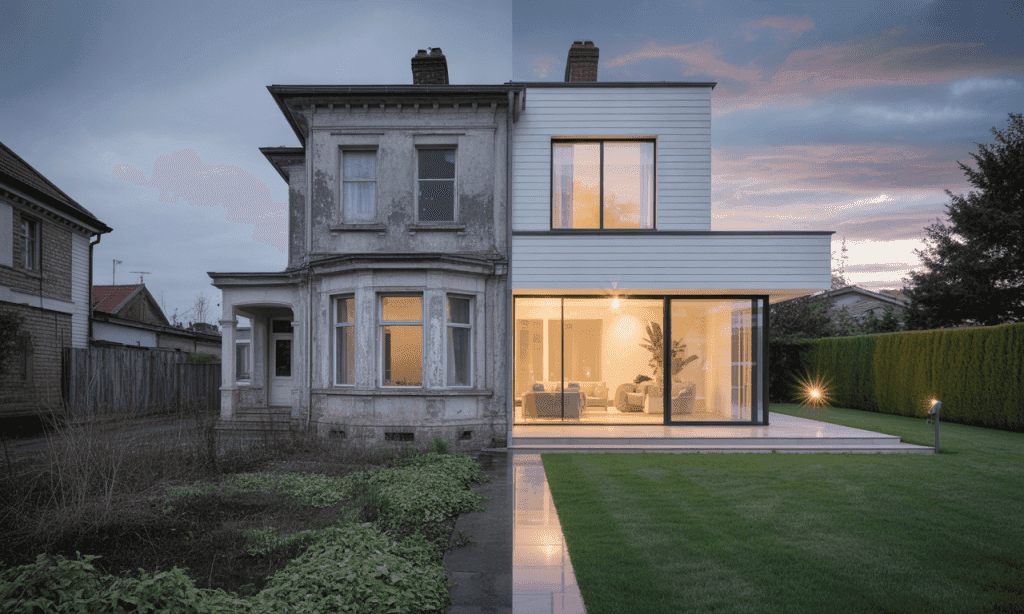
Every major renovation has a clear structure and goes through successive stages. How long each stage takes depends on the size of the house, the complexity of the work and how the team is organised. Below is a sample plan with approximate timescales.
Preparation and demolition – 1 to 3 weeks
This stage involves removing old floor coverings, furniture, window frames and plaster, as well as taking away the construction waste. In a small single-storey house it can be finished in 7–10 days, while in a large two-storey building with old structures and heavy materials it can take up to 3 weeks. Delays often occur when the logistics for removing the waste are poor.
Plumbing and electrical wiring – 2 to 4 weeks
Replacing pipes, cables, the consumer unit, sockets and lighting is a key stage. In new or well-preserved houses, where no serious breaking-out of walls is needed, the work can be finished in 2 weeks. But if the systems are old and need replacing completely, including new cable and pipe routes, the time easily reaches 4 weeks.
Roof and facade – 3 to 6 weeks
Roof repairs and insulating the facade are the most weather-dependent jobs. A small repair with partial replacement can be done in 3 weeks, while a complete renovation of a large roof and full insulation of a house of over 200 m² can take 6 weeks or more, especially if the weather is unfavourable.
Screed and plaster – 2 to 5 weeks
Levelling the floors and walls prepares the house for the final finishing work. In well-preserved rooms this stage is quick, but in old houses with badly damaged walls it can take over a month, especially if you have to wait for the materials to dry.
Flooring and wall tiling – 2 to 4 weeks
Laying tiles, laminate or parquet depends on the floor area and the complexity. A small house can be finished in 2 weeks, but with large areas and expensive materials that need more care, it takes up to 4 weeks. This stage often also includes completing the bathroom and kitchen – the rooms that take the most time because of their detailed services and the precision the tiling requires.
Final finishing work – 1 to 2 months
This includes painting and fitting doors, lighting, furniture and decoration. A small house can complete this stage in about a month, but in large homes with bespoke furniture and more detail it extends to 2 months.
How can you shorten a house renovation?
One of the surest ways to cut the time a major renovation takes is to entrust your project to an experienced company with a proven track record. When you work with professionals such as RemontS, you get a team that already has hundreds of successfully completed renovations and satisfied Bulgarian families behind it. This means the tradespeople know how to organise the process, avoid the most common mistakes and carry out tasks in parallel, without unnecessary delays. A professional company takes responsibility for the entire renovation – from planning to the final finishing work – and so spares you the stress of coordinating separate tradespeople and suppliers.
Practical tips for shortening the timescale
- Plan ahead – a clear design and schedule save time.
- Choose a professional company – experienced teams such as RemontS can have more tradespeople working at the same time.
- Get the materials delivered on time – missing materials are the most common cause of delay.
- Do not make last-minute changes – every change extends the process.
- Keep track of progress – regular communication with the team prevents surprises and ensures timely decisions.
Common delays and how to avoid them
Bad weather
One of the most common reasons a renovation is delayed is bad weather. This is especially critical for jobs such as roof repairs or facade work, which depend on dry, settled weather. Rain can stop work for days, and the cold in winter makes it impossible to apply plaster and insulation. So the best solution is to schedule these stages for spring or summer, when the weather is more predictable. If the renovation does have to take place in the colder months, it is good practice to plan for protective covers, temporary heating or working in stages, to minimise the risk of interruptions.
Late deliveries
Another common problem has to do with materials. Even the best-organised team cannot work if tiles, insulation or windows are missing. Sometimes deliveries are held up by days or weeks, especially if the materials are ordered from abroad or are made to order. So it is advisable to secure all the main materials in advance and to order the more specialised ones right at the start of the renovation. Working with a professional company such as RemontS is a big plus, as such companies often have established partners and can speed up deliveries.
Not enough workers
Delays quite often arise when the crew does not have enough people. A small team can do good work, but it inevitably falls behind on large projects where several jobs have to be done in parallel. The solution is to choose a company with enough capacity and experience to bring in more tradespeople when needed. This shortens the time and allows different stages – for example electrical wiring and plastering – to run at the same time.
An unclear contract
Not having a well-drafted contract is a recipe for disputes and delays. If the deadlines and responsibilities are not set out in writing, misunderstandings often follow – who is responsible for delivering the materials, what happens in bad weather, or what the penalties are for delays. To avoid situations like these, always insist on a detailed contract that sets out the deadlines, prices, scope of work and warranties. It is not just a formality, but a tool for peace of mind and control over the whole process.
Conclusion
A major house renovation is a long and complex process that calls for good preparation. On average it takes between 4 and 8 months, depending on the size of the property, its condition, the number of jobs and how the team is organised. With proper planning and a professional company, you can shorten the timescale and secure uncompromising quality. If you are considering renovating a house, the best way to get an accurate timescale is to consult the experienced specialists at RemontS FREE of charge and ask for a tailored quote. That way you will know not only how much it will cost, but also when you can move into your renovated home.
More articles
All articles Houses
12 min read
Renovating a heritage-listed house: how to breathe life into the past
Renovating a heritage-listed house is more than a building project – it is a delicate mission between the past and the present. These homes are not just properties – they are witnesses to their time, guardians of an architectural spirit and of a cultural memory that deserves to be preserved. But behind every restoration lies not only inspiration but also responsibility.
Read Plumbing & electrics
4 min read
Rewiring an old apartment: when it’s time and how it’s done
Aluminium wiring, old fuses and sockets that heat up – when old electrical wiring becomes a risk, what replacing it involves, and why it is done before skim coating, not after.
Read Bathroom
3 min read
Bathroom waterproofing: the invisible layer that protects you and your neighbours
Exactly where waterproofing goes in a bathroom, which details make all the difference, and how it is tested before the tiles go on.
Read