Renovating an old house: where to start and what it costs
The five stages of renovating an old house – from the site visit and roof to plaster and paint: why they follow this order and the task prices for each.
Free site visit and quote
Leave your phone – we will call you
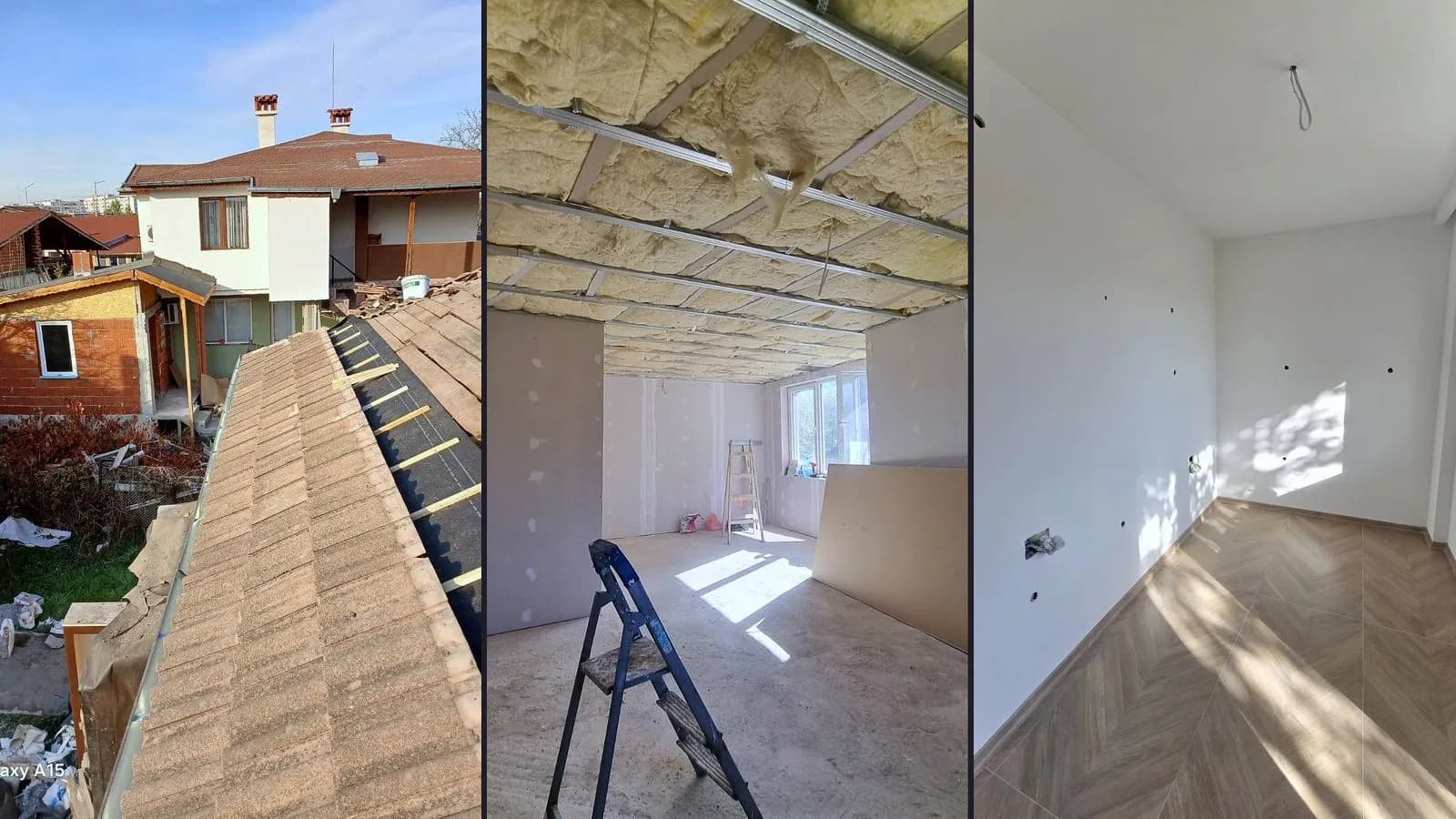
What an old house renovation comes to depends on which stages the house needs, so the price for the whole house is set in the written quote after the site visit. The prices for individual tasks, however, are known in advance. Under our price list, a new tiled roof is €141.00 per m², including the labour for removing the old one and the materials for the new one. External insulation is €64.42 per m² for labour, and a single electrical point is €32.21 for labour.
You start from the top and the outside: a site visit to check the structure and the roof, then the roof and its drainage, followed by the pipes and wiring, thermal insulation and windows, and finally the interior work. In this order, each stage protects the next – the new ceiling does not get soaked through the old roof, and the new plaster does not have to be hacked off to run a new cable.
Below are the prices, what is checked and done at each stage, and why the order is exactly this one. Construction materials are charged separately, except for the items marked ‘labour and materials’.
House renovation prices by stage
These are the main items from our price list, arranged by stage – from the roof to the interior work. The prices are as of October 2026 and may change.
| Price-list item | Price | Includes |
|---|---|---|
| Removing roof tiles | €6.00 per m² | labour |
| Complete roof reconstruction, materials + tile replacement | €135.00 per m² | labour and materials |
| Gutters + materials + metal eaves flashing + fascia boards | €32.21 per lin. m | labour and materials |
| Fitting downpipes + materials | €32.21 per lin. m | labour and materials |
| Erecting/dismantling scaffolding | €18.00 per m² | labour |
| Plumbing alteration | €240.31 each | labour |
| Digging and laying plumbing pipes | €48.32 per lin. m | labour |
| Electrical installation per point | €32.21 each | labour |
| Replacing a consumer unit, up to 8 fuses | €143.16 each | labour |
| External insulation + skim coat with mesh and render | €64.42 per m² | labour |
| Installing a suspended ceiling + mineral wool | €24.16 per m² | labour |
| Supplying and fitting external windows and doors | €370.43 per m² | labour and materials |
| Lime-cement plaster | €21.47 per m² | labour |
| Walls: primer + 3 skim coats + paint (full process) | €27.92 per m² | labour |
| Floor screed | €21.47 per m² | labour |
| Taking construction waste to a disposal site (tipper lorry) | €110.00 each | labour |
1. Site visit: structure, roof and damp
The site visit is free, and it is the first step. With an old house, the visit looks first for anything that would be expensive to put right later:
- cracks – whether they are only in the plaster or run through the masonry;
- the roof – signs of leaks on the ceiling and the roof timbers, rotten boards and battens, a missing membrane under the tiles;
- damp – blistered, flaking plaster and stains on the lower part of the walls, mould in the corners of the external walls;
- pipes and wiring – old galvanised pipes, where the drains run to, what is in the consumer unit;
- floors and ceilings – sagging, rotten joists, cracked screed.
If the cracks run through the masonry, you first need an assessment from a structural engineer. The same applies if you want to remove a wall or make a new opening: load-bearing walls, beams and floor slabs are not touched without such an assessment.
The aim of the site visit is to see what is urgent and what can wait. Afterwards you receive a written quote with the work described and priced, so you can see what each stage costs on its own.
2. The roof and rainwater drainage
The roof is the first stage because it protects everything beneath it. If it leaks after the interior has been renovated, the ceiling, the plaster and sometimes even the floor have to be done again. Roof work also creates dust and debris, and it is better for them to fall into a house that has not been renovated yet.
When the tiles are replaced, the labour for the removal plus the new roof including materials comes to €6.00 + €135.00 = €141.00 per m². The roof area is measured along the slopes, so it is larger than the footprint of the house. An example for a 120 m² roof and the stages of the replacement are in the article on tiled roof replacement.
Not every old roof needs replacing. If the rafters, the boards and the membrane are sound, and the leak comes from a few broken tiles or from around the chimney, a roof repair is enough. We describe what is particular about old roof structures in the article on roof repairs on old buildings.
Rainwater drainage is part of the same stage. Without gutters and downpipes, the water from the roof falls alongside the walls, splashes the plinth and runs towards the foundations – and then shows up inside as damp in the lower part of the walls.
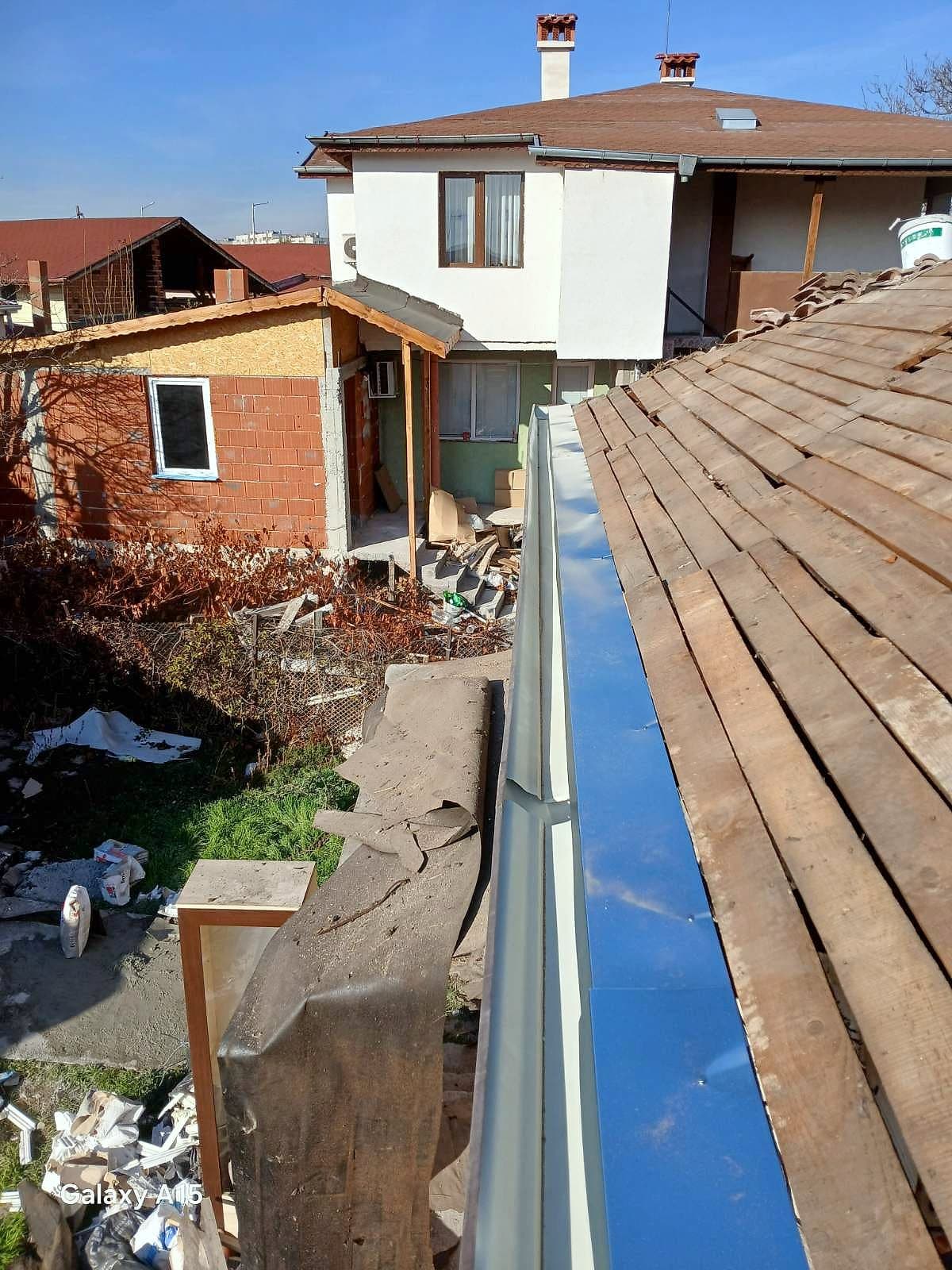 Gutter
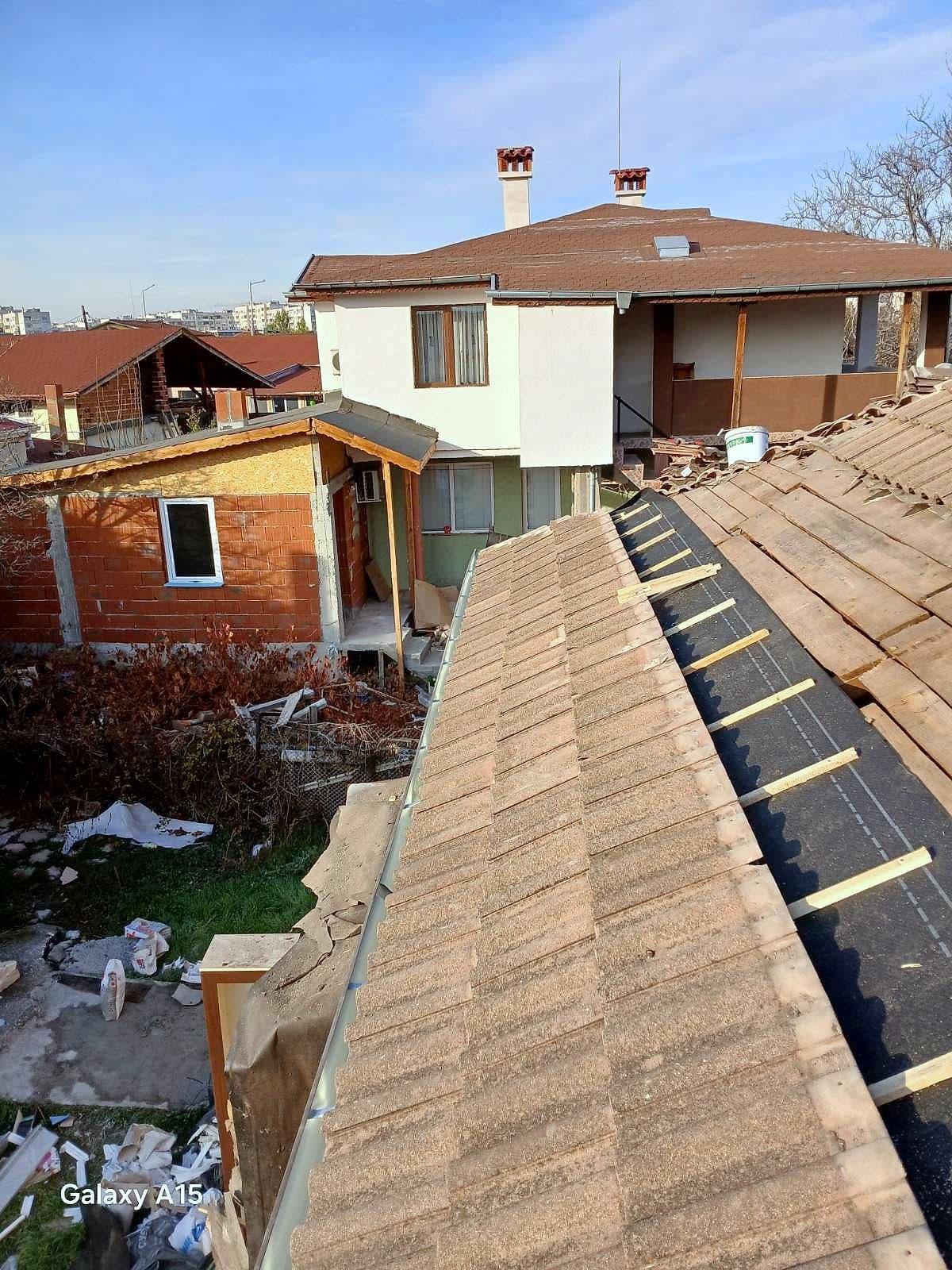 Tiles
3. Pipes and wiring: water, drains, electricity
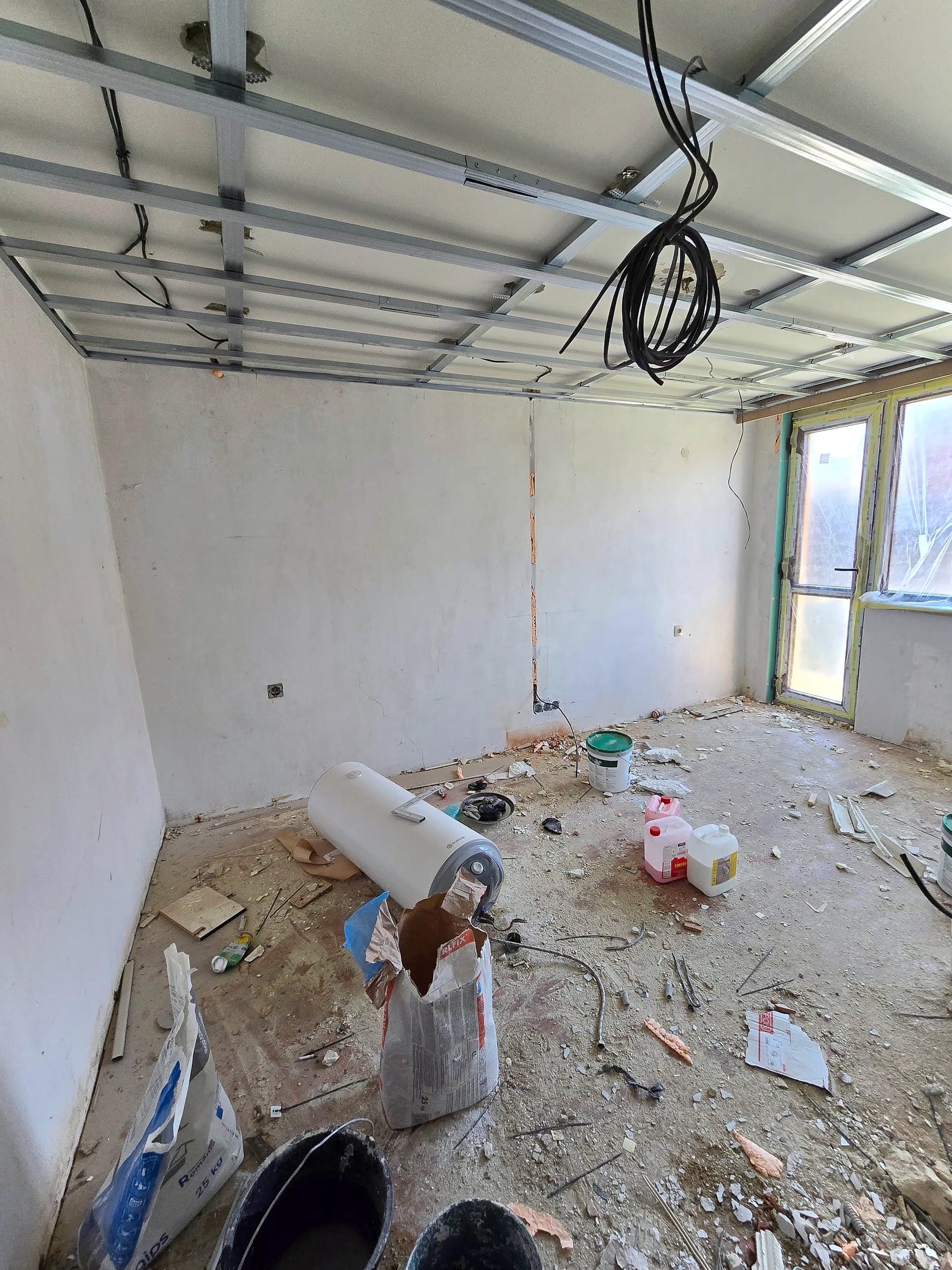
The pipes and wiring come after the roof and before the plastering, because the pipes and cables run inside the walls and the floor. The chases are cut before the new plaster and skim coat, and the new pipes are pressure-tested before they are closed into the wall.
In an old house, all three are often replaced: the water pipes, the drains and the electrical wiring. Typical finds are galvanised pipes rusted on the inside and a fuse box with old fuses instead of circuit breakers. This is also the time to make the openings through the external walls – for example for the drains, the power supply and the air conditioners – otherwise the already insulated façade has to be drilled through later.
The drains continue across the garden – to the street sewer or to the septic tank. The trench and the pipes there are done before the paving around the house; in the price list this is ‘Digging and laying plumbing pipes’ – €48.32 per linear metre for labour.
An electrical point – a socket, a switch or a lighting point – is €32.21 for labour, and the chase to it in a brick wall is €6.98 per linear metre for labour. How many points the house will have depends on the rooms and the appliances, and it is agreed at the site visit.
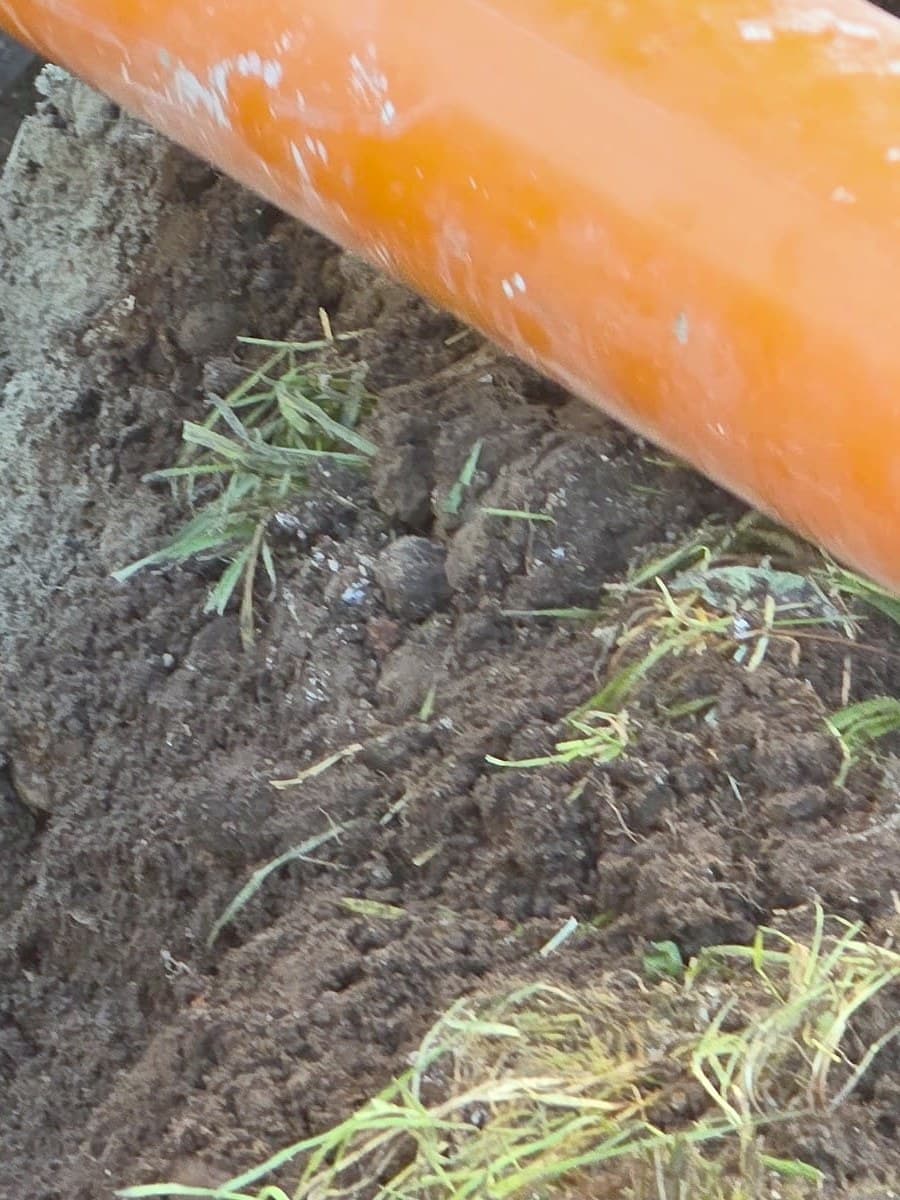 Garden
 Cables
4. Thermal insulation and windows
The windows are replaced before the insulation and before the interior plastering. Outside, the insulation around the new window is carried round into the window reveals; inside, the reveals are plastered and skim coated; and the new external window sills are ordered to suit the thickness of the insulation. If the windows are replaced later, everything around them has to be done a second time.
New windows are airtight and stop the draughts through which the old house used to ventilate itself. After the replacement, the rooms need airing regularly; otherwise the moisture in the air condenses on the coldest spots – the corners and the window reveals.
The façade is insulated when the walls are dry. If the damp comes from the ground or from a leak, the cause is dealt with first: insulation on a damp wall traps the water inside it. Façade work is done in the dry, warm part of the year, so it sometimes runs in parallel with the interior work. The pros and cons of external insulation are in the article on external wall insulation.
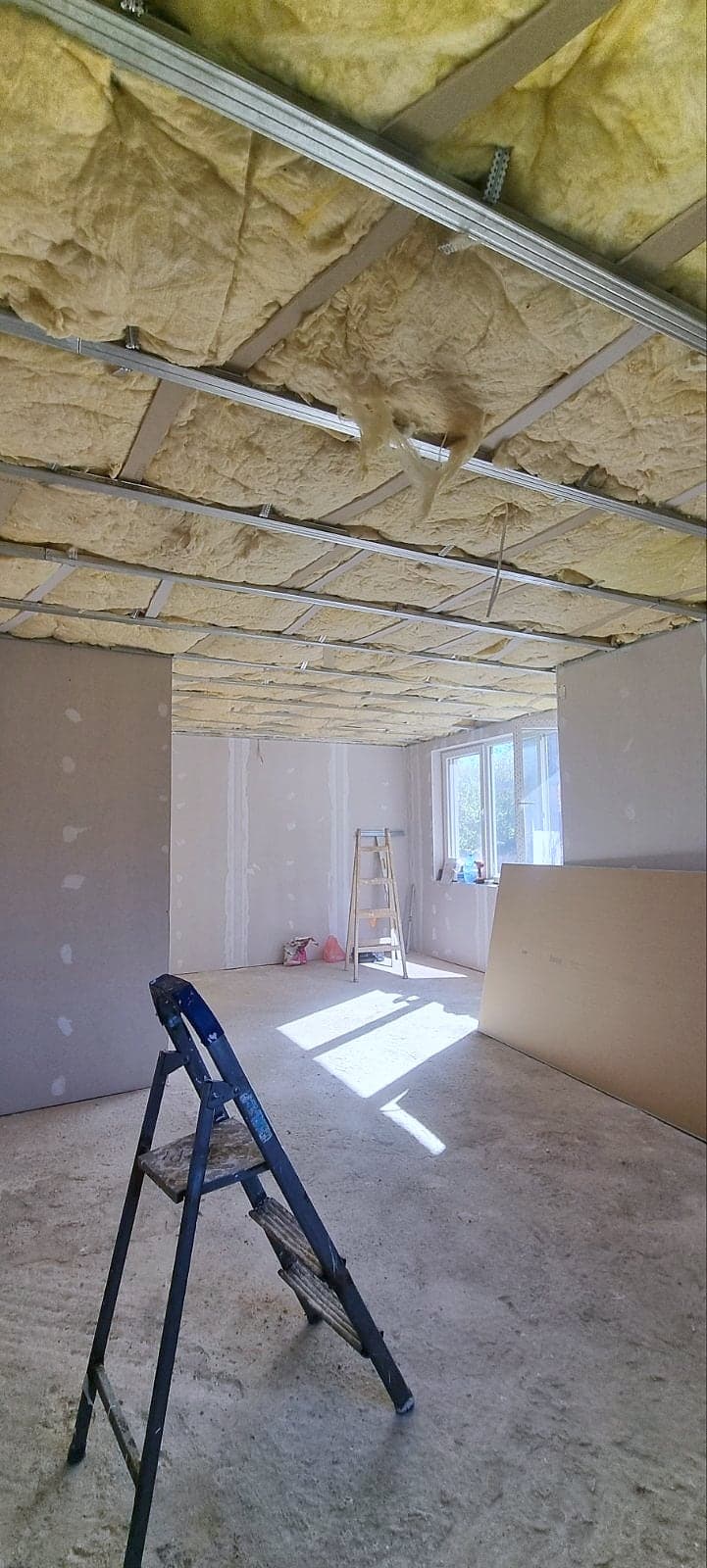
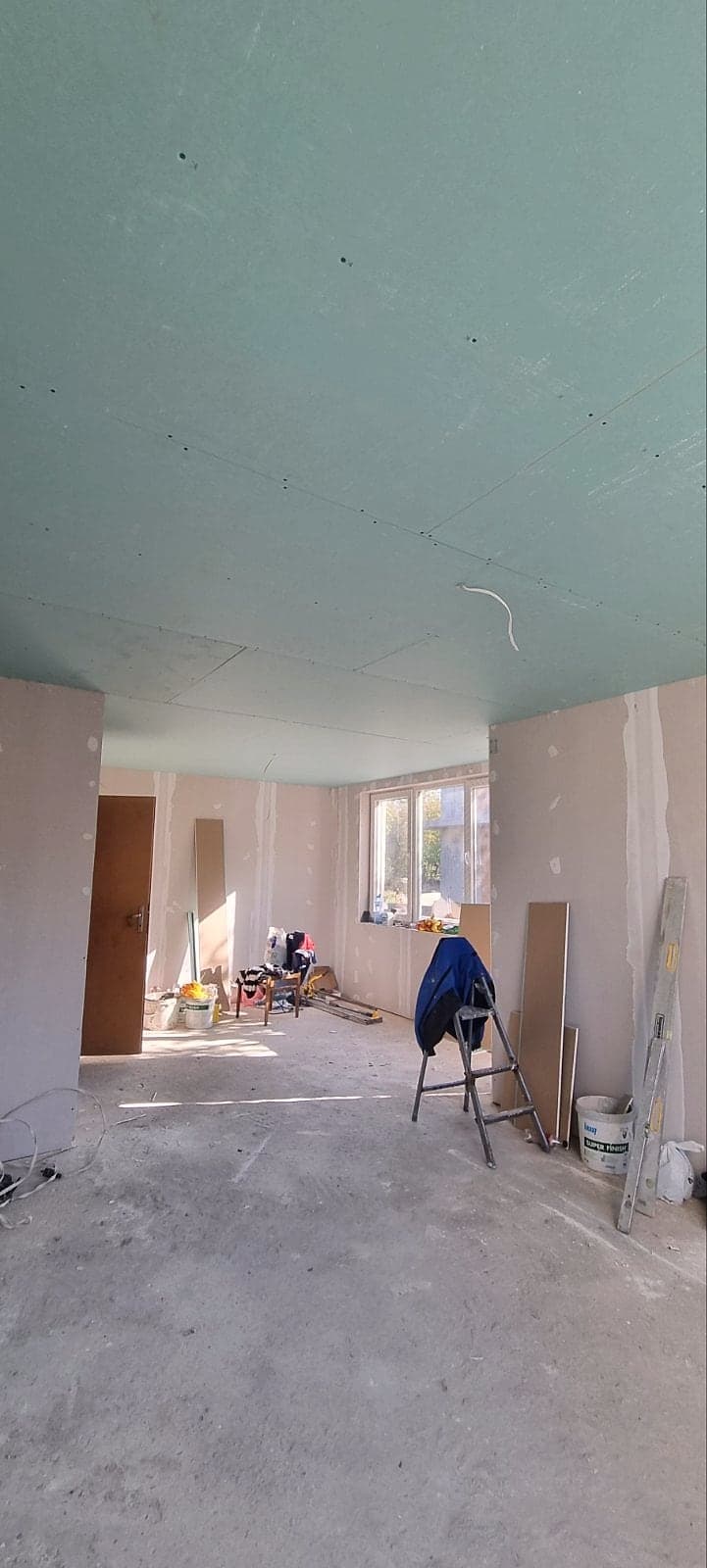
A house also loses heat through the ceiling. When there is a cold roof space above the rooms, mineral wool is laid above the suspended ceiling – as in the house in Bankya in the photos.
 Mineral wool
 Ceiling
5. Interior work
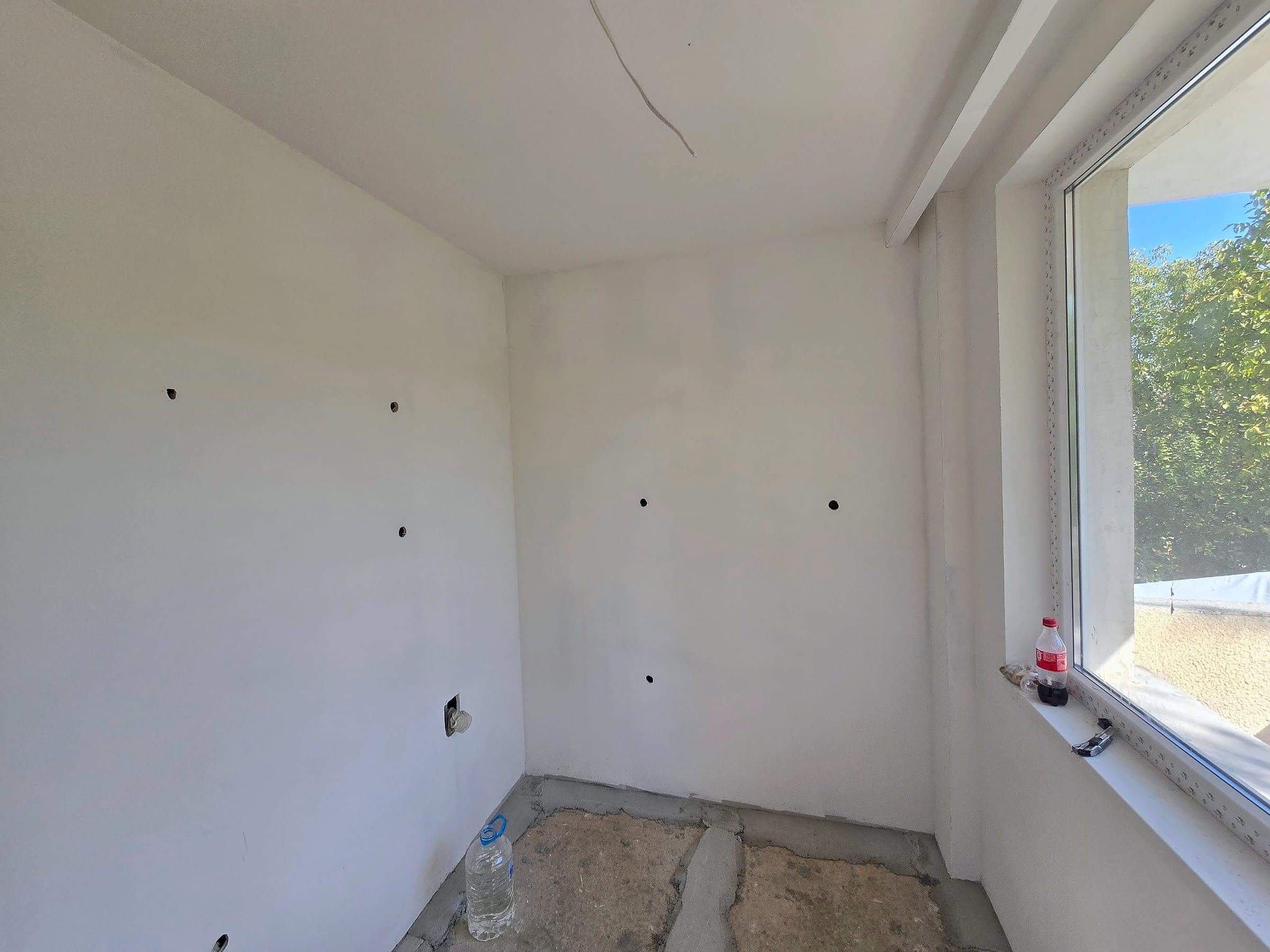
Inside, the order runs from the rough work to the finishing. First come the new walls, plaster, screed and suspended ceilings, then the skim coat, tiles and paint, and finally the floor coverings, the doors and the final fitting of switches, sockets and lights. The plaster and the screed must dry before they are covered with the next layer.
Old walls hide surprises. The plaster has often come away from the wall – it sounds hollow when tapped and crumbles – and then it is hacked off down to the masonry and replaced. The labour for such a wall is more than twice as high as for a wall with sound plaster:
| Condition of the walls | Area | Labour price |
|---|---|---|
| Sound plaster: ‘Walls: primer + 3 skim coats + paint (full process)’ – €27.92 per m² | 38 m² | €1,060.96 |
| Hollow plaster: hacking off, new lime-cement plaster and the same full process – €59.39 per m² | 38 m² | €2,256.82 |
The floor is the second surprise. The old floorboards can sometimes be kept: ‘Sanding and oiling an existing floor – floorboards’ – €26.84 per m² for labour. If the boards or the joists under them have rotted, removing the floorboards is €16.00 per m² for labour, and what to do with the base beneath them is decided at the site visit.
New partition walls and ceilings in old houses are often made of plasterboard – the prices by type are in the article on plasterboard work. The bathroom and the kitchen are separate budgets: a complete bathroom renovation usually costs €4,000–9,000 including labour and construction materials.
Old plaster, tiles and floors produce a lot of waste. It is carried out every day, and how many dump-truck trips to landfill will be needed is assessed at the site visit.
 Before
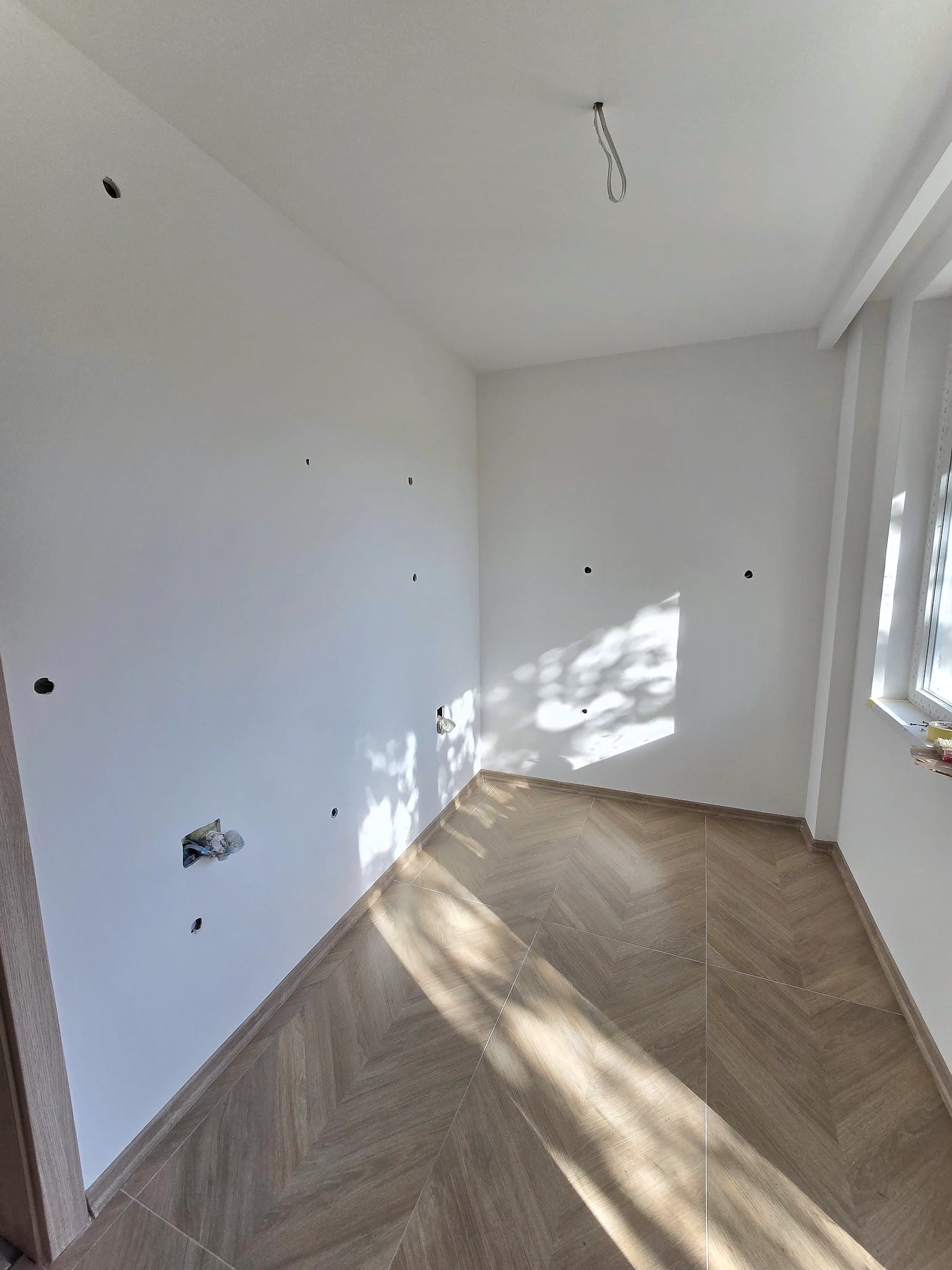 After
How to plan the budget
The price for the whole house is the sum of the stages it actually needs, which is why we do not price it per m². In the written quote, every task has a quantity and a price, and the construction materials – adhesives, waterproofing, screeds, profiles, plasterboard, mesh, primers – are on a separate line.
Leave a reserve. With an old house, some of the work only becomes visible once the roof tiles, the plaster or the floor come off. Such additional work is described and priced, and it starts only after your written approval.
You choose and buy the sanitaryware, the drains and the tiles yourself, while the doors, floor coverings and kitchen are agreed in the quote. Choose them in good time: the water connections depend on the sanitaryware, and the points for the appliances depend on the kitchen.
Frequently asked questions
Can the renovation be done in stages?
Yes, as long as the order is kept: roof and rainwater drainage, pipes and wiring, thermal insulation and windows, interior work. The reverse costs more – new paint under an old roof, or new plaster before the new cables, ends up being done twice. If there is a pause between stages, make the house weathertight from above first.
Can we live in the house during the renovation?
No. While the work is going on, the house is not fit to live in – there is demolition, dust and new installations, and the water and electricity are cut off for periods. The timeline is written in the quote and in the contract, so you know in advance how long to plan for.
When is the best time to renovate the roof?
In the dry part of the year – usually from spring to autumn, when the forecast shows no prolonged rain. With an old house, this also shapes the schedule: when the roof is finished before the cold weather, the interior work can carry on under it through the winter.
What warranty do I get?
A written one: 72 months for the roof waterproofing, 72 months for the plumbing and electrical installations, and 24 months for the rest of the renovation.
How long does it take to renovate an old house?
It depends on the stages, the floor area and the weather, because the roof and the façade are done in the dry season. The stage-by-stage schedule – when each stage starts and finishes – is written into the quote after the site visit.
If you have an old house and do not know where to start, book a site visit. The site visit is free, we reply to enquiries within 24 hours, and after the visit you receive a written quote broken down by stage. How we work on houses – from the site visit to the handover – is described on the house renovation and reconstruction page. We work in Sofia and within about 80 km of it, as well as in Varna, Burgas, Plovdiv, Pleven and Blagoevgrad.
More articles
All articles Houses
12 min read
Renovating a heritage-listed house: how to breathe life into the past
Renovating a heritage-listed house is more than a building project – it is a delicate mission between the past and the present. These homes are not just properties – they are witnesses to their time, guardians of an architectural spirit and of a cultural memory that deserves to be preserved. But behind every restoration lies not only inspiration but also responsibility.
Read Houses
12 min read
How long does a major house renovation take?
Renovating a house is one of the most serious undertakings a property owner can face. Whether you are buying an old house to do up or want to modernise the family home, the question ‘How long will the renovation take?’ always comes first. In this article we look in detail at how long a major house renovation takes, what the stages are, which factors affect the timescale and how to speed up the process without sacrificing quality.
Read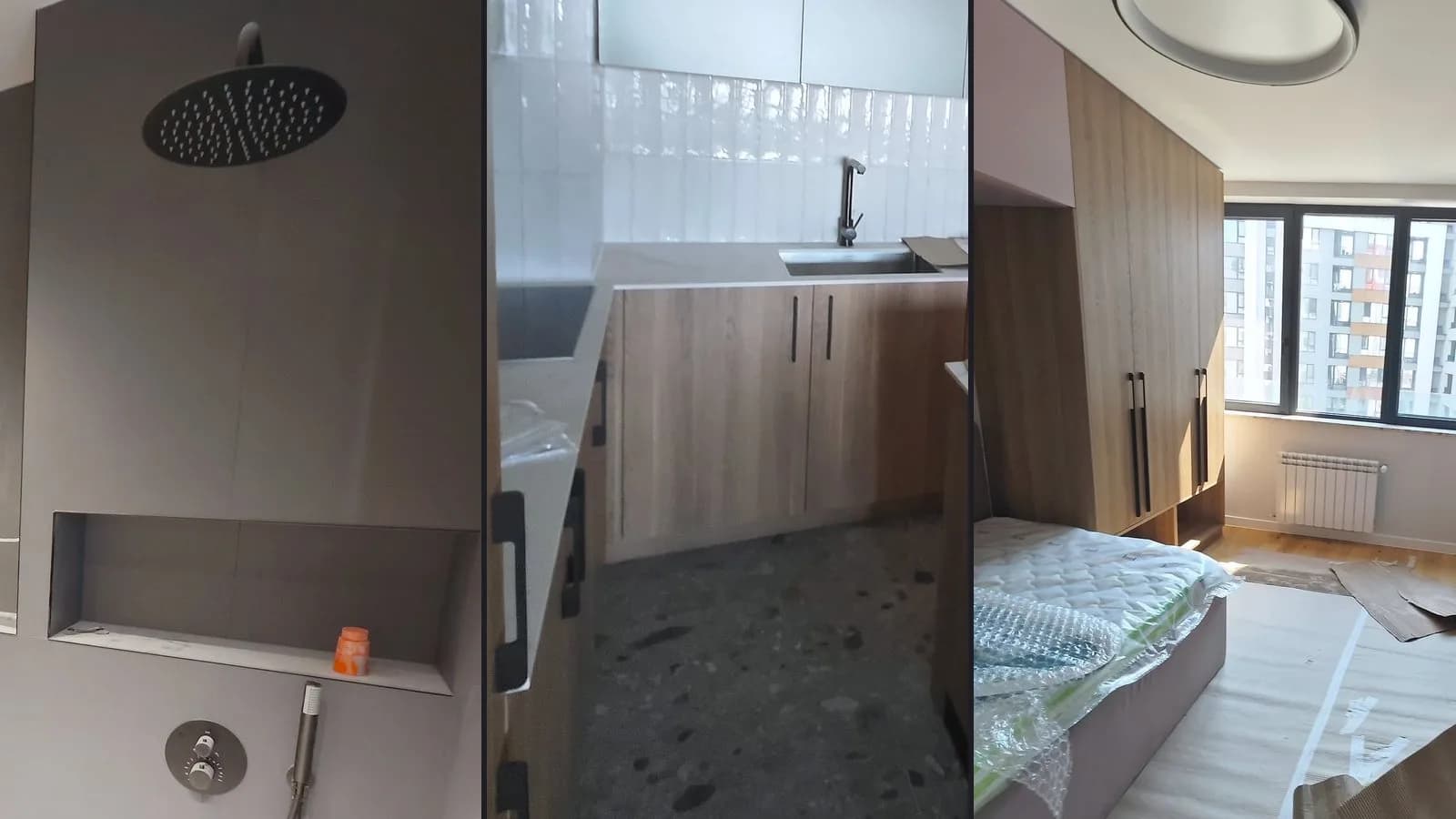 Projects
8 min read
New-build apartment: from bare walls to turnkey – the stages in photos
A new-build apartment renovation in photos: a shower niche, a concealed cistern, terrazzo-effect tiles in the hallway and kitchen and built-in wardrobes – and the stage by which each must be decided.
Read