PVC, aluminium or wood: which windows should you choose? Pros and cons
Choosing your window and door frames is one of the most important decisions when renovating or building a home, because windows and doors play a key role in comfort, energy efficiency and the look of the property. Good-quality frames not only improve thermal insulation, saving on heating and cooling costs, but also improve security…
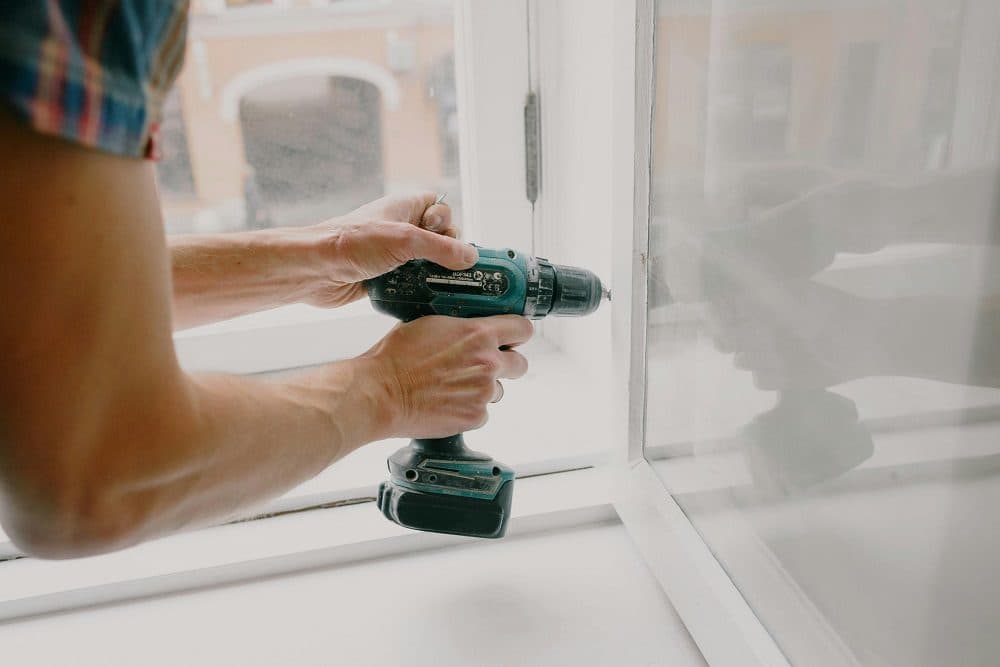
Choosing your window and door frames is one of the most important decisions when renovating or building a home, because windows and doors play a key role in comfort, energy efficiency and the look of the property. Good-quality frames not only improve thermal insulation, saving on heating and cooling costs, but also improve security and give the interior and exterior a finished look. The right material can extend the life of your windows and reduce the need for maintenance. Three main materials dominate the market – PVC, aluminium and wood – each with its own advantages and disadvantages. This article will help you understand their characteristics so that you can make an informed choice that suits your budget, style and needs.
Why does the choice of frame material matter?
Window and door joinery – the frames of your windows and doors – underpins both how they work and how they look in your home. It does three main jobs: it provides thermal and sound insulation, it protects against the elements such as wind and rain, and it contributes to the visual style of the building. The choice of material – PVC, aluminium or wood – has a direct effect on all of these. The material determines the price: PVC is usually the most affordable, while wood can be more expensive. Durability varies too: aluminium resists corrosion, whereas wood needs regular maintenance to stand up to moisture. Maintenance is another key factor – PVC needs almost no care, unlike wood, which may need repainting. The climate, the location and the style of the home also play a part: in coastal areas aluminium is preferred for its resilience, while wood suits traditional homes. Choosing the material means balancing function, budget and looks, which makes it a critical decision in any renovation.
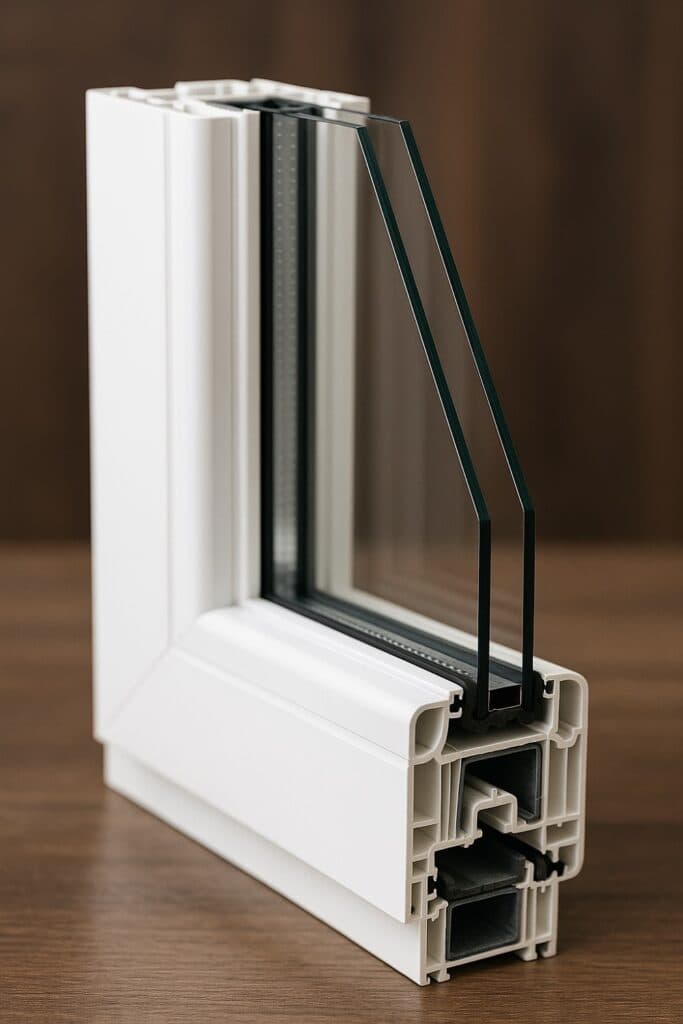
PVC windows: pros and cons
PVC (polyvinyl chloride) windows are a popular choice in Bulgaria thanks to their affordability and practicality. The material has established itself on the market because of its balance of price and quality, but it also has limitations worth considering.
Pros
- High energy efficiency: PVC frames offer excellent thermal insulation. PVC windows with double or triple glazing can achieve a U-value of 0.30 or lower, reducing heat loss and saving 15–20% on heating and cooling costs. In Bulgaria, that can mean savings of BGN 100–200 a year on the energy bills of a 70 m² apartment.
- Affordable price: PVC is among the cheapest options. For example, a single-casement PVC window (120×120 cm) with double glazing costs between BGN 270 and BGN 540, compared with wooden frames, which often exceed BGN 720. A standard opening window with triple glazing costs between BGN 300 and BGN 500.
- Low maintenance: PVC needs no painting or special treatment. Cleaning with soap and water is enough, which makes it ideal for city homes where there is little time for upkeep.
- Resistance to moisture and corrosion: PVC stands up to rain, damp and salty air, which makes it suitable for humid regions such as the Black Sea coast. PVC does not rot or corrode, unlike wood.
Cons
- Limited colour and design options: PVC offers fewer possibilities for customisation than wood or aluminium. The standard colours are white or beige, and wood-effect finishes (such as golden oak) add BGN 70–90 to the cost of the profile.
- Less strength in extreme conditions: PVC is less resistant to strong winds or hurricanes, especially in large windows. The frames can warp in extreme conditions, which is a problem in regions with a stormy climate.
- Environmental concerns: Producing PVC takes considerable energy and chemicals, which makes it less environmentally friendly. It is also harder to recycle than aluminium, which may worry eco-conscious customers.
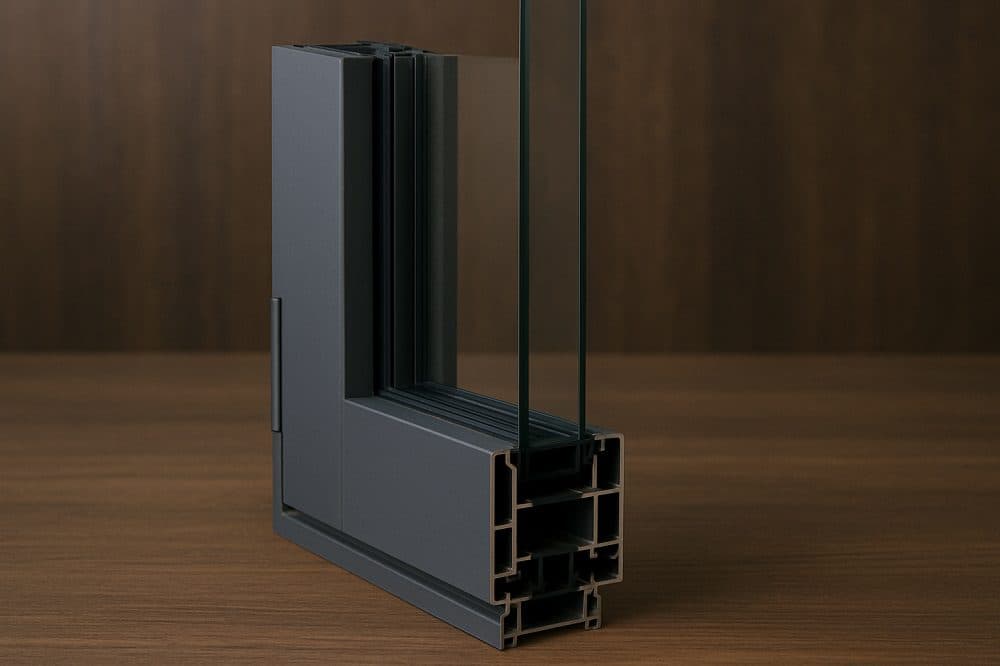
Aluminium windows: pros and cons
Aluminium frames are a favourite for contemporary homes and commercial buildings thanks to their strength and modern look. The material offers unique advantages, but it also has drawbacks worth considering.
Pros
- Exceptional strength and durability: Aluminium is an extremely strong material, suitable for large windows and sliding doors. Aluminium frames can withstand considerable loads, which makes them ideal for panoramic windows. For example, an aluminium profile for a 200×150 cm window can withstand winds of up to 200 km/h without deforming.
- Modern, elegant design: Aluminium frames are slim, which maximises the glazed area and gives a contemporary look. Aluminium is the preferred choice for minimalist and industrial designs, often found in luxury villas and offices in Sofia.
- Resistance to corrosion and weathering: Aluminium does not rust and stands up to rain, UV rays and salty air, which makes it suitable for coastal areas such as Varna or Burgas. With a powder coating, aluminium frames keep their appearance for decades.
- Recyclability: Aluminium is 100% recyclable, which makes it an environmentally friendly choice.
Cons
- Lower thermal insulation: Without a thermal break, aluminium frames have a higher U-value (around 0.6), which makes them less efficient than PVC (U-value 0.3). A thermal break can improve the insulation, but it raises the price by 20–30%. For example, an aluminium window with a thermal break costs around BGN 900–1,200 for 120×120 cm.
- Higher price: Aluminium frames are more expensive than PVC. A standard aluminium window (120×120 cm) costs between BGN 540 and BGN 900, while a PVC equivalent costs BGN 270–540. This can be an obstacle for owners on a limited budget.
- Potential condensation: If they are installed incorrectly, aluminium frames can cause condensation, especially in cold climates. That is why we recommend quality installation and seals. Our team of window fitters has many years of experience in fitting and removing every type of window and door frame, in all shapes and sizes. We are just a phone call away.
Wooden windows: pros and cons
Wooden frames are the traditional choice, valued for their looks and warmth, which makes them a favourite for luxury and historic homes. For all their advantages, they demand more care and a bigger investment than the other materials.
Pros
- Classic, warm aesthetic: Wooden frames give a unique, natural look that is ideal for traditional or luxury homes. Wood adds warmth and character, especially in village houses or historic buildings. For example, oak or pine windows bring authenticity to restored villas in the Rhodopes or old townhouses in Plovdiv.
- Excellent thermal insulation: When properly treated, wood offers good insulating properties. Wooden frames with double glazing can achieve a U-value of around 0.35, comparable with PVC, which cuts heating costs by 10–15% a year (around BGN 80–150 for a 70 m² apartment).
- Scope for customisation: Wood can be painted or varnished in a range of colours and finishes, so it can be fully matched to the interior and exterior. This makes it the preferred option for one-off design projects, such as restoring historic facades.
Cons
- High maintenance: Wood needs regular upkeep, including repainting or revarnishing every 3–5 years, to protect it from the weather. Skipping maintenance can lead to cracking or warping. Renewing the varnish or paint costs around BGN 50–100 per window.
- Higher price: Wooden frames are more expensive than PVC. A standard wooden window (120×120 cm) costs between BGN 720 and BGN 1,200, compared with BGN 270–540 for PVC. In Bulgaria, high-end wooden frames (mahogany, for example) can reach BGN 1,500 per window.
- Vulnerability to moisture and insects: Without the right treatment, wood is prone to rot, especially in humid regions such as the Black Sea coast. Untreated wood can be damaged by termites or damp, which means extra spending on protective coatings (around BGN 100–200 per application).
Comparing the materials: how to choose your windows
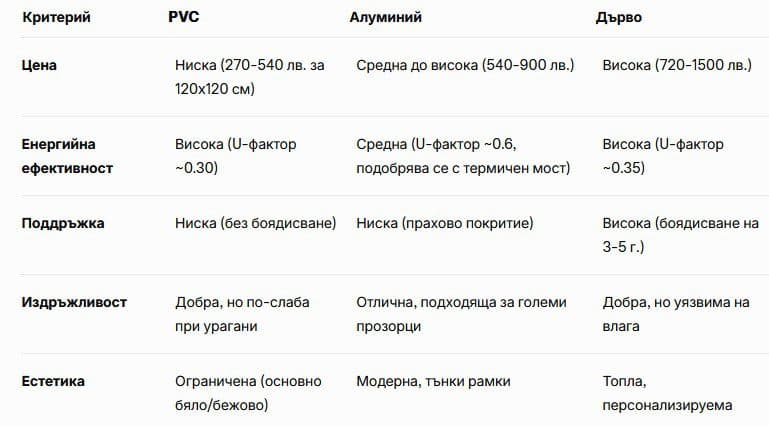
The right choice of frames comes down to balancing budget, function and looks. PVC, aluminium and wood each offer different advantages – and different challenges. A comparison table is shown below.
Conclusion
Choosing your windows is an important decision that affects the comfort, energy efficiency and look of your home. PVC frames are affordable (BGN 270–540 for 120×120 cm), with high thermal insulation and low maintenance, but limited design options. Aluminium (BGN 540–900) offers strength and a modern look, ideal for large windows, but needs a thermal break for better insulation. Wood (BGN 720–1,500) impresses with its classic aesthetic and good insulation, but needs regular maintenance. The best choice depends on your budget, your climate and the style of your home. Make an informed choice by weighing up your needs and consulting professionals. Contact our team for a free consultation or a quote for installation, and get quality windows that will improve your home for years to come!
More articles
All articles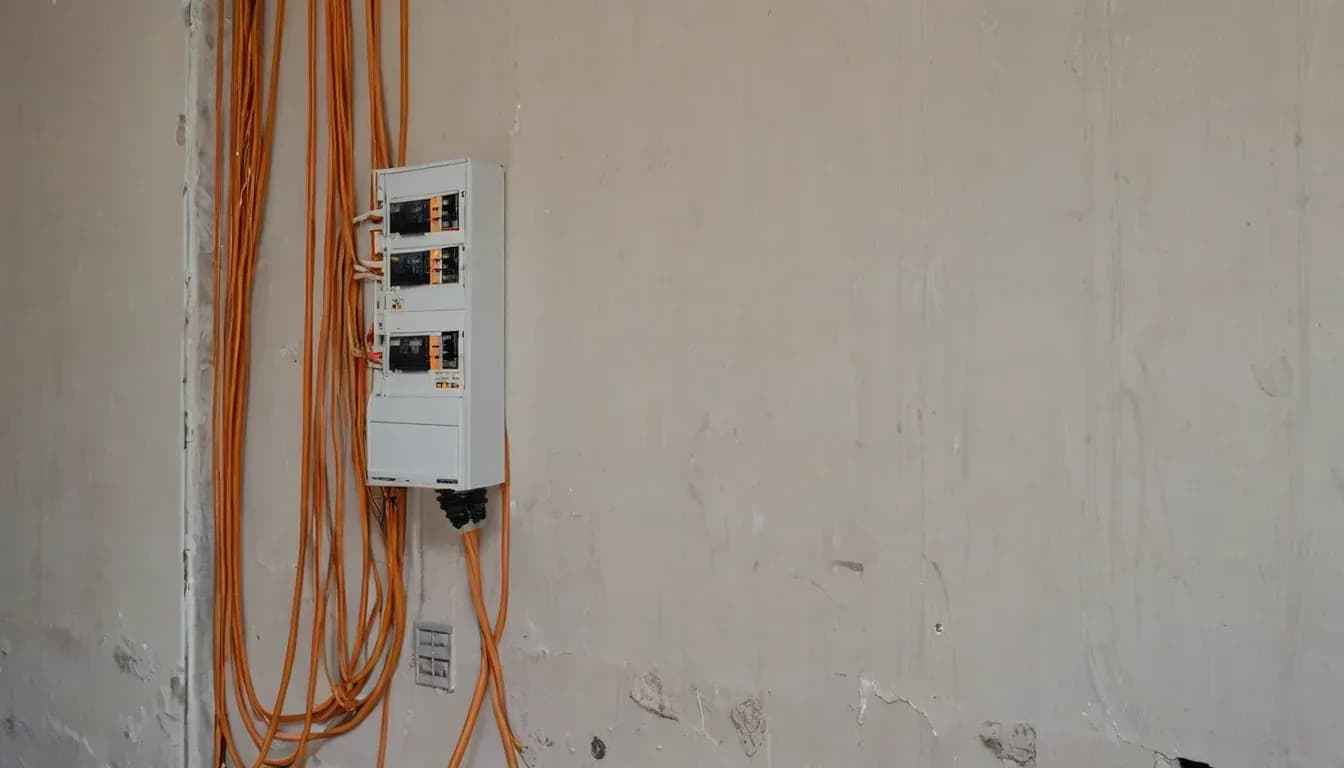 Plumbing & electrics
4 min read
Rewiring an old apartment: when it’s time and how it’s done
Aluminium wiring, old fuses and sockets that heat up – when old electrical wiring becomes a risk, what replacing it involves, and why it is done before skim coating, not after.
Read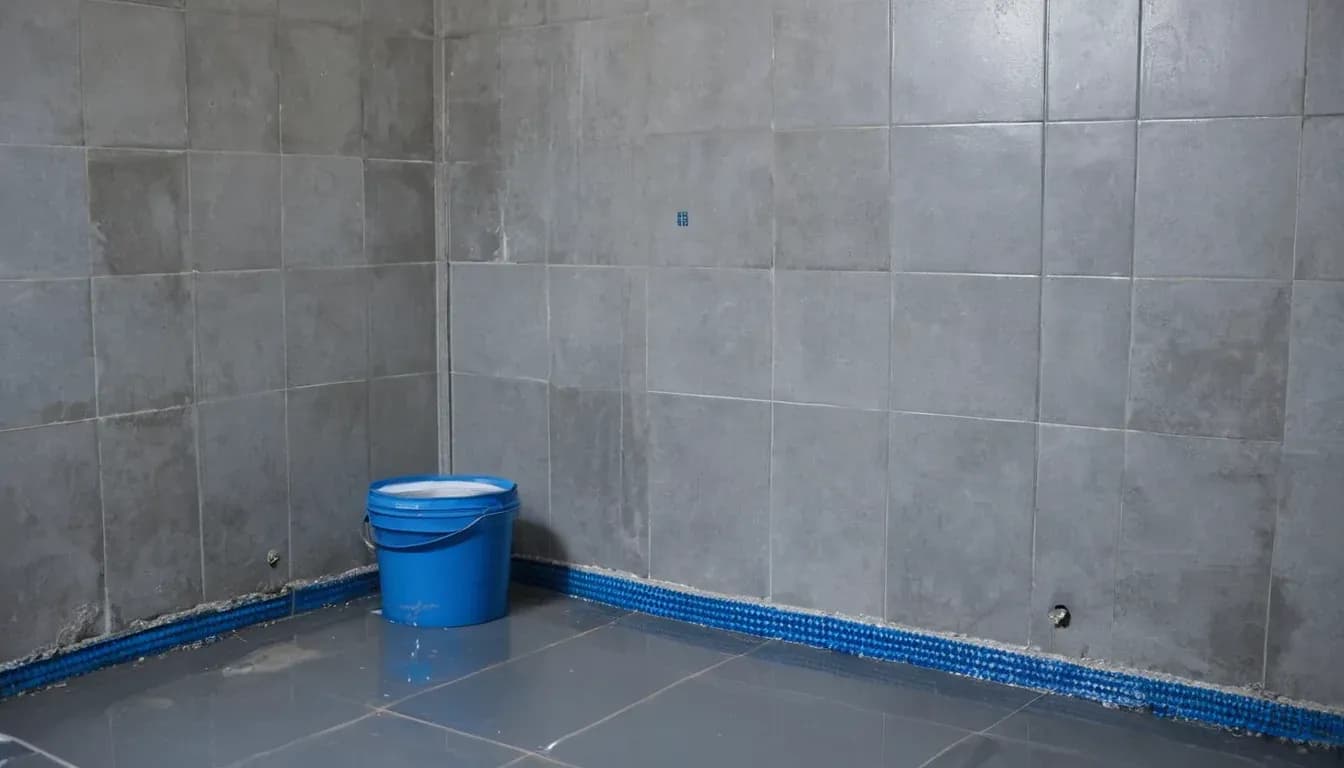 Bathroom
3 min read
Bathroom waterproofing: the invisible layer that protects you and your neighbours
Exactly where waterproofing goes in a bathroom, which details make all the difference, and how it is tested before the tiles go on.
Read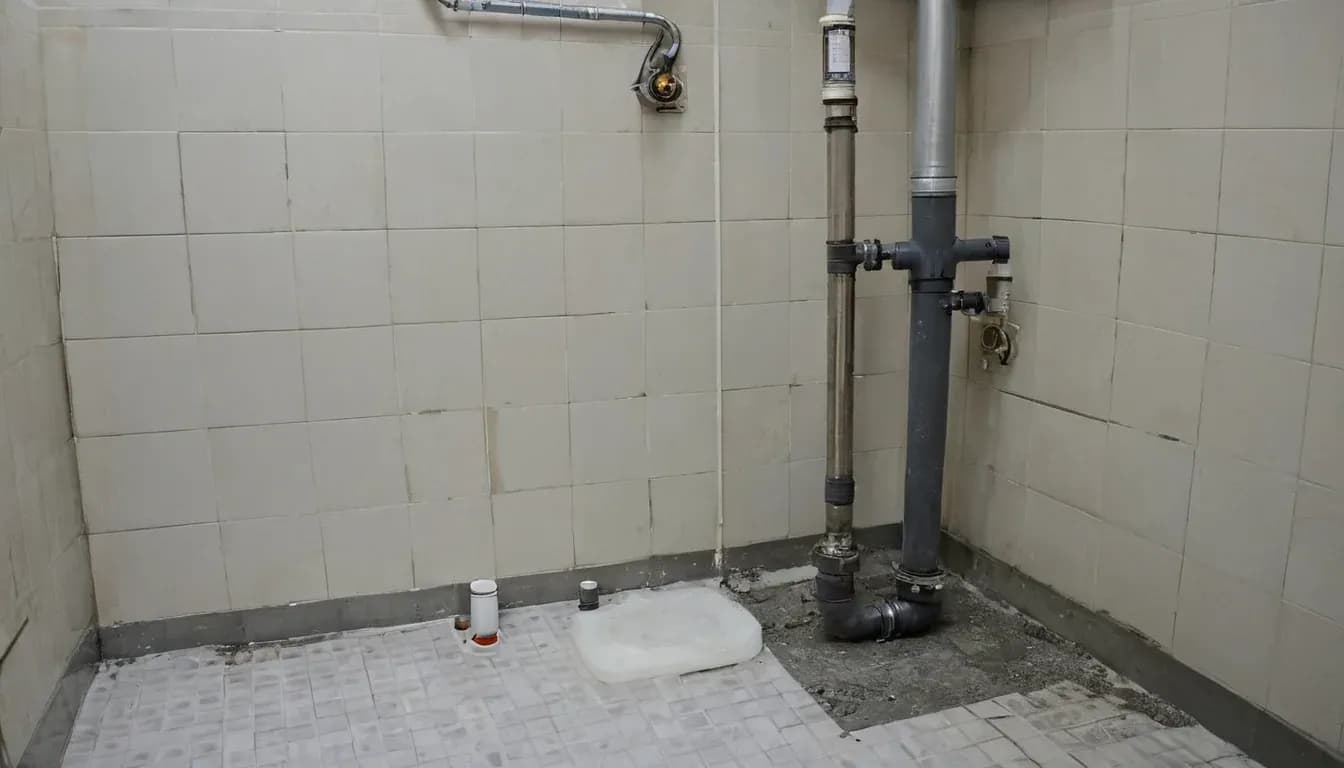 Plumbing & electrics
3 min read
Replacing the risers in an apartment block: how it’s organised and what to expect
Risers are a common part of the building, and replacing them affects every neighbour along the same vertical line of apartments. When it’s needed, how it’s agreed and how it goes without unnecessary stress.
Read