Concrete repair cost: €60 per m² and how it is done
Concrete repair with us costs €60 per m², and the exact amount depends on how deep the damage goes, the reinforcement, the area and access. Where concrete breaks down, how it is repaired and when an engineer comes first.
Free site visit and quote
Leave your phone – we will call you
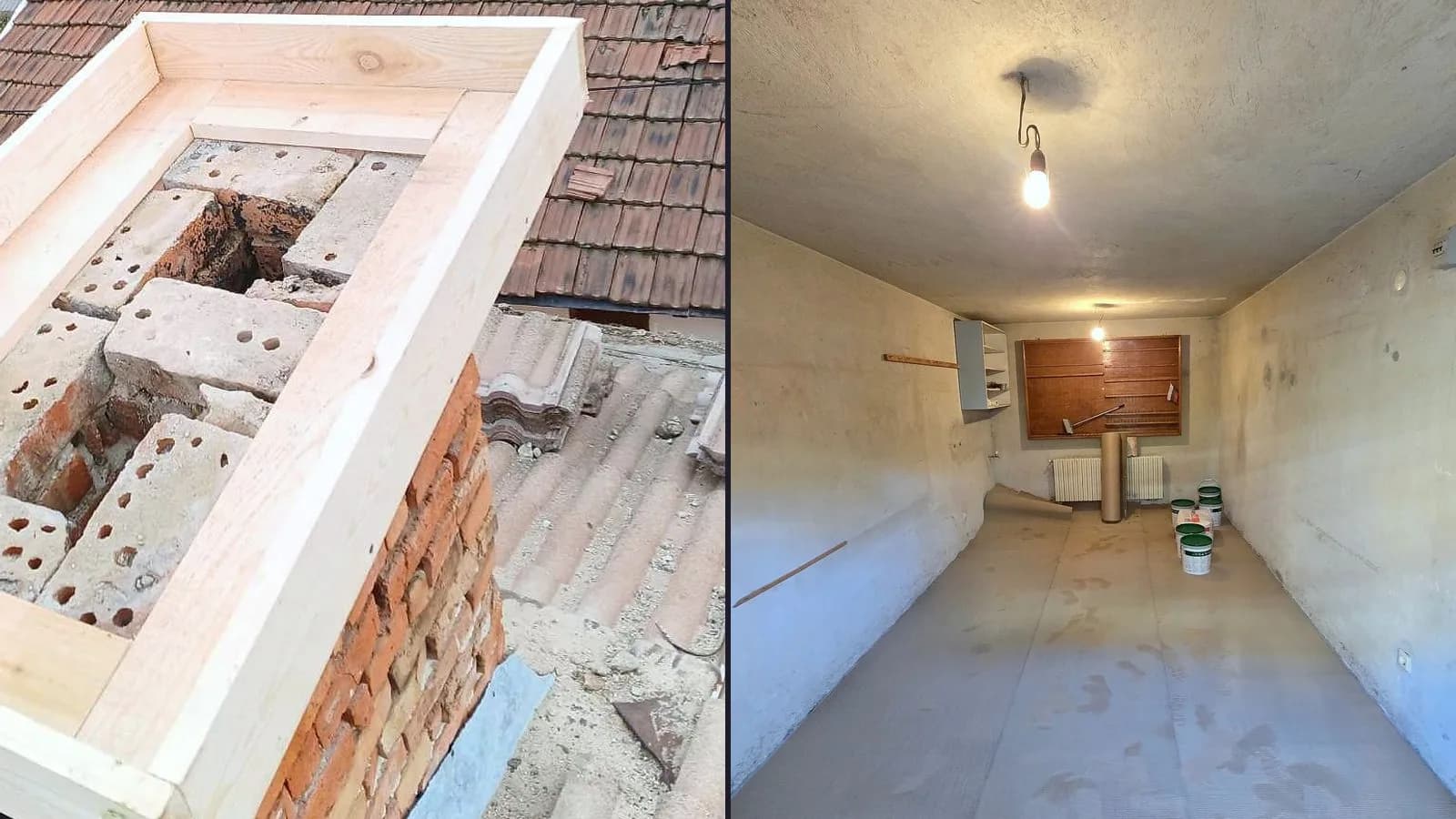
Concrete repair with us costs €60 per m². The exact amount depends on how deep the damage goes, whether the reinforcement is exposed and rusting, the area and the access – whether scaffolding is needed. It is in the written quote you get after the free site visit.
Concrete repairs cover balcony slabs and their edges, stairs and landings, columns, parapets and ledges, and slabs in garages and basements – concrete that water, frost and salt can reach. The signs are spalled pieces, rust stains, exposed reinforcement, cracks, crumbling edges and water dripping from the underside of a balcony.
A repair is not just patching over the top: loose concrete is removed down to sound concrete, the reinforcement is cleaned and protected, and the shape is rebuilt with repair mortar in layers.
Price: €60 per m²
Our price for concrete repair is €60 per m². The amount for your job depends on four things:
- The depth of the damage – whether only the surface is crumbling, or the concrete is hollow and cracked deeper down.
- The reinforcement – whether it is exposed and how badly it has rusted.
- The area to be repaired – the underside of the slab, the edges, the steps.
- Access – the floor, the scaffolding and whether people walk underneath and need to be protected.
If more damaged concrete turns up during the work, the extra work is done only with your written consent. The work around the repair is priced on our price list:
| Price-list item | Price | Includes |
|---|---|---|
| Erecting/dismantling scaffolding | €18.00 per m² | labour |
| Fencing off and securing the site | €6.50 per lin. m | labour |
| Concrete bonding primer – on smooth concrete, before render | €3.00 per m² | labour |
| Applying facade render | €16.11 per m² | labour |
| Renovating a railing + paint | €26.84 per lin. m | labour |
Where concrete needs repair
In apartment buildings and houses, these are:
- Balcony slabs – the underside, the front edge and the corners. The slab projects in front of the facade, and rain and frost reach it from above, below and the sides.
- Stairs and landings – especially external ones, where water stands, and the edges of the steps.
- Columns and beams – outdoors, in garages and in basements.
- Parapets, upstands, ledges and canopies over entrances.
- Slabs in garages and basements – ceilings that water comes through, and floors where cars leave water and salt.
In houses, add concrete steps in the garden, terraces above rooms and concrete ring beams. How the work on an old house is ordered is in the article on renovating an old house.
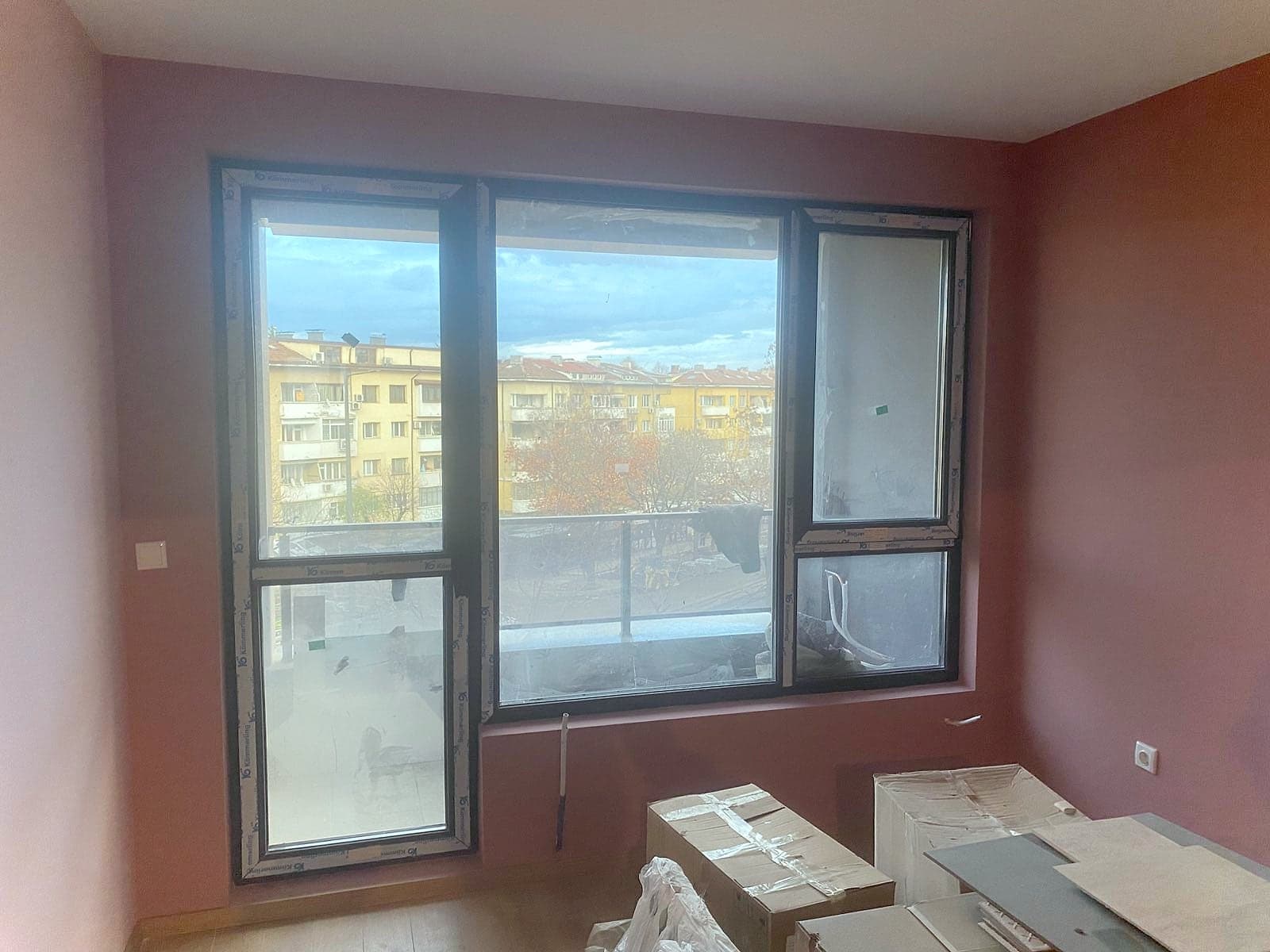
Signs that concrete is breaking down
- Spalled pieces and crumbling edges – on the front edge of a balcony, on steps, on the corners of columns.
- Rust stains and streaks – the reinforcement underneath is rusting.
- Exposed reinforcement, often with flakes of rust.
- Cracks – especially along the bars and ones that are getting wider.
- A hollow sound when tapped – the concrete has come away, even if it has not fallen yet.
- Water dripping from the underside of a balcony, damp patches and white deposits – water is passing through the slab and carrying salts out of the concrete.
If pieces of concrete are falling above a pavement or an entrance, the area below is fenced off straight away, before the repair, and the building manager is informed.
Why concrete breaks down
There are three causes, and they usually work together.
Water
Concrete has pores and, over the years, cracks. Water gets in where it stands: on a balcony that does not slope outwards, around the railing posts, along an edge with no drip groove or drip profile – without one, water does not drip off the edge but runs back under the slab.
Rusting reinforcement
Steel in concrete does not rust as long as the concrete around it is dense and alkaline. Over the years, carbon dioxide from the air works its way into the concrete and this protection weakens, and de-icing salt breaks it down too. The thinner the concrete over the reinforcement, the sooner water and air reach it.
Rust takes up more space than the steel it formed from: the bar swells, cracks the concrete around it and pushes pieces off. That is where the rust stains, the cracks along the bars and the spalled edges come from.
Freezing
Water in the pores and cracks freezes and expands, the cracks grow, and at the thaw more water gets in – every winter. So a repair has two parts: rebuilding the concrete and stopping the water. Otherwise the rust comes back, even under the new mortar.
How concrete is repaired
The order is the same for a balcony, a staircase or a column:
- Site visit. We tap the concrete for hollow spots and check how deep the damage goes, whether the reinforcement is exposed and how badly it has rusted. If there are signs that the load-bearing capacity is affected, a structural engineer comes first.
- Safety. The area below is fenced off and, if needed, scaffolding goes up.
- Removing loose concrete. Everything that crumbles, sounds hollow or is coming away is broken out down to sound concrete, and around exposed reinforcement also behind the bars, so that they can be cleaned on all sides. The edges of the patch are cut square rather than tapered, so that there is no thin edge of new mortar to break off.
- Cleaning the reinforcement – with a wire brush or an abrasive tool, down to clean metal. If a bar has thinned, the engineer says whether a new one is added next to it.
- Corrosion protection – the cleaned bars are coated before they can rust again.
- Bonding primer – the base is cleaned of dust and primed or dampened as the manufacturer of the repair mortar specifies.
- Repair mortar in layers – as thick as the manufacturer allows. An edge with a large piece missing is formed with formwork. The fresh mortar is protected from sun, wind and frost.
- Finishing – smoothing, primer and paint or render.
- Keeping the water out – waterproofing on top of the balcony, a fall outwards, a drip edge and sealing around the railing posts. Otherwise the damage comes back.
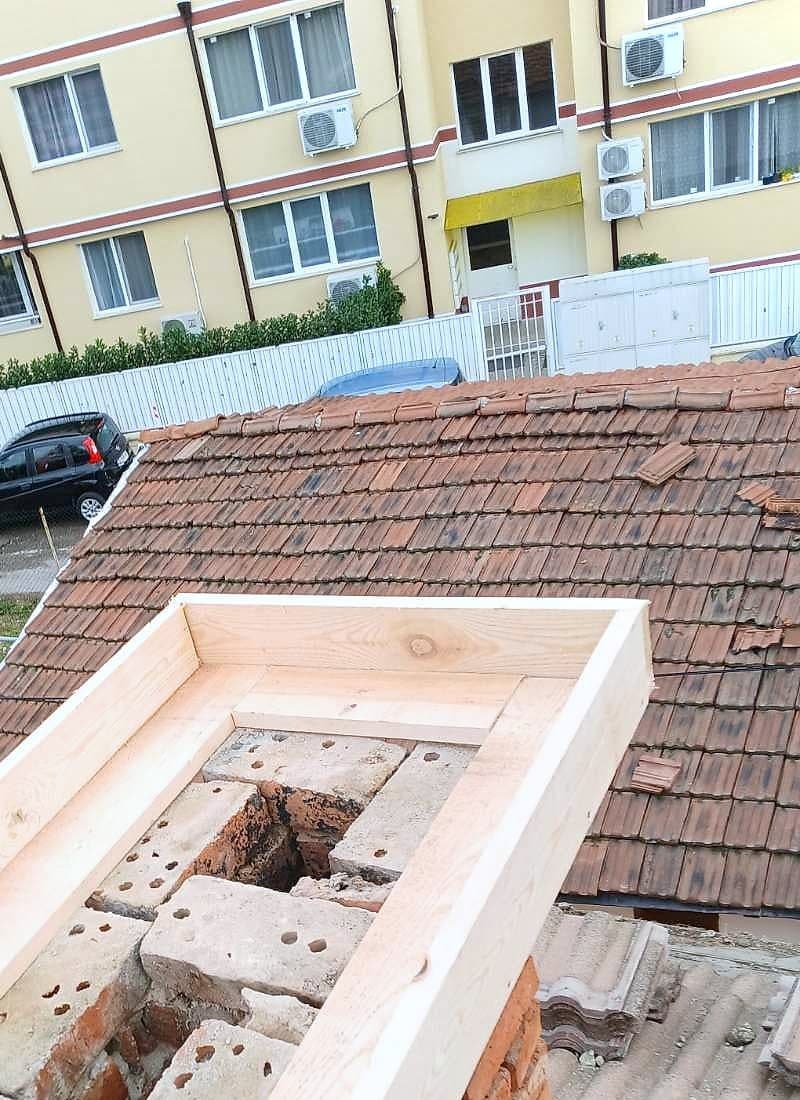
Breaking out concrete is noisy: in an apartment block it is planned for the hours allowed by the municipality and the building, and there is a ready-made renovation notice for the neighbours.
Example: the underside and edges of a balcony
The calculation is for repairing the underside and edges of a balcony slab. We assume that:
- the balcony is 4.00 m long and projects 1.20 m in front of the facade, and the edge – the thickness of the slab – is 0.15 m;
- the whole underside and the front and side edges are repaired;
- the damage is not deep, the reinforcement has rusted but not thinned, and the price is our €60 per m²;
- the underside of the balcony is 3.00 m above the pavement below – hence scaffolding and a barrier.
The area is: underside 4.00 × 1.20 = 4.80 m², front edge 4.00 × 0.15 = 0.60 m² and side edges 2 × 1.20 × 0.15 = 0.36 m² – 5.76 m² in total. The scaffolding is 5.00 m wide and 4.00 m high, i.e. 20 m², and the barrier runs along three sides of it: 5.00 + 2 × 2.50 = 10 linear metres.
| Item | Calculation | Amount |
|---|---|---|
| Concrete repair | 5.76 m² × €60 | €345.60 |
| Erecting/dismantling scaffolding – labour | 20 m² × €18.00 | €360.00 |
| Fencing off and securing the site – labour | 10 lin. m × €6.50 | €65.00 |
| Total | €770.60 |
In total €345.60 + €360.00 + €65.00 = €770.60; the scaffolding and the barrier come to €360.00 + €65.00 = €425.00 for labour. Here the scaffolding costs slightly more than the repair itself: with a small patch at height, access is a large part of the amount. If the spot can be reached without scaffolding and nobody walks underneath, €345.60 remains.
If the water comes from above
If water is getting through the slab from above, repairing the underside is not enough: the old floor covering is broken out, waterproofing goes down and new tiles are laid. For the same balcony, the floor is 4.80 m², the waterproofing 5.40 m² including the upstand along the wall (4.00 × 0.15 = 0.60 m²), and the tape 4.00 linear metres in the corner along the wall:
| Item | Calculation | Amount for labour |
|---|---|---|
| Removing tiles (walls + floor) | 4.80 m² × €16.11 | €77.33 |
| Applying waterproofing (walls and floor) | 5.40 m² × €18.79 | €101.47 |
| Fitting waterproofing tape | 4.00 lin. m × €10.74 | €42.96 |
| Laying and grouting floor tiles | 4.80 m² × €48.32 | €231.94 |
| Total | €453.70 |
Labour comes to €77.33 + €101.47 + €42.96 + €231.94 = €453.70. Together with the repair underneath, the balcony comes to €770.60 + €453.70 = €1,224.30: €878.70 for labour on the price list (€360.00 + €65.00 + €453.70) and €345.60 for the concrete. If the base under the tiles is crumbling or does not slope outwards, it is redone – ‘Breaking out floor screed’ is €16.11 and ‘Mesh + floor screed up to 6 cm’ €29.53 per m² for labour. How waterproofing is laid is in the article on bathroom waterproofing, and the service is on the waterproofing page.
What the amounts do not include
- The structural engineer's opinion, the design and the permit, when they are needed – a separate line in the quote.
- Render or paint over the whole underside, if you want an even finish beyond the repaired patches, and repairs to the railing – using the items in the table at the start.
- Waste removal, if there is enough for a tipper lorry – ‘Taking construction waste to a disposal site (tipper lorry)’ is €110.00 per trip for labour; more in the article on construction waste.
- The drip groove or drip profile and the sealing around the railing posts – priced in the quote.
If you plan to glaze or convert the balcony after the repair, the calculation for that is in the article on balcony conversion.
When it is not a simple repair: the engineer comes first
A mortar repair rebuilds the concrete around the reinforcement and the shape of the element. Whether that is enough, or the element needs strengthening, is for a structural engineer to decide when:
- a load-bearing element – a column, a beam, a balcony slab – has badly thinned, broken or missing reinforcement;
- the cracks are deep, wide or growing over time;
- the balcony slab sags or tilts, or there is a crack where it leaves the wall;
- the concrete crumbles deep down, not just at the surface.
When an opinion, a design or a permit is needed, we arrange them; their cost is a separate line in the quote.
Routine repairs need no building permit (Art. 151(1), item 1 of the Spatial Development Act, ZUT) – repairs that do not affect the structure of the building (§ 5, item 43 of the Additional Provisions). The law calls the partial restoration or partial replacement of structural elements a major repair (§ 5, item 42), and a permit for a major repair of an existing building that affects the structure is issued after a survey (Art. 148(13)). The engineer and the municipality will tell you which applies to yours.
Concrete repairs in an apartment block: who decides
For a building where the floors, or parts of them, belong to different owners, the Property Act lists among the common parts the foundations, external walls, internal load-bearing walls, columns, lintels, slabs, stairs, landings and roofs (Art. 38(1)). Repairs to the common parts are carried out by decision of the general meeting of owners, and the costs are shared according to each owner's share in the common parts (Art. 48(1) and (3) of the Condominium Management Act, ZUES).
Balconies are not listed separately in Art. 38, but repairing the front edge and the underside of a balcony affects the facade, and the ZUES prohibits work on the common parts, including the facade, that impairs the architectural appearance, the load-bearing capacity or the stability of the structure (Art. 6(1), item 19). So before repairing a balcony in a block, talk to the building manager.
When pieces are falling, the repair may be urgent – the ZUES term for work to prevent the destruction of the building or its structural elements and to remedy damage that endangers life and health (§ 1, item 9 of the Additional Provisions). For an urgent repair, money from the ‘Repair and renovation’ fund is released immediately by decision of the manager (Art. 49(1)). If there is no money and the general meeting is not called or does not decide, the mayor of the municipality or district, once notified by the manager or by interested parties, carries out a check and issues an order requiring the owners to carry out the repair (Art. 49(2)–(4)).
More on the common parts is in our article on renovation rules in apartment buildings, and our work on facades, entrances and stairwells is on the facades and common areas page. This article is not legal advice: it sets out what the laws say.
Frequently asked questions
How much does concrete repair cost per m²?
With us, €60 per m². The exact amount depends on how deep the damage goes, the reinforcement, the area and the access. In the example, 5.76 m² of a balcony's underside and edges comes to €345.60, and with the scaffolding and the barrier €770.60.
Can it just be patched or painted over?
Not if the reinforcement is rusting. Paint or render hides the stains, but the rust carries on underneath, the bar swells and pushes off the new layer together with the concrete. That is why loose concrete is removed down to sound concrete and the reinforcement is cleaned and protected before the repair mortar goes on.
Is an engineer needed?
Not for every repair. A structural engineer has to look first when a load-bearing element has badly thinned or broken reinforcement, when the cracks are deep or growing, and when a balcony slab sags. Then the engineer decides whether a repair is enough or the element needs strengthening.
Who pays for repairing a balcony in an apartment block?
Slabs, columns, stairs and landings are common parts (Art. 38 of the Property Act), and the costs of repairing them are shared according to each owner's share, after a decision of the general meeting (Art. 48 of the ZUES). Balconies are not listed separately in the law, so ask the building manager about yours. If the manager does not call a general meeting within one month of you reporting that the repair is needed, you can carry out the necessary repair of the common parts at your own expense; the costs are reimbursed by decision of the general meeting or offset against your contributions (Art. 48(6) of the ZUES).
How long does a concrete repair last?
It depends above all on whether the water has been stopped. If it keeps getting in, the reinforcement rusts again and the damage comes back. That is why our quote also describes the protection – the waterproofing, the fall and the drip edge.
What is the warranty?
Our warranty is in writing, with a certificate: 24 months on the work.
If there is spalled concrete or rust on your balcony, stairs or columns, book a free site visit or call +359 888 802 618. We reply to enquiries within 3–4 hours, and the quote is in writing – with the tasks, quantities and prices. For a house, see also house renovation and reconstruction. For contracts signed by 31 December 2026, the whole quote – labour and the materials we supply – is 10% off. The RemontS brand has been working since 2019, with a full-time team and over 180 completed projects, in Sofia and up to 80 km around it.
More articles
All articles Process
9 min read
Construction waste removal: cost and how it is organised
What a dump-truck trip to landfill costs, which waste is priced separately, how it leaves the home every day and why sacks are not left by the bins.
Read Process
10 min read
Bathroom and wall demolition: cost per m² and how it works
Price-list rates for breaking out tiles, plaster, screed and walls, a 4 m² bathroom example and the order of work – from water shut-off to waste removal.
Read Process
11 min read
How long does a bathroom renovation take? A stage-by-stage timeline
A typical 3–5 m² bathroom takes 10–15 working days to renovate. The schedule stage by stage, the drying times you cannot skip and what causes delays.
Read