Renovation notice for an apartment: 3 templates for neighbours
Ready-to-use notices for the entrance, the building manager and the noisy days – what to include, when to put them up and how to handle a complaint.
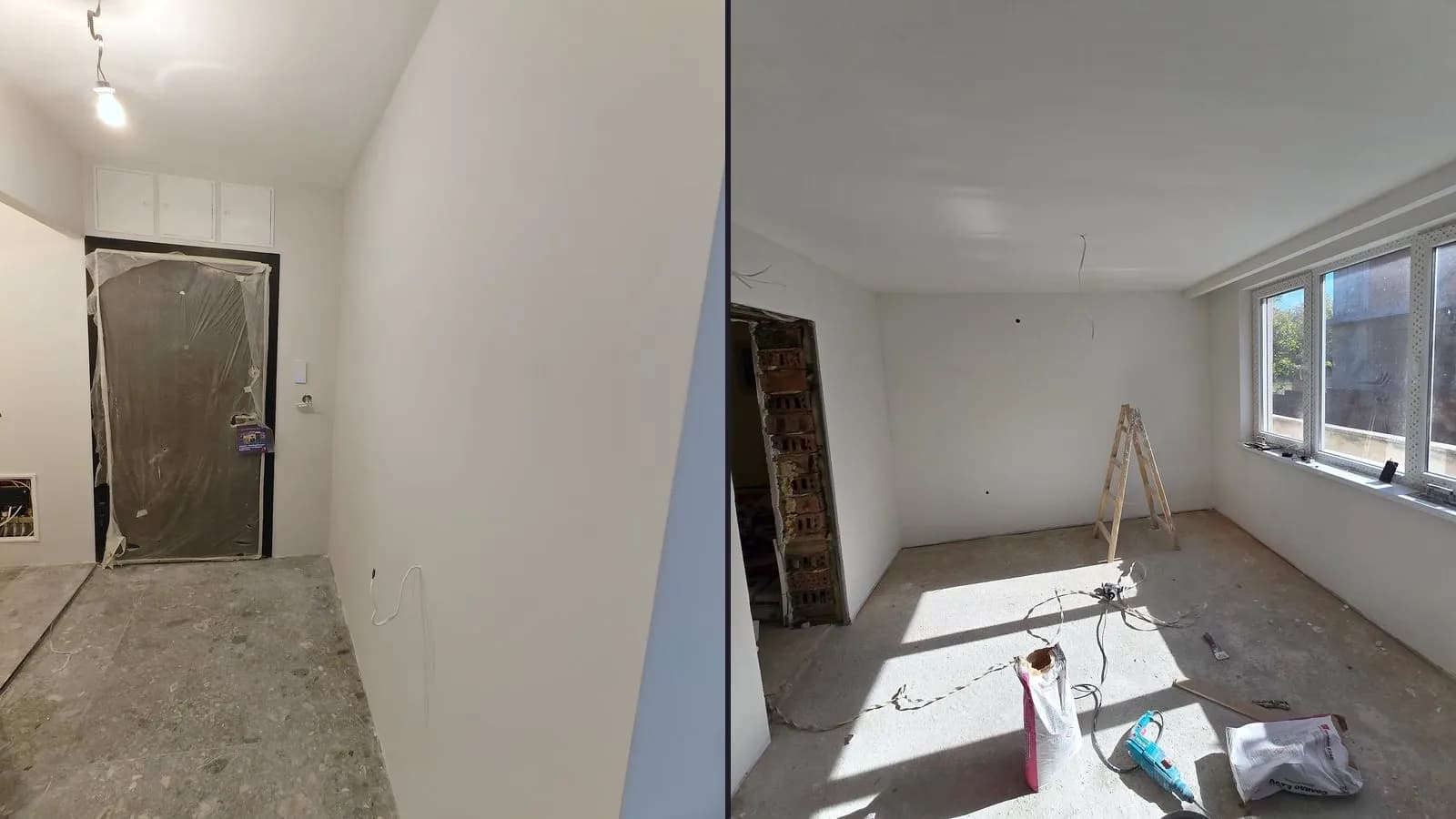
A good notice about an apartment renovation tells the neighbours which flat is being renovated and for how long, which days will be noisy, how the stairwell and the lift will be protected, when the waste will be taken out and which number to call. It ends with a thank-you for their patience. It goes up in the entrance a few days before work starts, while the manager of the owners’ association (the building manager) is notified separately – earlier and in more detail.
Below are three templates you can copy: a short notice for the entrance, a notification to the building manager and a notice for the noisy days. Replace the words in brackets with your own details and delete any sentences that do not apply to you.
The rules themselves – quiet hours, use of the common areas, when approval is needed – depend on the municipality and the building, and are covered in the article on renovation rules in apartment buildings with an owners’ association. Here we look at the practical side: how to tell your neighbours what will happen and when.
What the notice should include
Each line answers a question you would otherwise be asked on the stairs.
- Flat and floor: for the notice in the entrance, that is enough. For the building manager, add the address, your name and the company doing the work.
- Timeframe: a start date and an end date, with a little leeway. When renovating an old bathroom, old pipes and crooked walls often come to light once the demolition is done – and with them, extra work.
- Noisy days: not ‘there will be some noise’, but the exact days for demolition and drilling and the hours for them – within the rules of the building and the municipality.
- Common areas: how you will protect the stairwell and the lift, and when you will be taking materials up – the lift will be in use at those times.
- Waste: that it is taken out every day and not left in the entrance, and when the lorry will pull up. Construction waste removal is arranged in advance – the day, the time and the loading spot.
- Phone number: yours or that of the person in charge at the company – a number that someone answers while the work is going on.
- A thank-you: one sentence is enough. It shows that you realise how disruptive the renovation is.
Only promise what you will actually do: if the notice says the stairwell is cleaned every day, the neighbours will check. The sheet in the entrance is read by everyone who comes in, so do not include more personal details than you need to – a name, flat number and phone number are enough.
Template 1: a short notice for the entrance
This one is for the noticeboard in the entrance or the wall next to the lift. Print it on a single sheet in a large font.
‘Dear neighbours, from (date) to (date) we will be renovating the (bathroom, kitchen, whole flat) in flat (flat number) on the (floor) floor. The noisiest work – demolition and drilling – will be on (dates), between (time) and (time). We will take the waste out every day and will not leave it in the entrance, and we will clean the stairs and the lift each time we do. If anything concerns you, please call (phone). Thank you for your patience, and we apologise for the inconvenience. (Name), flat (flat number)’
Template 2: a notification to the building manager
The building manager needs to know more than the neighbours: who the contractor is, when you will be taking materials up in the lift and where the waste will be loaded from. Send the notification in writing – by email, by chat message or on paper – as soon as you know the dates. That way there is a record that you gave notice.
‘Hello (name), I would like to let you know that from (date) to (date) we will be renovating the (bathroom, kitchen, whole flat) in flat (flat number) at (address), with no changes to the common areas or the load-bearing walls. The contractor is (company), and the person in charge is (name), tel. (phone). The noisy work will be on (dates), between (time) and (time). We will take materials up in the lift on (dates) and will cover the floor and walls inside the lift. The waste will be taken out every day, and the lorry that takes it away will park (where) on (dates). If the building has any house rules or general meeting decisions on renovation work, please let me know so that we can follow them. Thank you. (Name), tel. (phone)’
Include ‘with no changes to the common areas or the load-bearing walls’ only if it is true. Otherwise a notification is not enough – see the question about the neighbours’ signatures below.
Template 3: a notice for the noisy days
The noisiest part of a renovation is the demolition. In a bathroom, that is usually the first day or two; how long each of the following stages takes is covered in the article how long a bathroom renovation takes.
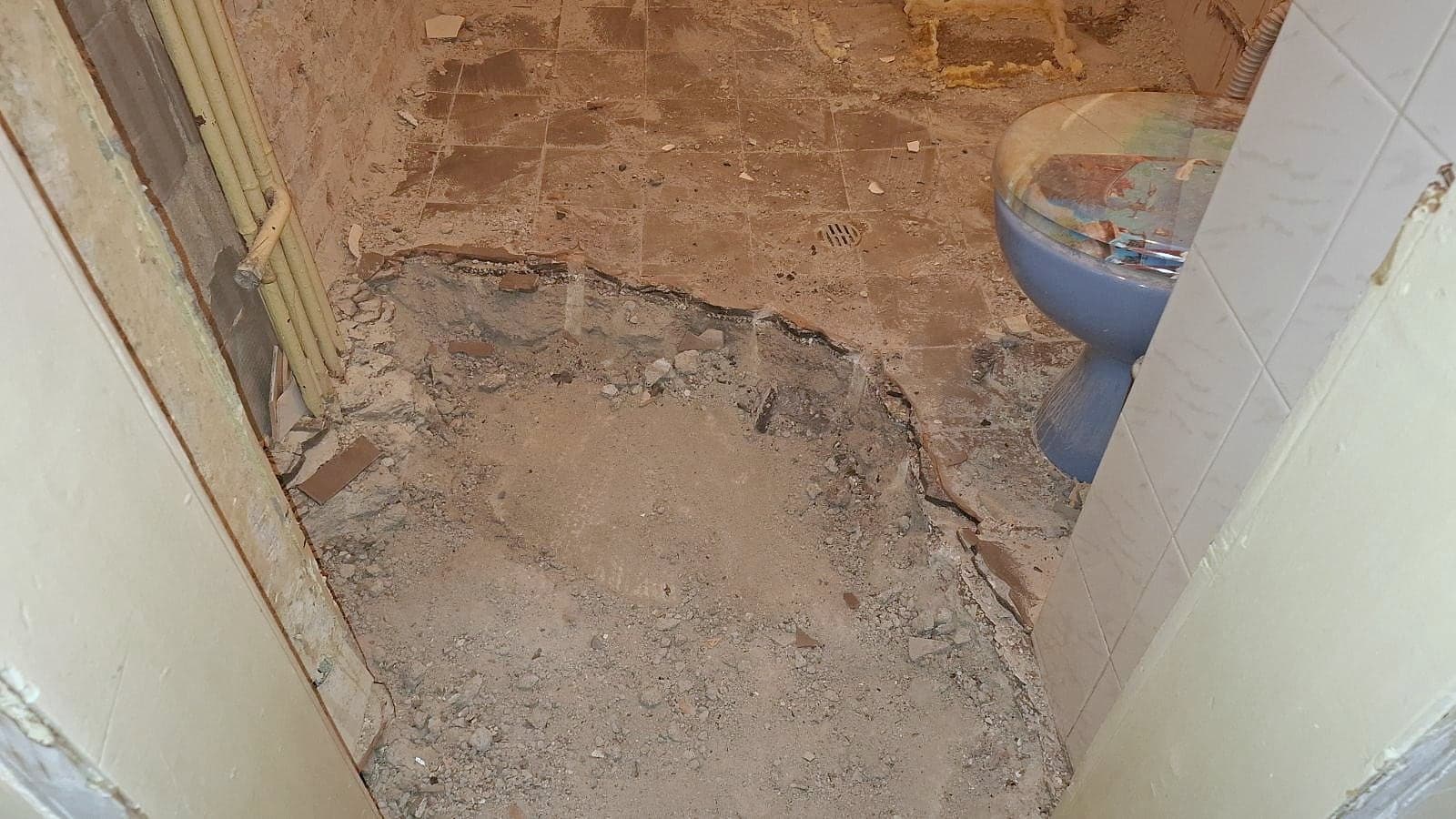
Put up a separate notice a day or two before the demolition, even if the dates are already in the first one. Anyone who works from home or looks after a small child will then be able to plan their day.
‘Dear neighbours, on (dates) there will be demolition and drilling in flat (flat number). We will only work between (time) and (time), and it will be quiet outside those hours. If any of these days is particularly important to you, please call (phone) – we will try to reschedule the noisiest work. Thank you for your patience. (Name), flat (flat number)’
When and where to put it up
Put up too early, a notice gets forgotten, and on the day of the demolition it is already too late. As a rule of thumb, aim for a few days before work starts.
| What | When | How and where |
|---|---|---|
| Notification to the building manager (template 2) | as soon as you know the dates | in writing |
| Notice for the entrance (template 1) | a few days before work starts | on the noticeboard in the entrance |
| Conversation with the neighbours above, below and next door | a few days before work starts | in person |
| Notice for the noisy days (template 3) | a day or two before the demolition | next to the first notice |
| New sheet with the new dates | as soon as the schedule changes | in place of the old one |
| Removing the notices | after the renovation is finished | from the noticeboard |
The neighbours above, below and next door will hear the renovation the most, so it is worth talking to them in person and leaving them your phone number. A two-minute conversation often heads off a complaint.
If your entrance has a residents’ group chat, post the text there too – but not instead of the printed notice: not every neighbour is in it.
What we do on site
When we are doing the renovation, most of the promises in these templates are ours to keep: we protect the common areas, take the waste out every day and do noisy work only during the permitted hours. We take the rules of the particular building into account as early as the site visit.
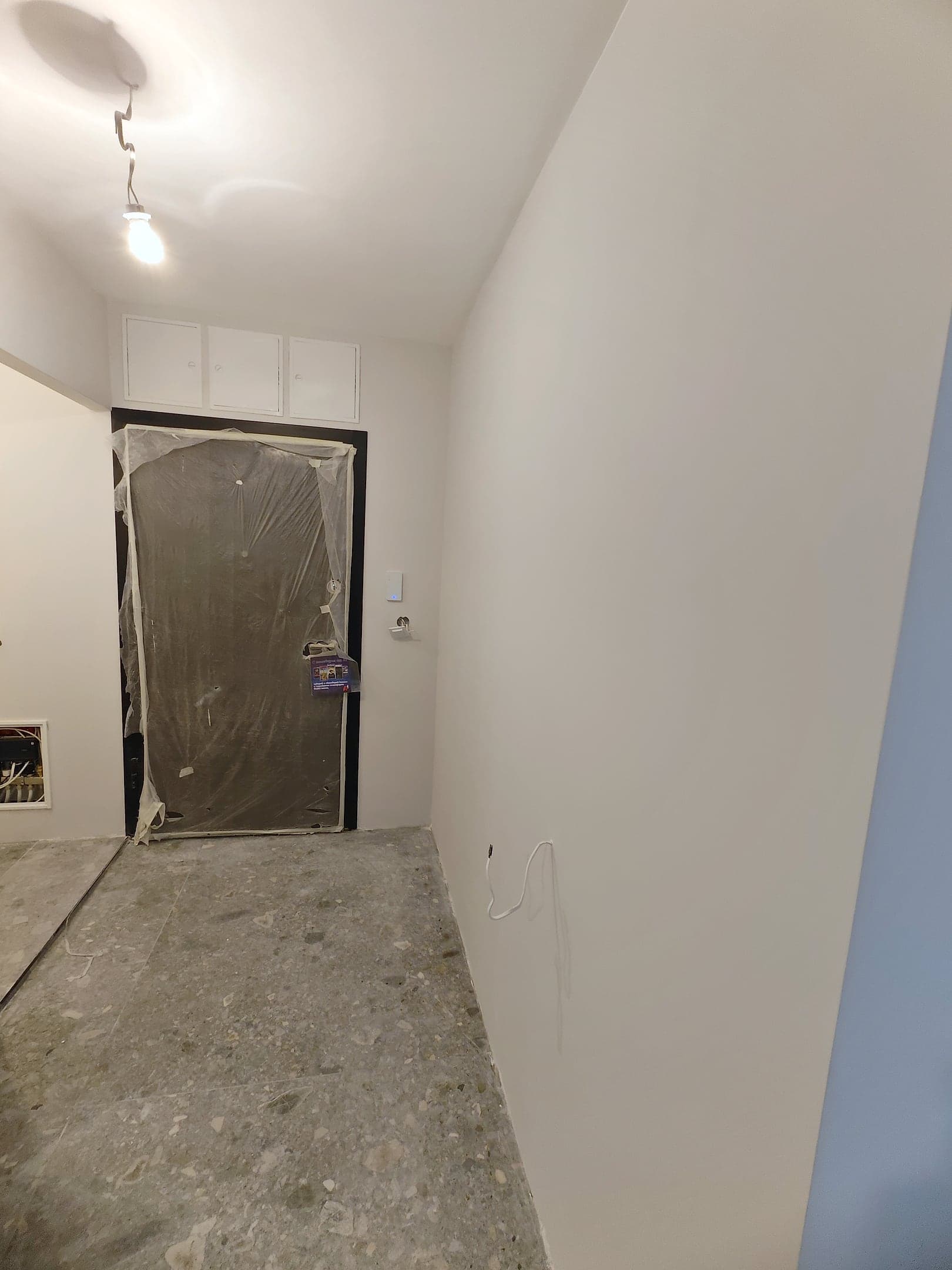
The photo is from the new-build apartment renovation project: while the finishing work is under way, the front door stays covered in film. The same care applies on the other side of it – to the stairwell and the lift.
Frequently asked questions
Do I have to notify my neighbours?
It depends on the rules of the building and the municipality – what exactly applies is covered in the article on the rules in apartment buildings with an owners’ association. But even where it is not mandatory, a notice is good practice: the neighbours know what to expect, and you have fewer grounds for dispute.
How many days in advance should I put the notice up?
A few days before work starts – early enough for people to plan their week, and close enough that they do not forget. Notify the building manager earlier, as soon as you know the dates.
Do I need my neighbours’ signatures?
For work inside the flat, with no changes to the common areas, usually not: the notice is there to inform, not to ask for permission. If the work affects the risers, the facade, a balcony or load-bearing elements, approval may be needed, and sometimes a design project and a permit. If in doubt, ask the building manager before you start.
What should I do if a neighbour complains?
Listen to them and check what the problem is: noise outside the announced hours, dust in the entrance, waste sacks on the stairs. If they are right, tell them what you will change – and change it.
If the noise was within the permitted hours, show them the schedule and offer to warn them in person before the noisiest days. If something in their home has been damaged, inspect it together, take photos and agree on the repair. If you cannot reach an agreement, turn to the building manager.
What should I write if the renovation takes longer than planned?
Replace the sheet with a new one: the new end date, any new noisy days, and one sentence on the reason – for example, ‘the demolition uncovered old pipes, which are being replaced’. Do not leave an out-of-date notice on the noticeboard.
If you are only now planning a renovation, the calculator will give you an indicative price, and at the free site visit we will also plan the noisy stages so that you can put them in your notice to the neighbours.
More articles
All articles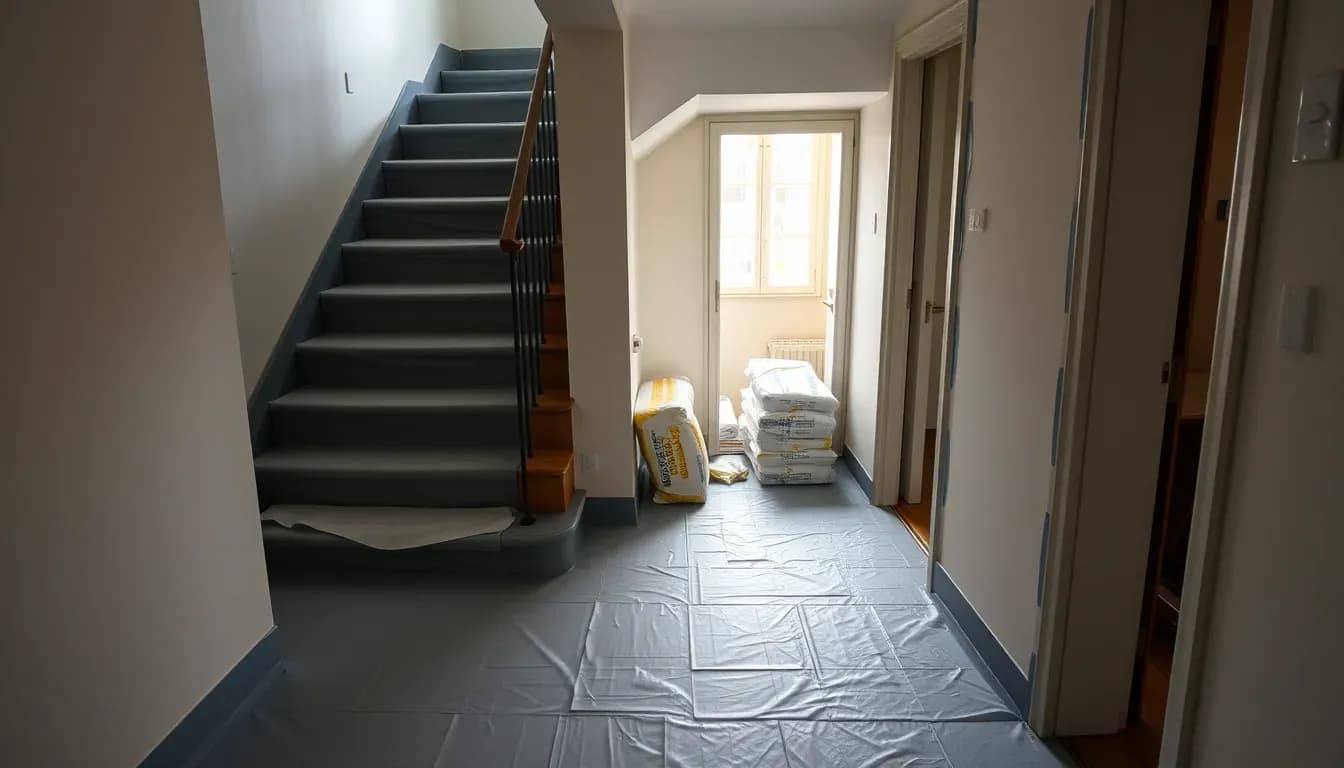 Rules
3 min read
Renovation rules in Sofia apartment buildings
Working hours, noise, common areas and neighbours – the rules that apply when you renovate in a Sofia apartment building with an owners’ association, and how to avoid disputes and having your work stopped.
Read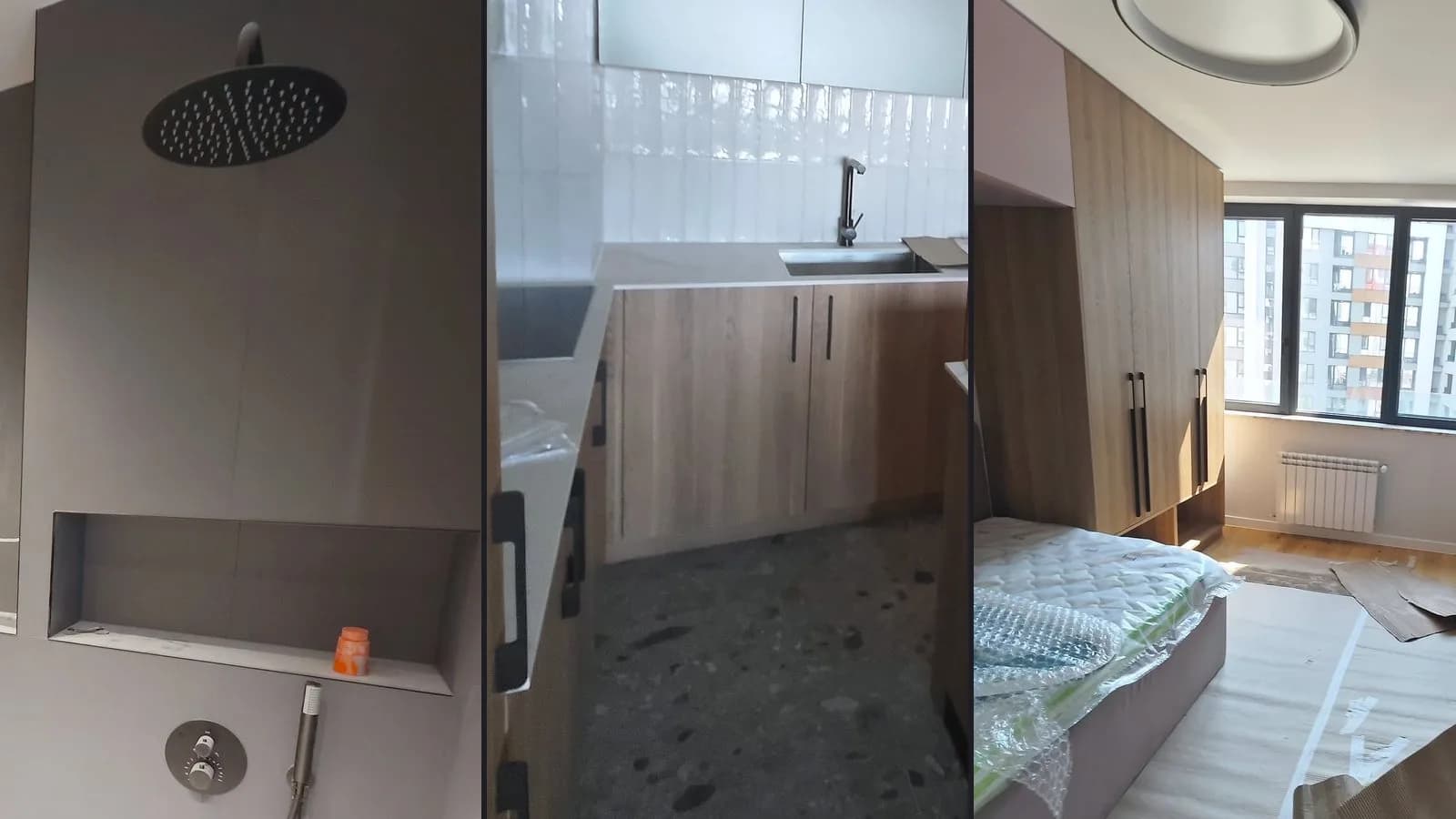 Projects
8 min read
New-build apartment: from bare walls to turnkey – the stages in photos
A new-build apartment renovation in photos: a shower niche, a concealed cistern, terrazzo-effect tiles in the hallway and kitchen and built-in wardrobes – and the stage by which each must be decided.
Read Budget
13 min read
Finishing a new-build apartment: what it costs from skim coat to turnkey (2026)
Price-list maths for a new 65 m² two-room apartment: labour from skim coat to turnkey is €7,585.26, from bare plaster €12,421.70. What is in and what is not.
Read