Renovating an old bathroom: what the tiles hide – before and after
What turns up when an old bathroom is stripped out, what to change while the walls are open, what it costs – and our bathrooms before and after.
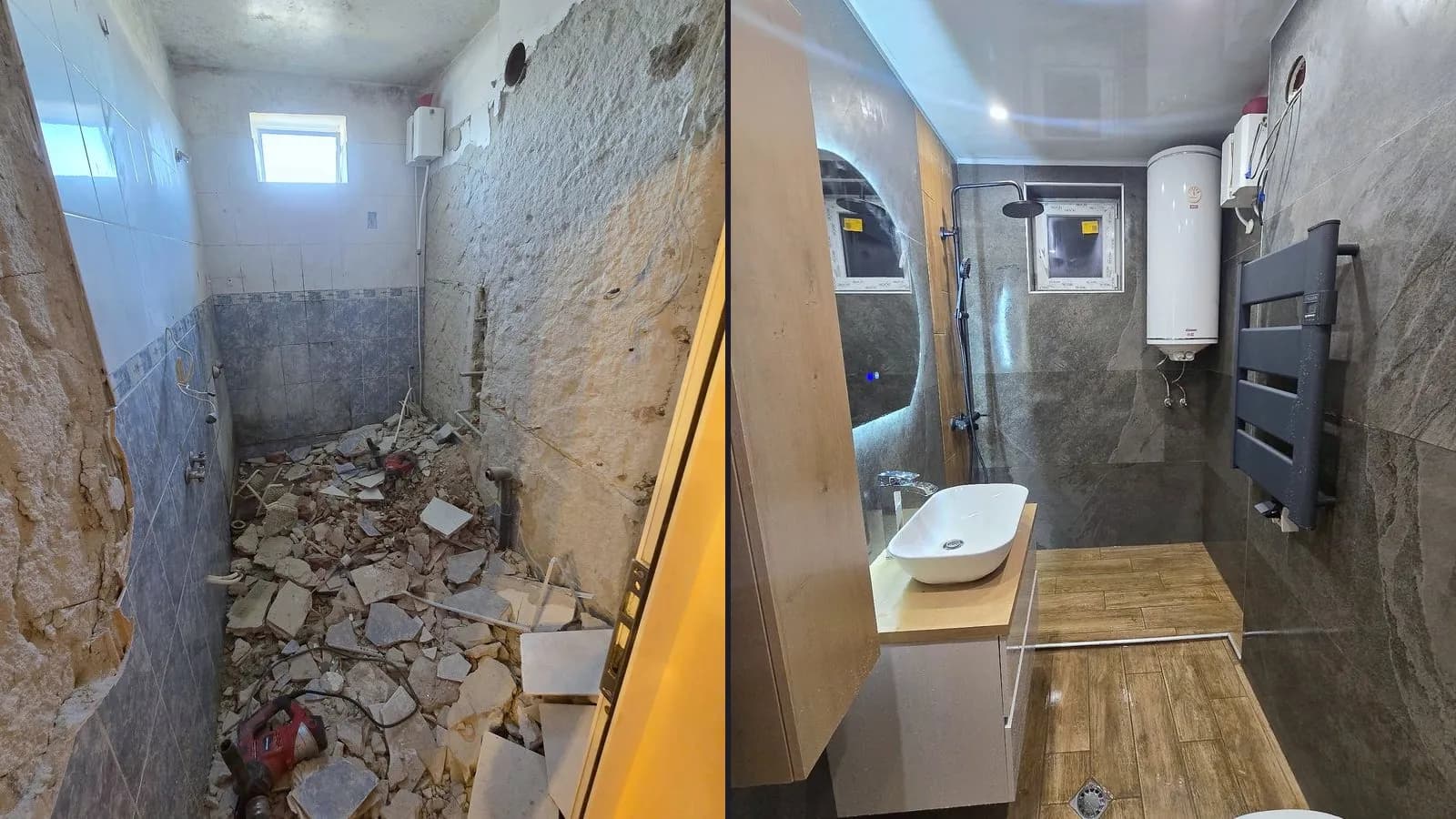
Renovating an old bathroom is rarely just a matter of new tiles. It starts with stripping the room back to the bare walls and floor, moves on to new pipes, screed and waterproofing, and only at the very end gets to the tiles and sanitaryware. For a bathroom of about 4 m² at a standard level, the renovation usually costs €4,500–5,500 including the construction materials, while you buy the tiles and sanitaryware yourself.
The reason lies in what is often hidden under the tiles of a bathroom from the 1980s and 1990s – old pipes, missing waterproofing, crooked walls. Most of these only come to light after the strip-out.
Below, using bathrooms we have renovated, before and after, we show what we find under the tiles, what is worth changing while the walls are open and what the labour for those changes costs.
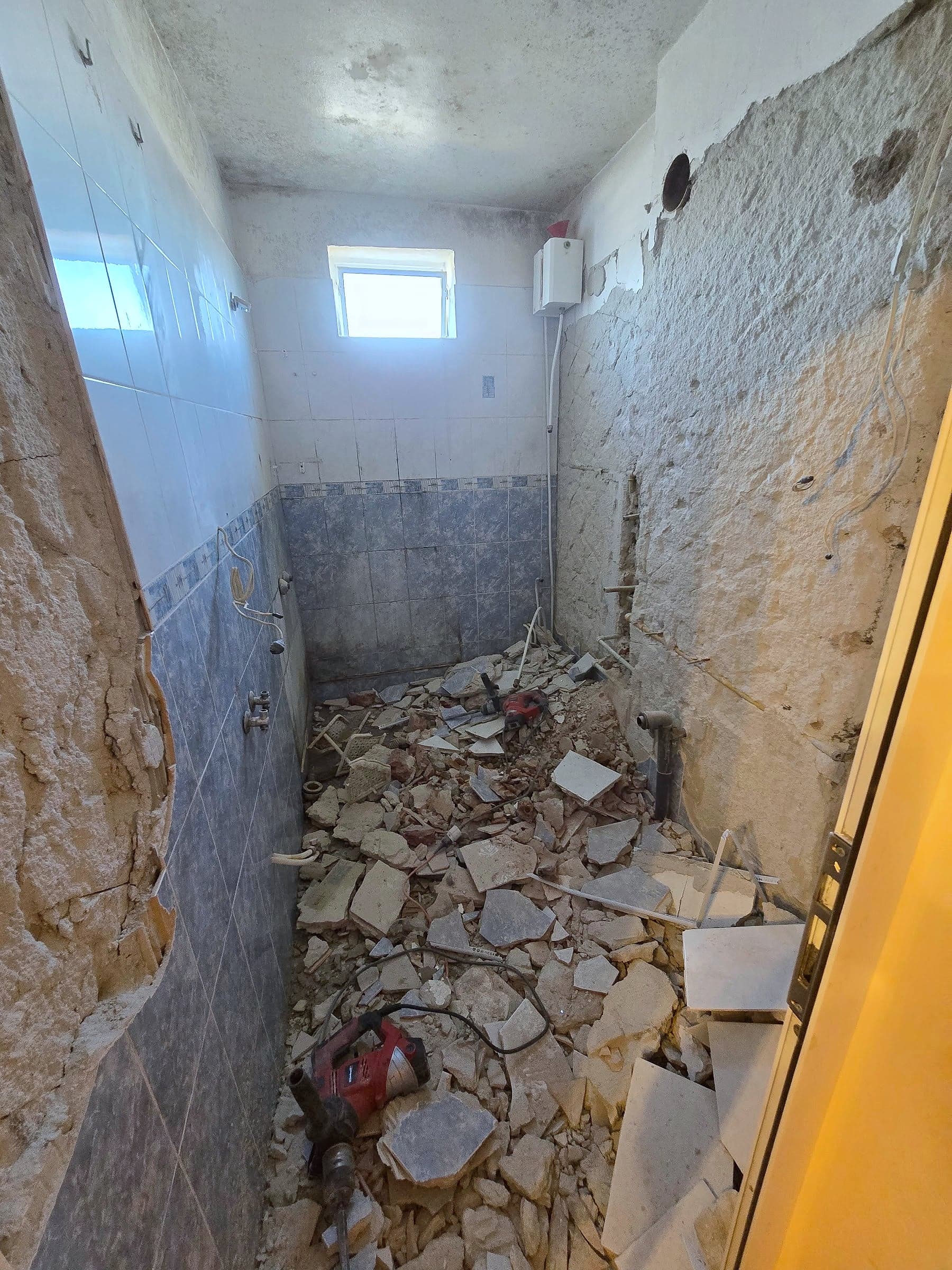 Before
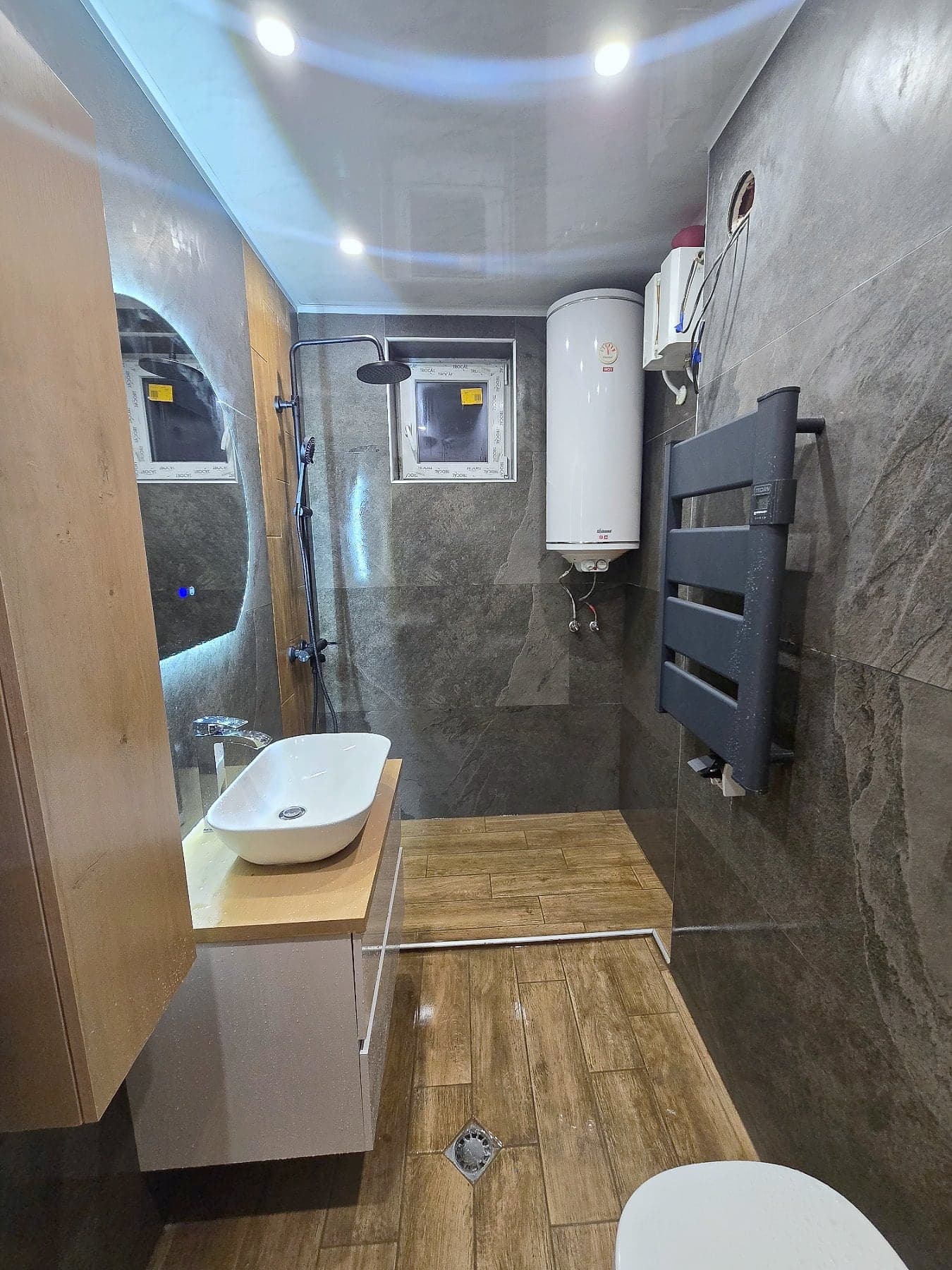 After
AfterWhat we find under the old tiles
Every old bathroom is different, but the same things keep turning up after the strip-out.
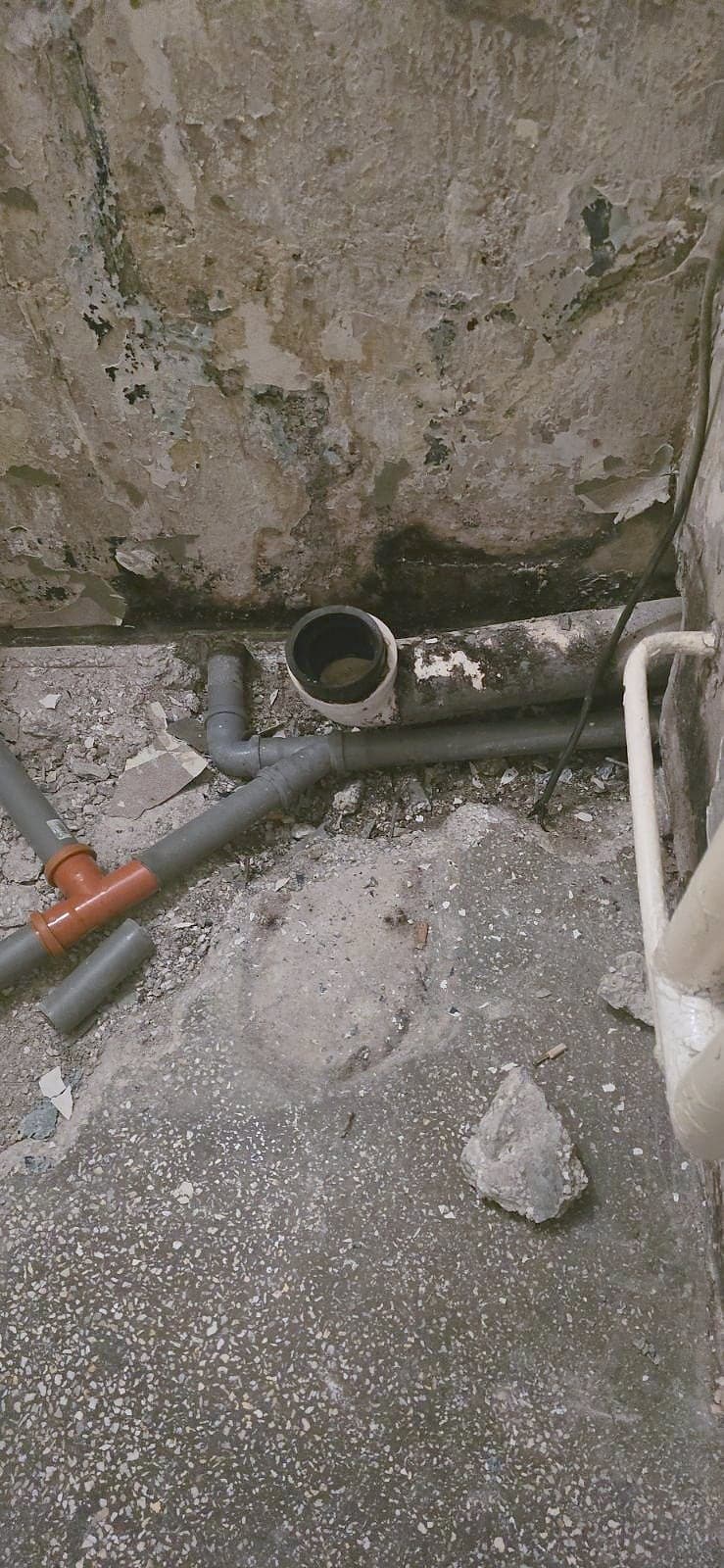
- Old galvanised pipes. They rust from the inside, the water pressure drops, and their joints are quick to leak once they are disturbed. Later repairs have often added plastic pipes, run along the surface of the tiles.
- Cracked or missing waterproofing. Under a lot of old tiling there is no layer to stop the water: it seeps through the grout into the screed and ends up on the neighbours’ ceiling.
- Crooked walls and old screed. After the strip-out, the walls are left uneven by the old mortar and by the masonry itself, while the floor screed is often cracked and has no fall towards the drain. New tiles – especially large ones – need a flat base.
- Drainage with too little fall. The water drains away slowly and deposits build up in the pipes. For a walk-in shower, the fall matters even more.
- Mould. Dark patches on the ceiling and in the corners show that the steam has nowhere to go. The mould is treated before the new layers go on (‘Mould treatment’ – €100.00 for labour), but without an extractor fan it comes back.
- The shared riser. The building’s vertical pipes are often as old as the building itself, and replacing them affects the neighbours directly above and below – we explain how this is organised in replacing risers in an apartment block. After the replacement, the shaft is closed up with plasterboard (€64.42 for labour) and an access panel to the stopcocks (€42.95 for labour).
Some of these problems can be seen even before the renovation – like the dark patches on the ceiling in Bankya or the pipes on the wall in the white and grey marble bathroom. The condition of the pipes inside the walls, the waterproofing and the screed, however, only becomes clear during the strip-out, so it is sensible to keep a reserve in the budget.
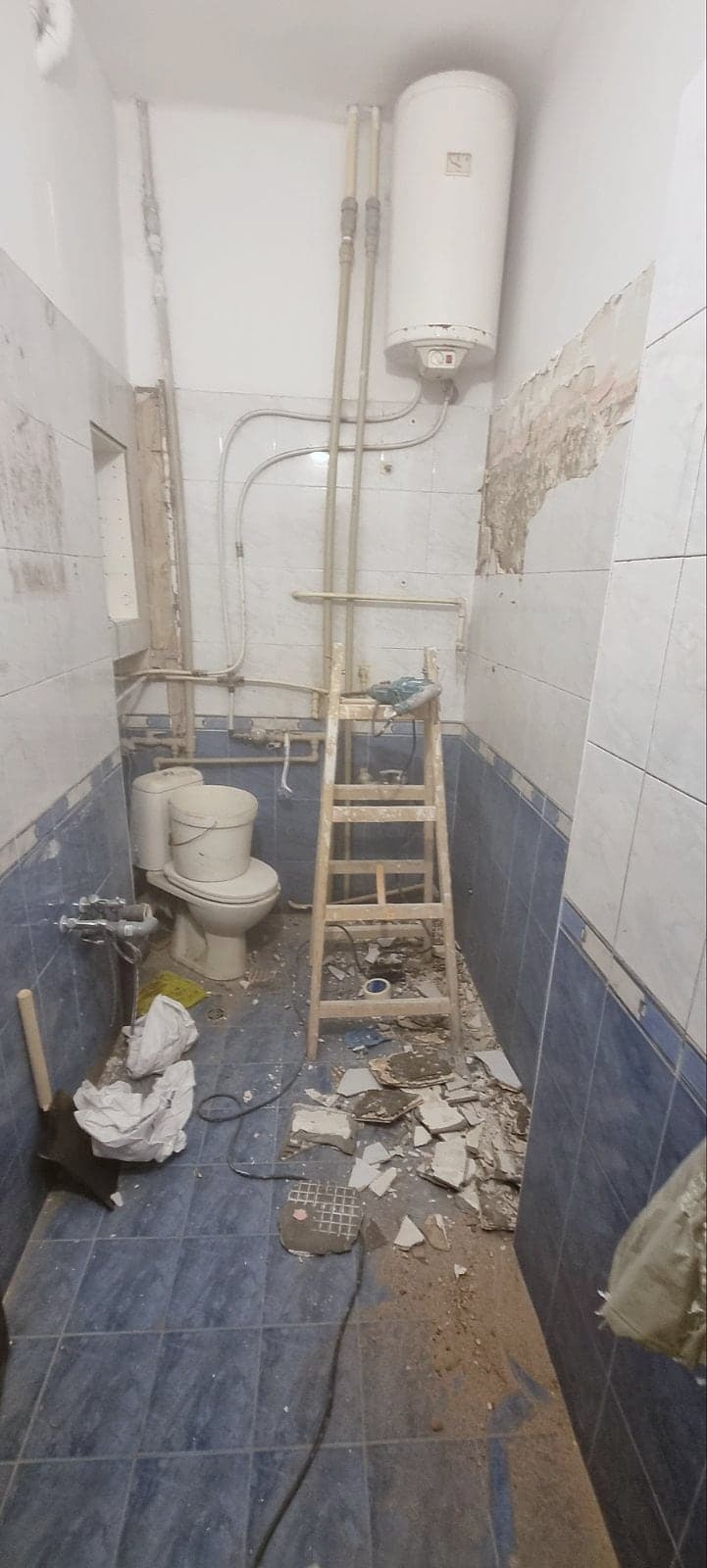 Before
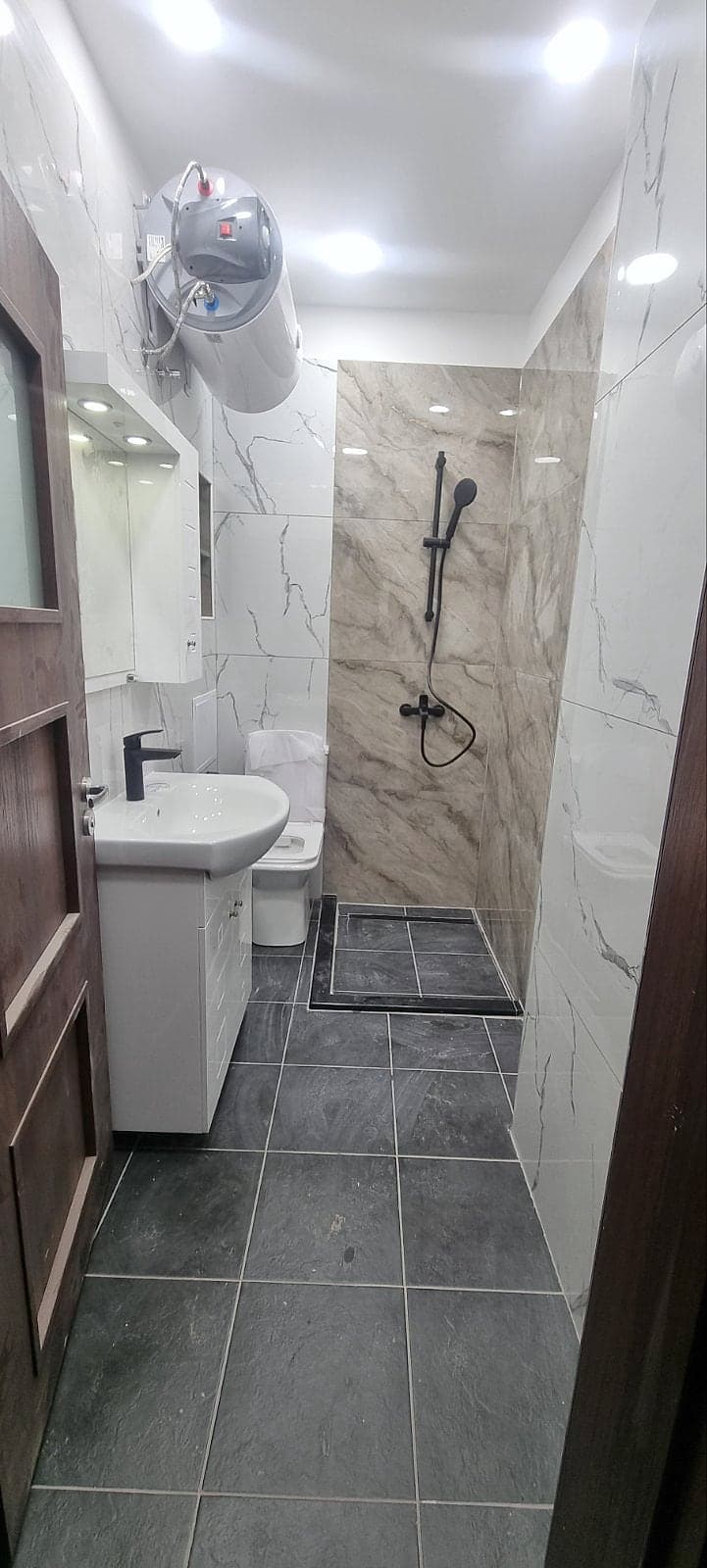 After
AfterWhat an old bathroom renovation costs
The worked example in our price list, for a 4 m² bathroom with a shower, comes to €4,355 for labour, but it only covers the main jobs. In an old bathroom, you also have to add the removal of the old sanitaryware, a few items the example does not list, the construction materials and the work that comes to light after the strip-out. That is why the real figure for an old 4 m² bathroom at a standard level – labour and construction materials – is usually €4,500–5,500. We break it down line by line in our article on labour costs by task.
‘Standard level’ refers to how complex the work is – the tile format and pattern, niches, a concealed shower – not to the grade of the materials. Prices are as of October 2026 and may change; the current ones are in our price list.
What to change while the walls are open
Once the bathroom has been stripped back to the bare walls and floor, changes cost the least: the pipes are being laid from scratch anyway, and the walls have yet to be straightened. Here are five options worth considering.
Bath or walk-in shower
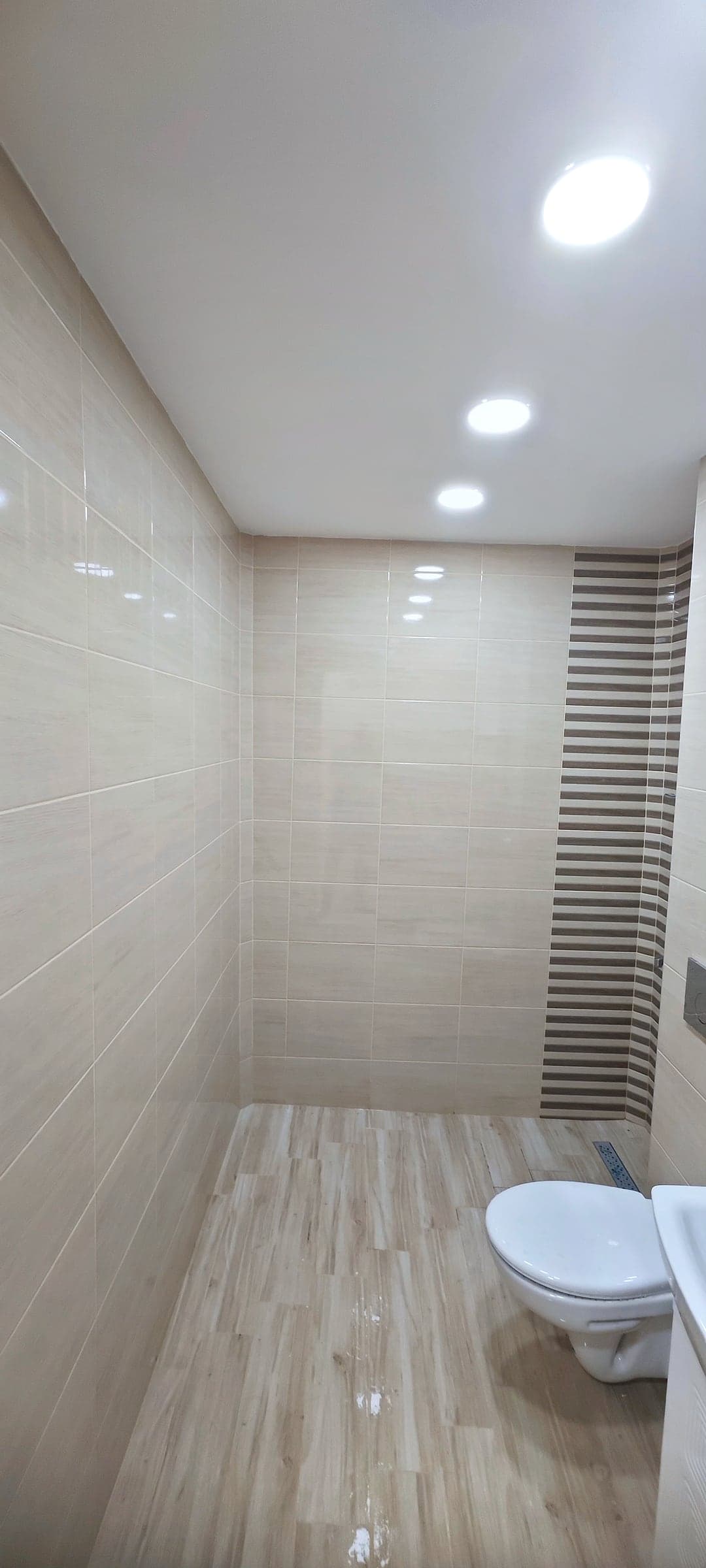
An old bath usually takes up a whole wall, and getting in means stepping over a high edge. A walk-in shower frees up space, you walk straight in, and the floor is easy to clean. The water runs off into a linear drain – a narrow channel in the floor, with the shower area sloping towards it – and a glass screen can be fitted to stop the splashes.
In the bathroom in Knyazhevo, the drain runs along the wall and the shower area is part of the floor, with no threshold. If the shower is moving to a new position, relocating the water outlets is added to the bill – €107.37 for labour.
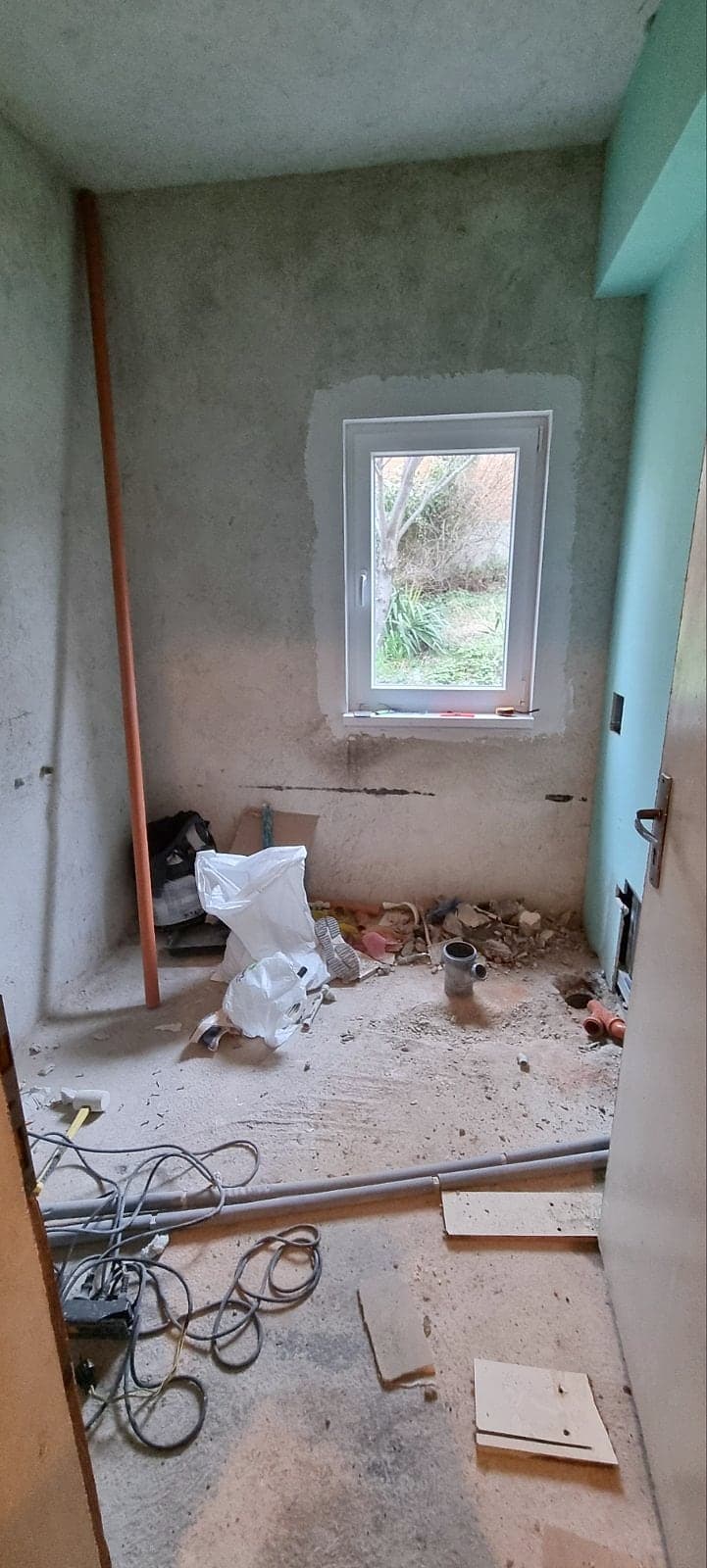 Before
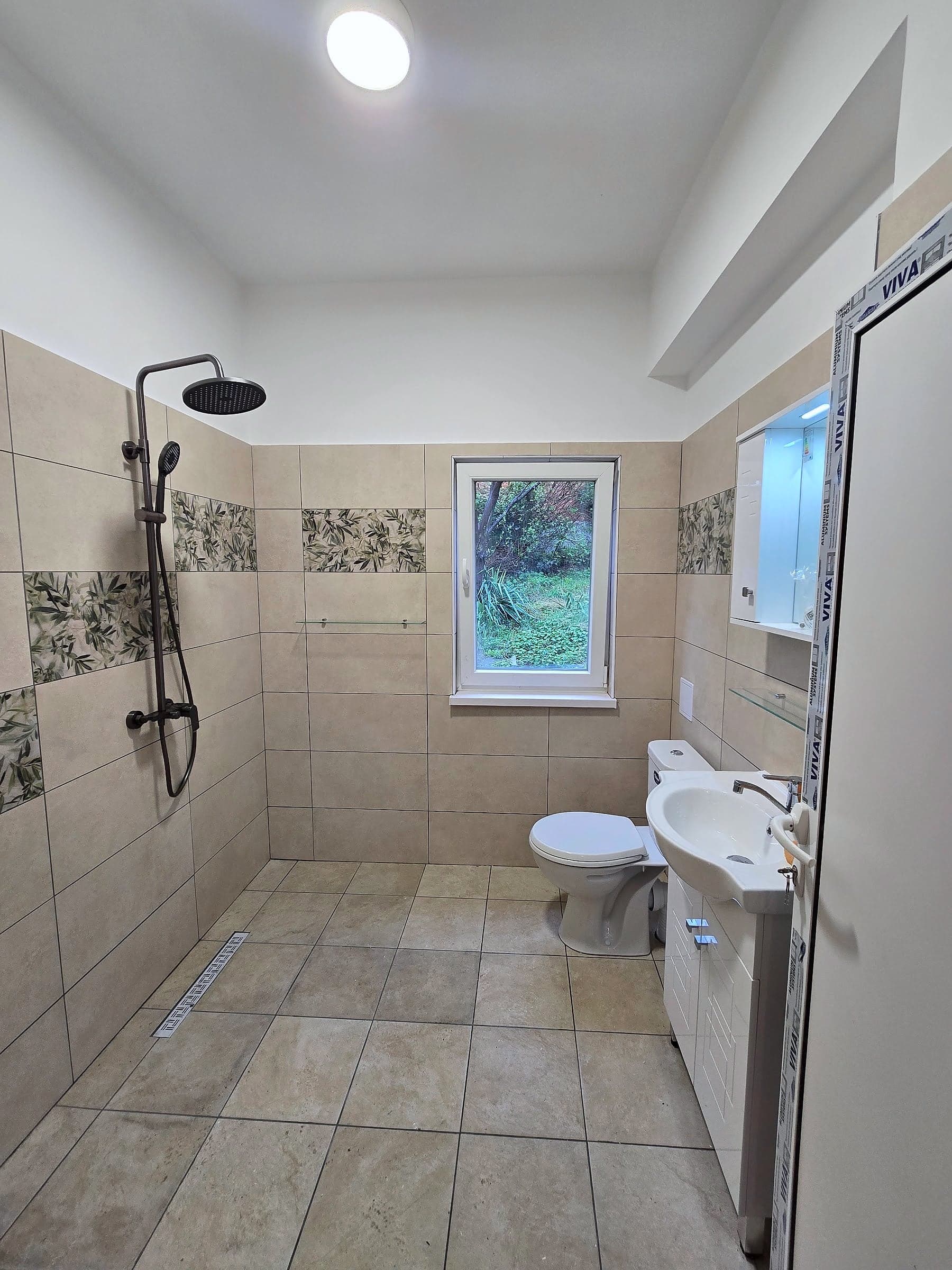 After
AfterA wall-hung toilet instead of a floor-standing one
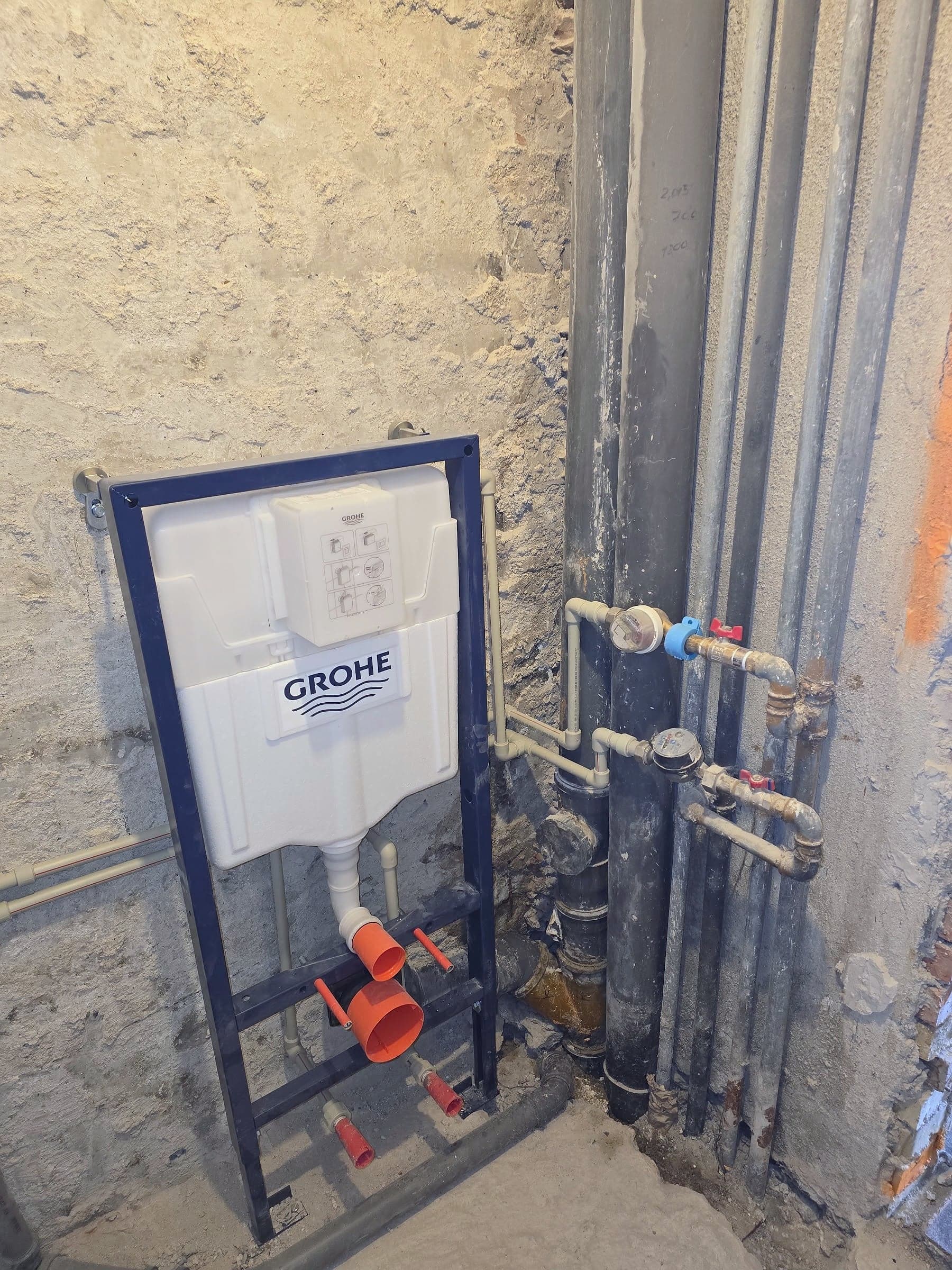
A wall-hung toilet is mounted on a metal frame fixed to the wall and the floor. The frame carries the toilet and hides the cistern, and together with the pipes it is boxed in behind a moisture-resistant plasterboard lining. The floor under the toilet stays clear and is easy to clean.
The cistern mechanism can be reached through the flush plate opening, without breaking into the wall. In the bathroom in Sveta Troitsa, the ‘before’ photo shows both: the old floor-standing toilet and the new frame next to it.
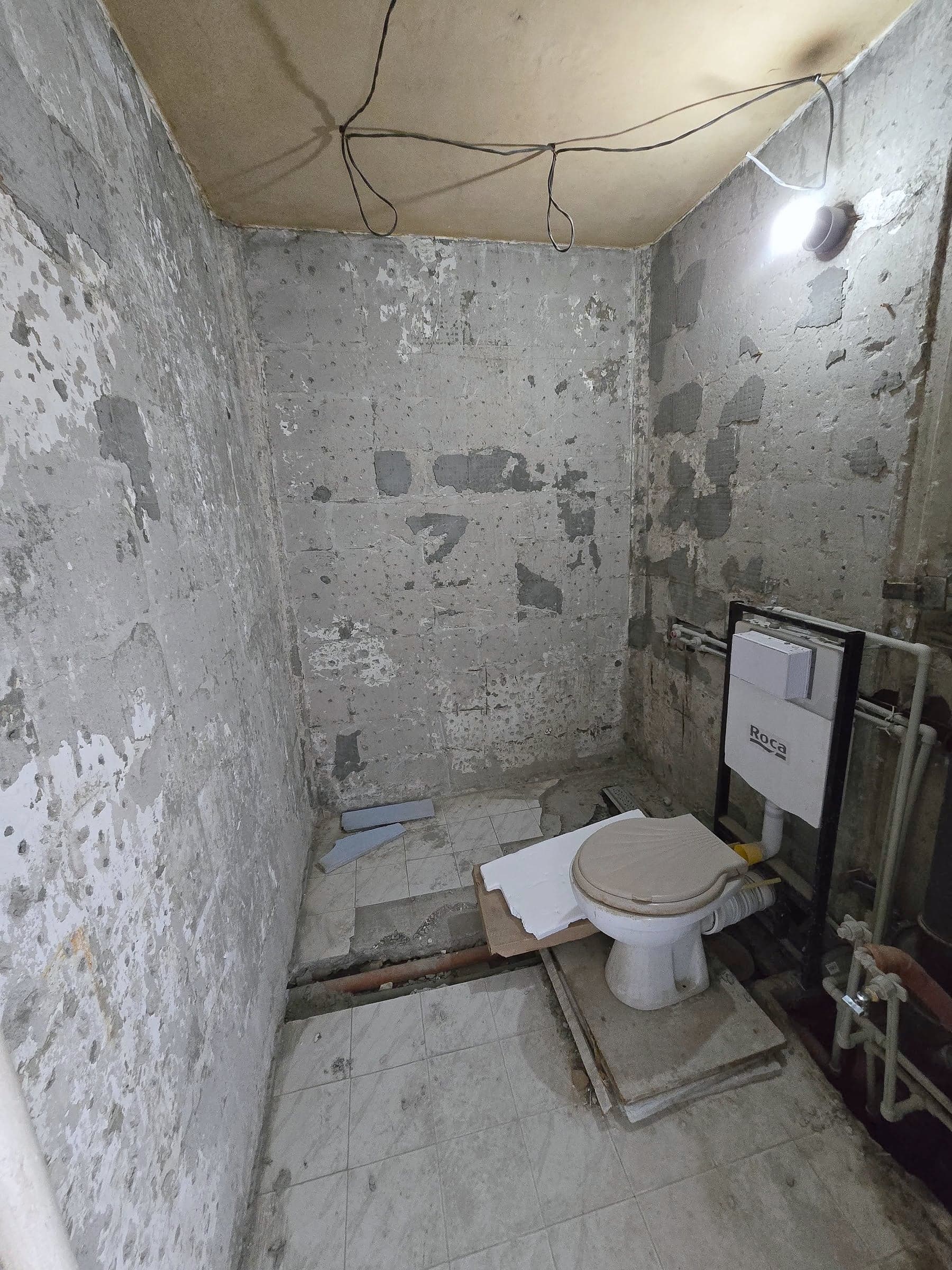 Before
 After
AfterNiches instead of shelves
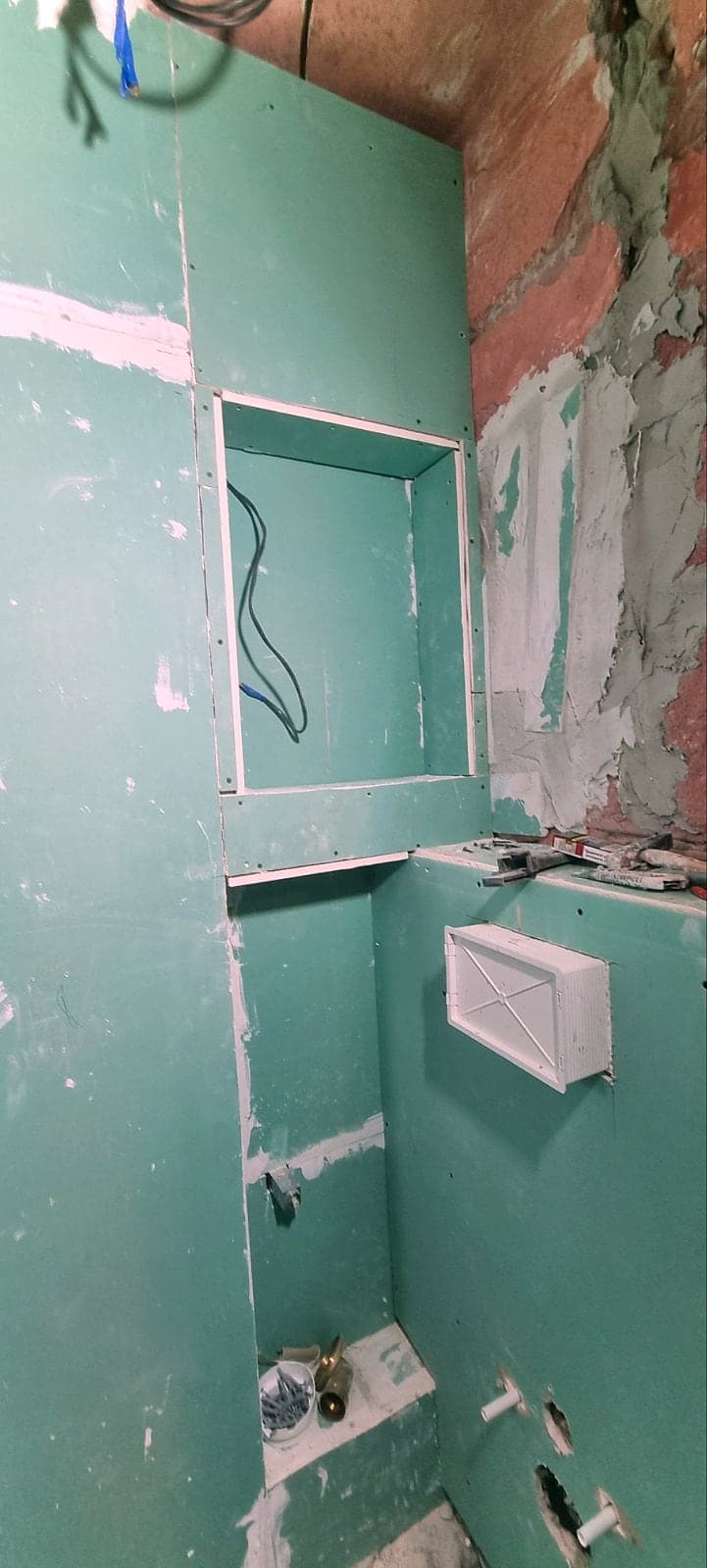
A niche in the wall holds the shampoos in the shower and the small things above the toilet, with no shelves hanging on the walls. It is easiest to build one into the plasterboard lining – where there is a frame or pipes anyway, as in the bathroom in Bankya. In a brick wall, the niche is cut out, but a load-bearing concrete wall must not be broken into – there, the niche belongs in the lining.
A suspended ceiling with lighting
The old bathroom ceiling is often stained and cracked. A suspended ceiling in moisture-resistant plasterboard hides the stains and cracks, along with the cables and the extractor fan duct, and makes room for built-in lighting – downlights or LED strip.
An extractor fan
In a bathroom without a window, an extractor fan is essential: without one, the steam stays in the room and the mould comes back. It is connected to the ventilation opening, and it is handy to have it switch on together with the light.
What the labour for these options costs
| Option | Total for labour |
|---|---|
| Walk-in shower instead of a bath. Labour: installing a linear drain €59.05 + fitting a glass screen €96.63 | €155.68 |
| Wall-hung toilet instead of a close-coupled one. Labour: fitting the frame + boxing it in with plasterboard €187.90 + fitting the wall-hung toilet €59.05 (for comparison, fitting a close-coupled toilet – €42.95) | €246.95 |
| Niche in the plasterboard lining. Labour: building a plasterboard niche €140.00 + tiling the niche €107.37 | €247.37 |
| Suspended ceiling with four downlights. Labour: plasterboard suspended ceiling for a bathroom €161.06 + 4 × (running the wiring €8.05 + fitting a downlight €10.74) | €236.22 |
| Extractor fan. Labour: fitting €26.84 + an electrical point to power it €32.21 | €59.05 |
The renovation process in brief
A bathroom renovation follows a strict order, because each stage covers up the one before it:
- Stripping out the bathroom back to the bare walls and floor, and taking the waste away.
- New water pipes, drainage and wiring. The new pipes are pressure-tested before they are closed into the wall.
- Straightening the walls, moisture-resistant plasterboard linings and niches.
- Screed with a fall towards the drain.
- Waterproofing on the floor and in the shower area, with waterproofing tape in the corners and around the pipes. It is tested with water before tiling – we explain exactly how in our article on bathroom waterproofing.
- Tiling and grouting.
- Suspended ceiling and lighting, fitting the sanitaryware, cleaning and handover.
The waste is taken out every day, and the drying times for the screed and the waterproofing are not cut short. To see how many days each stage takes, read how long a bathroom renovation takes. With a turnkey bathroom renovation, every stage – from the strip-out to fitting the sanitaryware – is covered by a single quote.
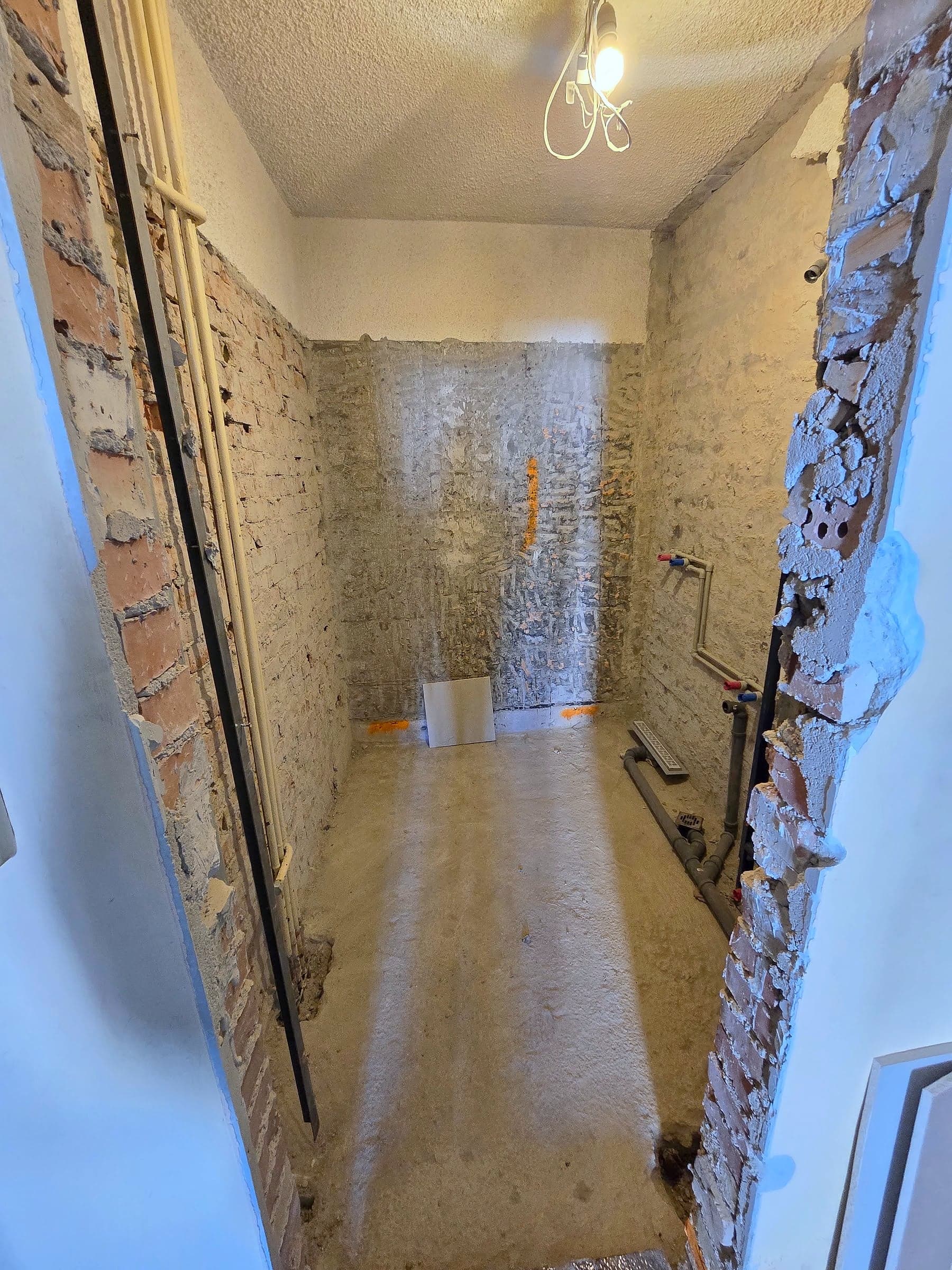 Before
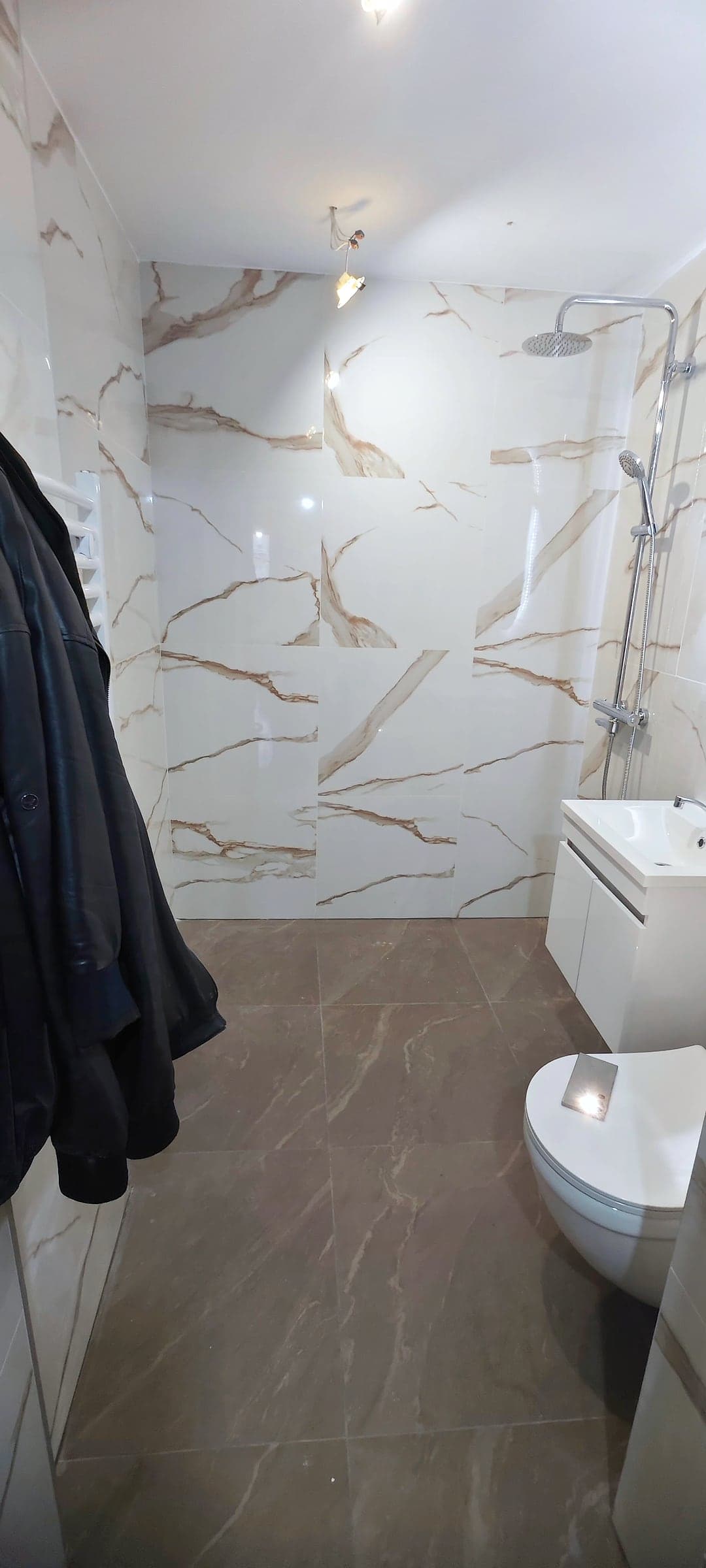 After
AfterWhat you get in writing
The site visit is free, and afterwards you receive a written quote setting out the work and the price. If the strip-out shows that work outside the quote is needed, it is described and priced, and it only starts once you have approved it in writing.
The warranty is in writing too: 24 months for the renovation, 72 months for the plumbing and electrical installations and 24 months for the bathroom waterproofing. The longest term covers the pipes and cables – exactly what stays hidden in the walls.
Frequently asked questions
Can I replace just the bath?
Yes, if the tiles and pipes around it are sound. An old bath, however, is usually bricked in and tiled at the front: when it is removed, the tiles around it break, and sometimes there are no tiles underneath it. If you do not have spare tiles of the same model, the replacement quickly turns into a partial renovation. According to our price list, removing a bath costs €53.69 and fitting a new one €250.00, both for labour.
Do the pipes have to be replaced?
In an old bathroom – yes, once the walls are being opened up. A leak from an old pipe after the renovation means breaking up the new tiles. The new pipes are pressure-tested before they are closed in, and the warranty on the plumbing is 72 months. If the shared riser is old too, replacing it is agreed with the neighbours directly above and below.
How long will we be without a bathroom?
As a rough guide, 2–3 weeks of work for a 3–5 m² bathroom, or up to about 4 weeks if hidden problems turn up after the strip-out. The exact schedule is in the quote. The stages and drying times are set out in how long a bathroom renovation takes.
Can an old bathroom have a walk-in shower?
Usually, yes. It needs a new screed with a fall towards the drain, waterproofing across the whole floor and enough depth under the floor for the linear drain and its connection to the drainage. Whether the floor has to be raised for this becomes clear at the site visit.
Who buys the sanitaryware?
You choose and buy the sanitaryware, the drains and the tiles. The building materials – adhesives, waterproofing, screeds, profiles, plasterboard, mesh and primers – are included in our quote. Choose the sanitaryware before work starts: it determines exactly where the water outlets go.
If your bathroom dates from the 1980s or 1990s, the best first step is the free site visit. You can also work out an indicative price, labour and construction materials, yourself with the calculator, and there are more bathrooms before and after renovation in our project gallery.
More articles
All articles Bathroom
12 min read
Bathroom renovation: labour costs in 2026, task by task
Bathroom labour prices task by task, a worked example for 4 m² and why an old bathroom usually comes to €4,500–5,500 with construction materials.
Read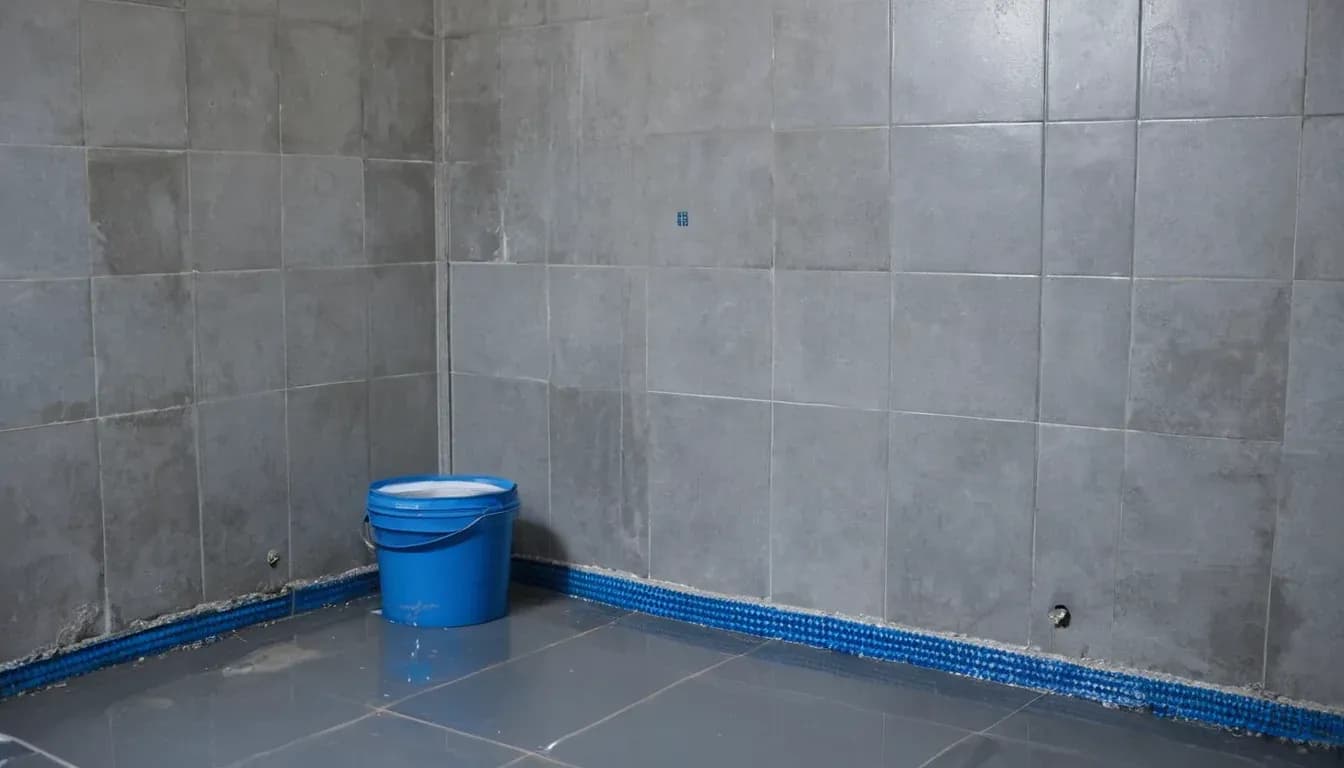 Bathroom
3 min read
Bathroom waterproofing: the invisible layer that protects you and your neighbours
Exactly where waterproofing goes in a bathroom, which details make all the difference, and how it is tested before the tiles go on.
Read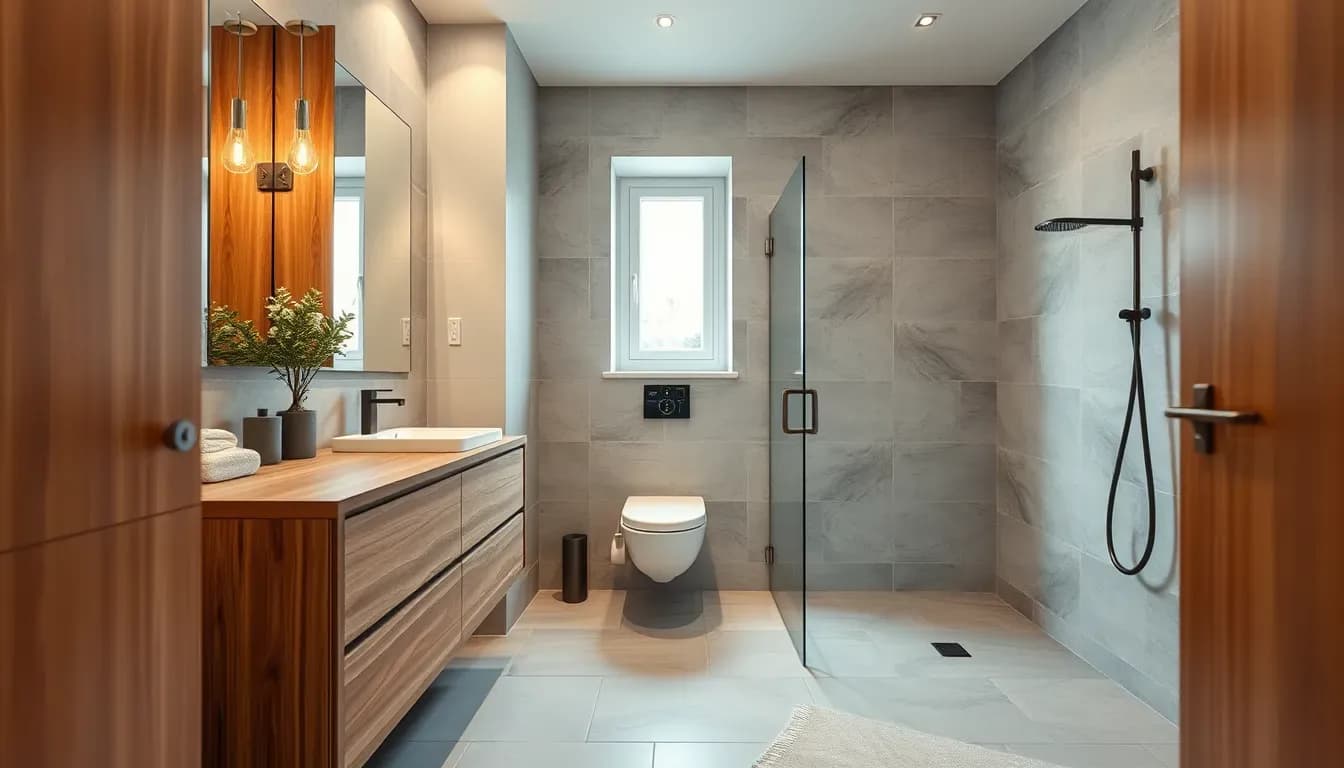 Bathroom
3 min read
Bathroom renovation in Sofia: cost and process
What drives the cost of a bathroom renovation in Sofia and how the process unfolds – from strip-out and waterproofing to final installation. The exact figures come after a site visit.
Read