How long does a bathroom renovation take? A stage-by-stage timeline
A typical 3–5 m² bathroom takes 10–15 working days to renovate. The schedule stage by stage, the drying times you cannot skip and what causes delays.
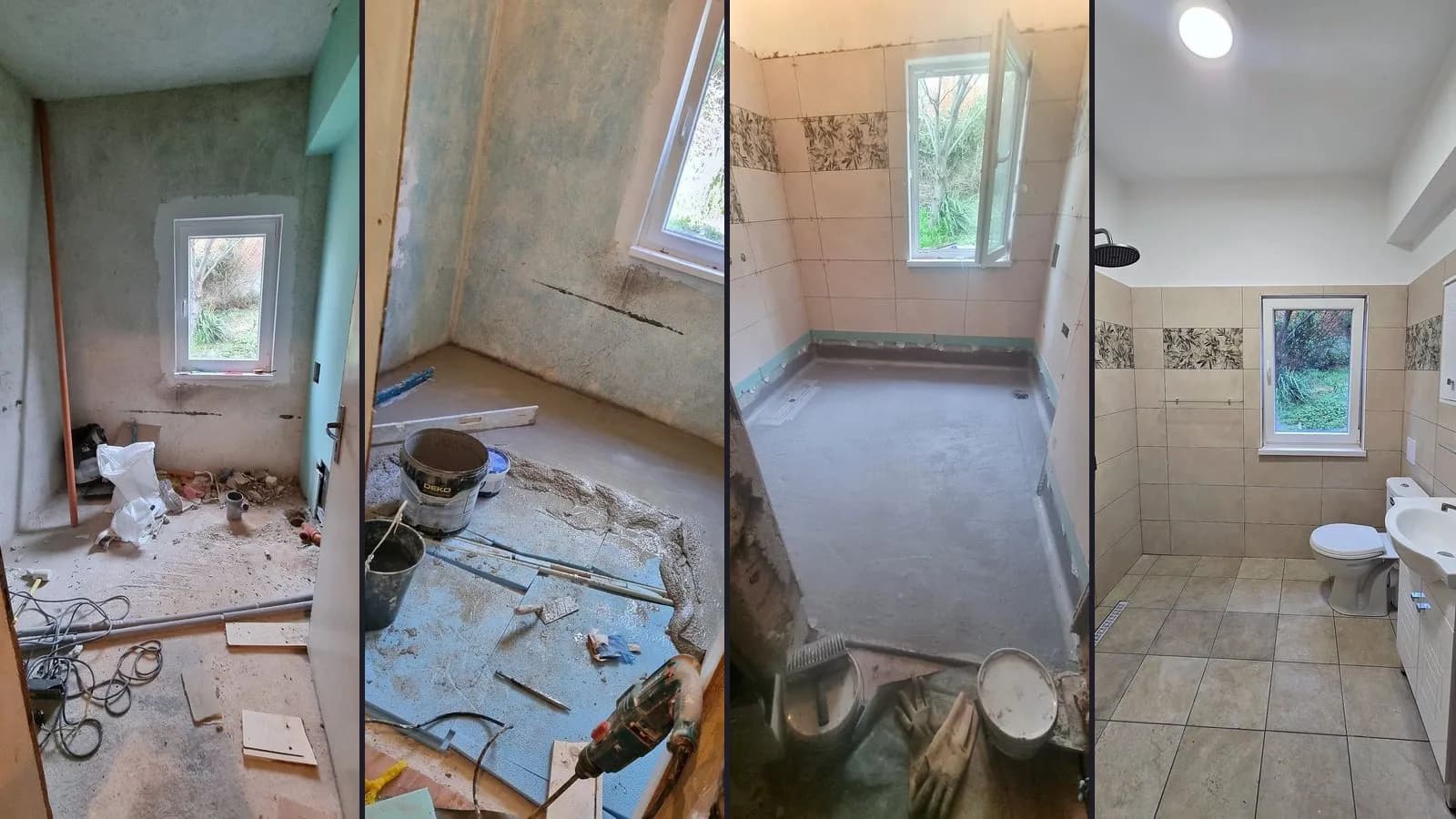
A typical bathroom of 3 to 5 m² takes roughly 2–3 weeks to renovate – usually 10–15 working days from the first day on site to the handover. If the strip-out uncovers surprises or the tiling is complex, it can take up to around 4 weeks.
This is a guide, not a promise. The exact schedule is written into the quote after the site visit and depends on the particular bathroom: how large the tiled area is, what condition the walls and pipes are in, and what type of shower and toilet it will have. A good share of the time is not work but waiting – the screed and the waterproofing have to dry before the next layer goes on top of them.
These days do not include the preparation: the decisions about the bathroom and the delivery of the tiles and sanitaryware. It cannot be seen on site, but whether the schedule is kept depends on it.
The stages and how long each one takes
A complete bathroom renovation goes through the same stages in the same order. Between some of them there are pauses while the material dries and no work is done in the bathroom.
| Stage | What is done | Approx. duration (working days) |
|---|---|---|
| Preparation | choosing and ordering the tiles and sanitaryware | before the start |
| Strip-out and waste removal | tiles, sanitaryware and, if needed, the screed | 1–2 |
| Plumbing and wiring | pipes, cables, pressure testing | 1–2 |
| Walls | plaster and mesh, or plasterboard | 1–2 + drying |
| Screed | a new floor with a fall towards the drain | 1 + a few days’ drying |
| Waterproofing | tape and collars, two coats | 1 |
| Drying and water test | water on the floor, checking for damp | 1–2 |
| Tiling | tiles on the walls and floor | 3–5 |
| Grouting | filling the joints between the tiles | 1 |
| Ceiling and lighting | suspended ceiling, downlights or LED strip | 1 |
| Sanitaryware and accessories | toilet, washbasin, shower, shower screen | 1–2 |
| Cleaning and handover | checking everything, written warranty | on the last day |
| Total | some of the stages overlap | usually 10–15 |
The lower end is for a small bathroom where the toilet, shower and washbasin stay where they are and the tiles are a standard size. Surprises after the strip-out, straightening all the walls, niches, a walk-in shower with a linear drain, large-format tiles and herringbone push the timeline towards the upper end and beyond.
The timeline and the price depend on the same things. A complete bathroom renovation costs roughly €4,000–9,000 including the construction materials, while you buy the tiles and sanitaryware yourself. The breakdown by task is in the article on the labour cost of a bathroom renovation, and the calculator works out an approximate figure for your bathroom.
Week by week: a 4 m² bathroom as an example
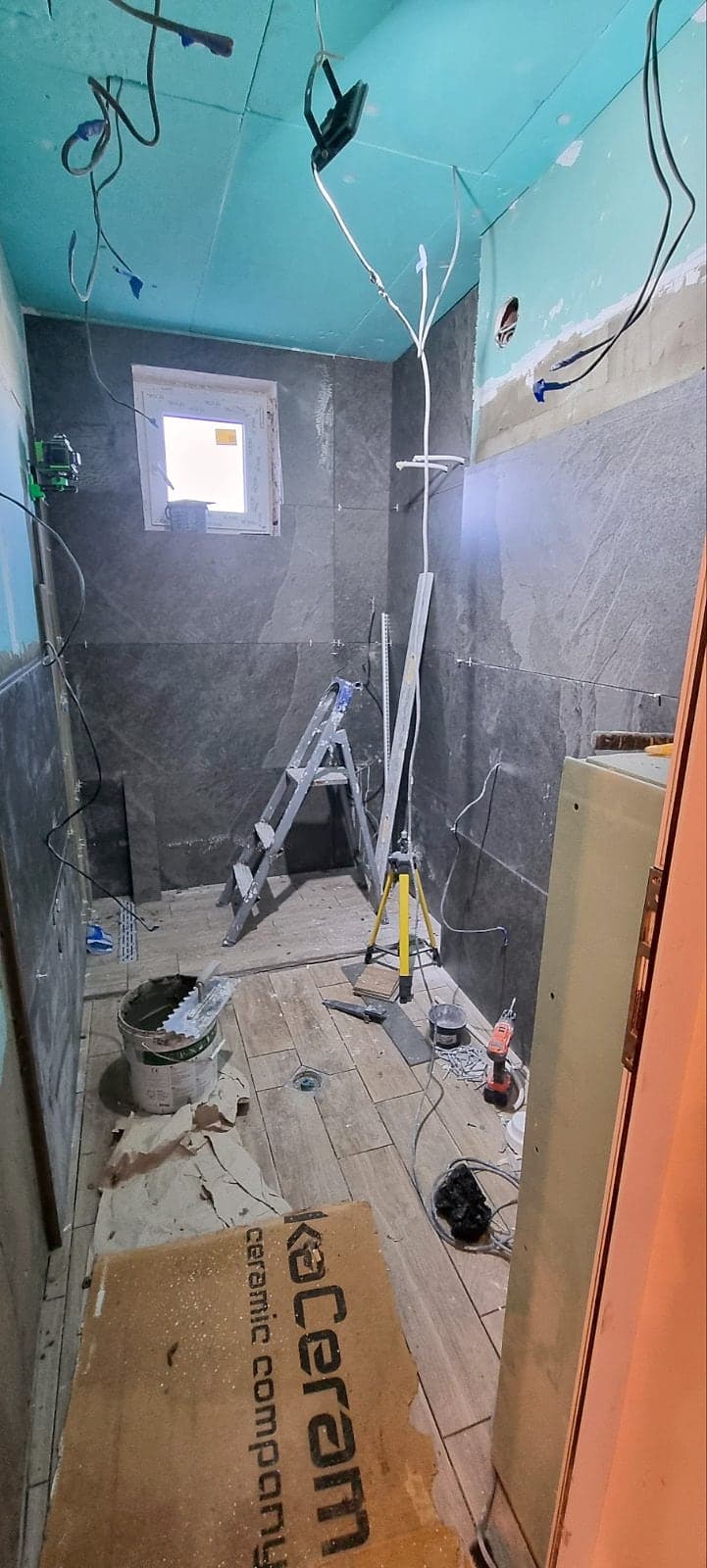
Here is what the schedule usually looks like for a bathroom of around 4 m² with no major surprises – three weeks if work starts on a Monday. The photos are from the bathroom in Knyazhevo: from the bare walls to the finished bathroom.
Week one: strip-out, plumbing and wiring, walls and screed
The first one or two days are the noisiest and dustiest: the old tiles and sanitaryware come out, along with the screed if necessary. The waste is taken out every day. Straight after the strip-out, the real condition of the bathroom becomes visible – we show what usually comes to light in the article on renovating an old bathroom.
Next come the plumbing and wiring, usually in a day or two. The new water supply and drainage pipes are laid, and the parts that will stay hidden in the wall and floor are fitted: the body of the concealed shower mixer, the concealed frame for the wall-hung toilet and the linear drain. The pipes are pressure-tested before they are closed into the wall. The cables for the lighting, the extractor fan and the sockets are run at this stage too.
The walls and the screed come at the end of the week. The walls are straightened with plaster and mesh or lined with moisture-resistant plasterboard, and the floor gets a new screed with a fall towards the drain. If the screed is laid on a Thursday or Friday, it also dries over the weekend, so no working days are lost.
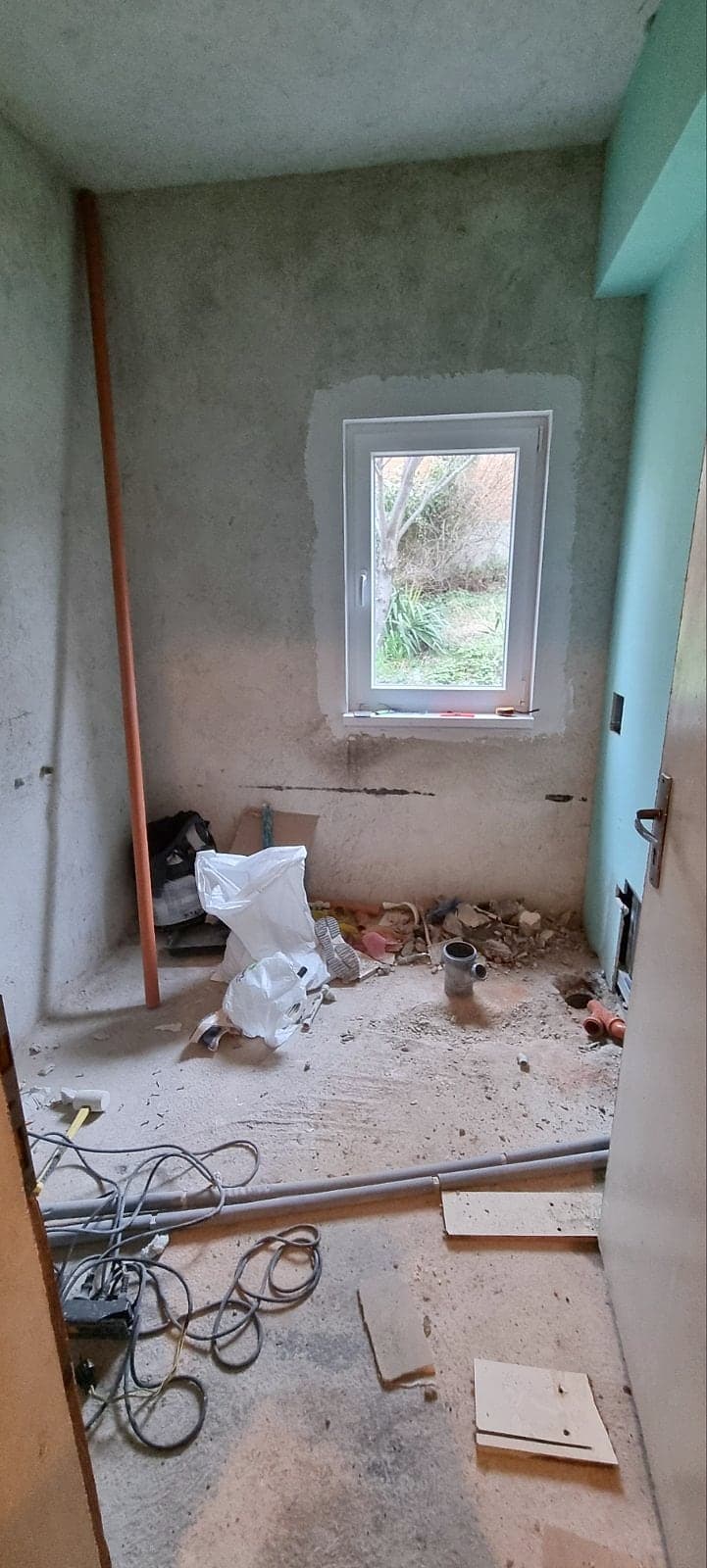 Start
Start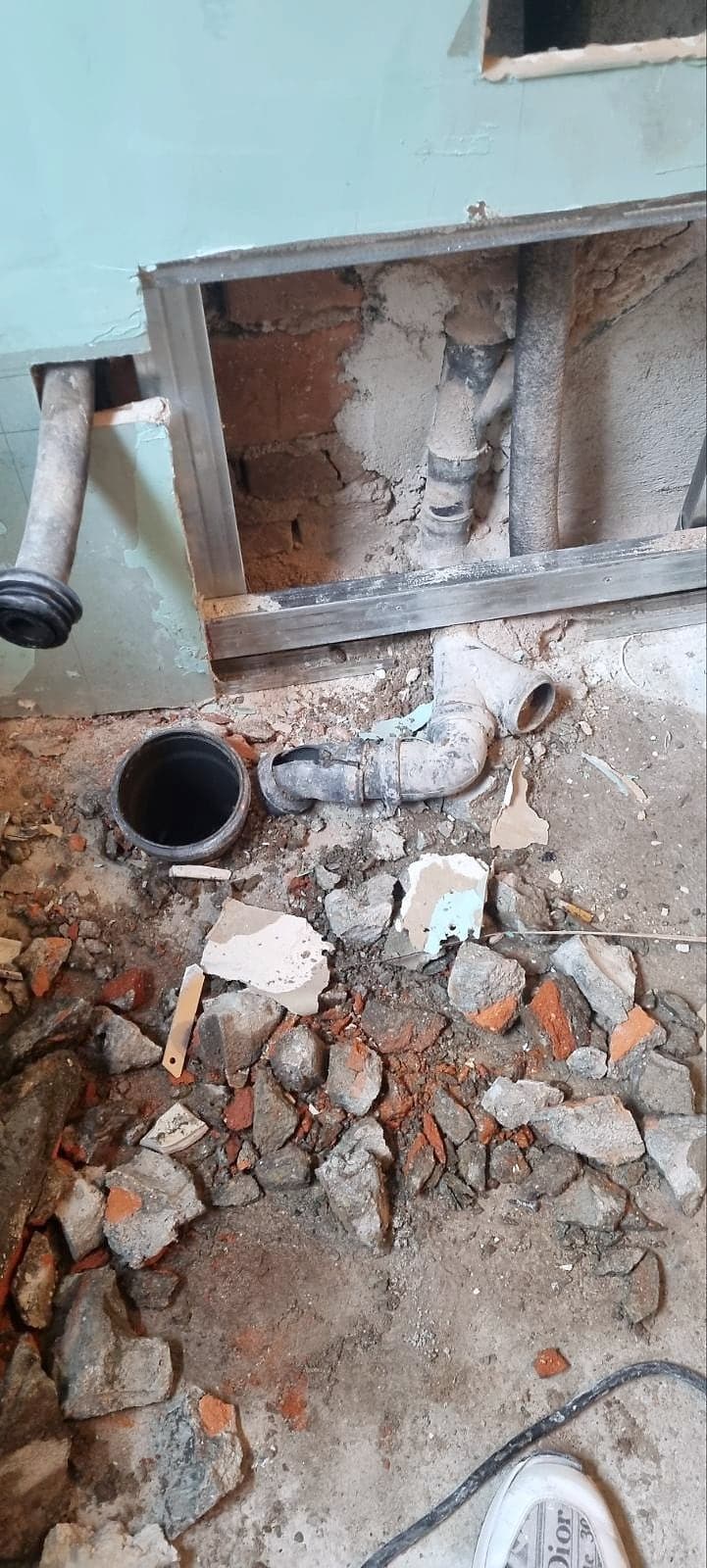 Drain pipes
Week two: waterproofing, water test and wall tiles
Waterproofing starts once the screed has dried enough – how long that takes is set out in the manufacturer’s instructions for the mix. First, waterproofing tape and sealing collars go into the corners and around the pipes, then two coats are applied across the whole floor and on the walls in the shower area. We have covered bathroom waterproofing in detail in a separate article – where it goes and which details make all the difference.
Once it has dried, the waterproofing is tested with water before the tiles are laid: the floor is covered with a thin layer of water and checked for any signs of damp. The drying and the test usually take a day or two, during which no work is done in the bathroom.
Then the tiling starts – usually 3–5 days. In the Knyazhevo bathroom, the walls were tiled first and the floor after them. Large-format tiles and herringbone need more cutting and levelling, and every niche has to be tiled around its edges, so these take more days.
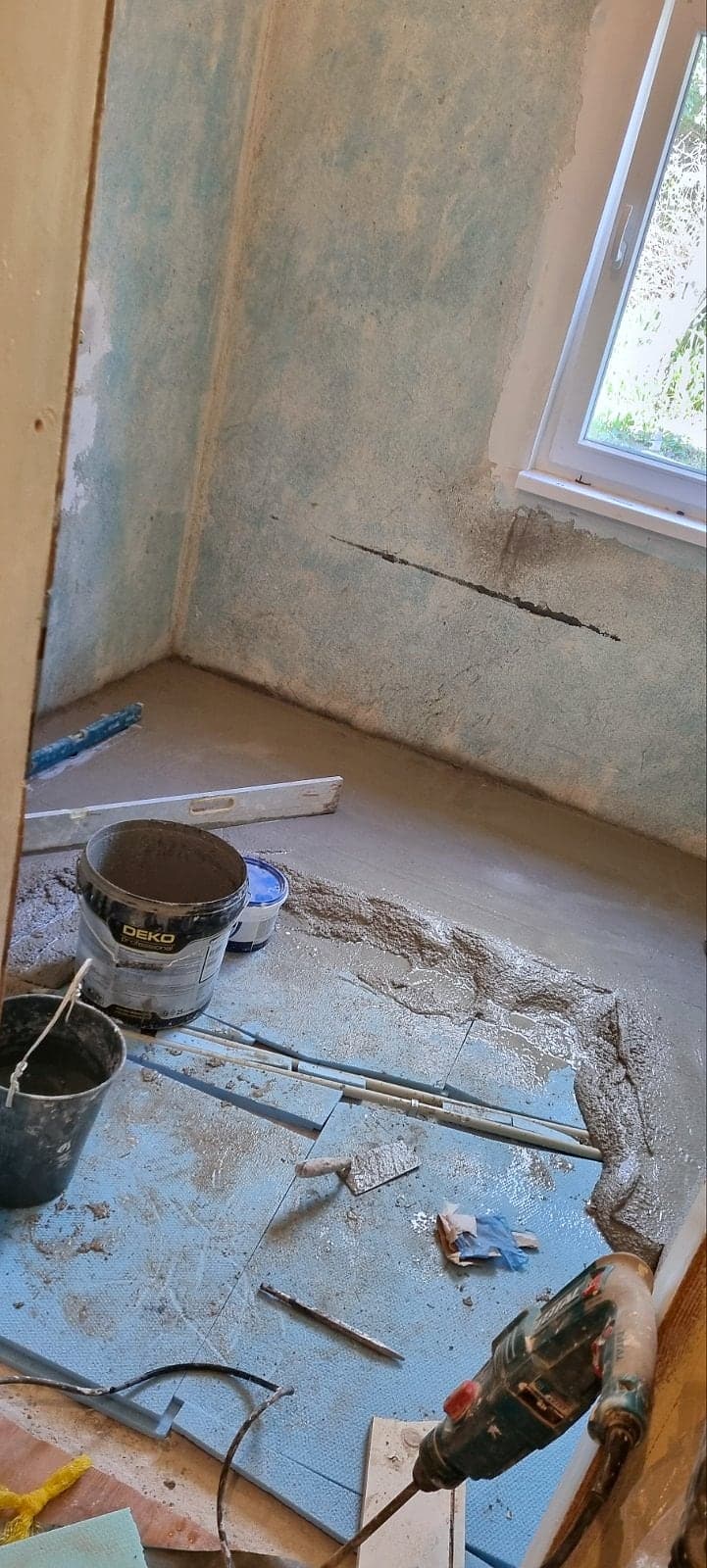 Screed
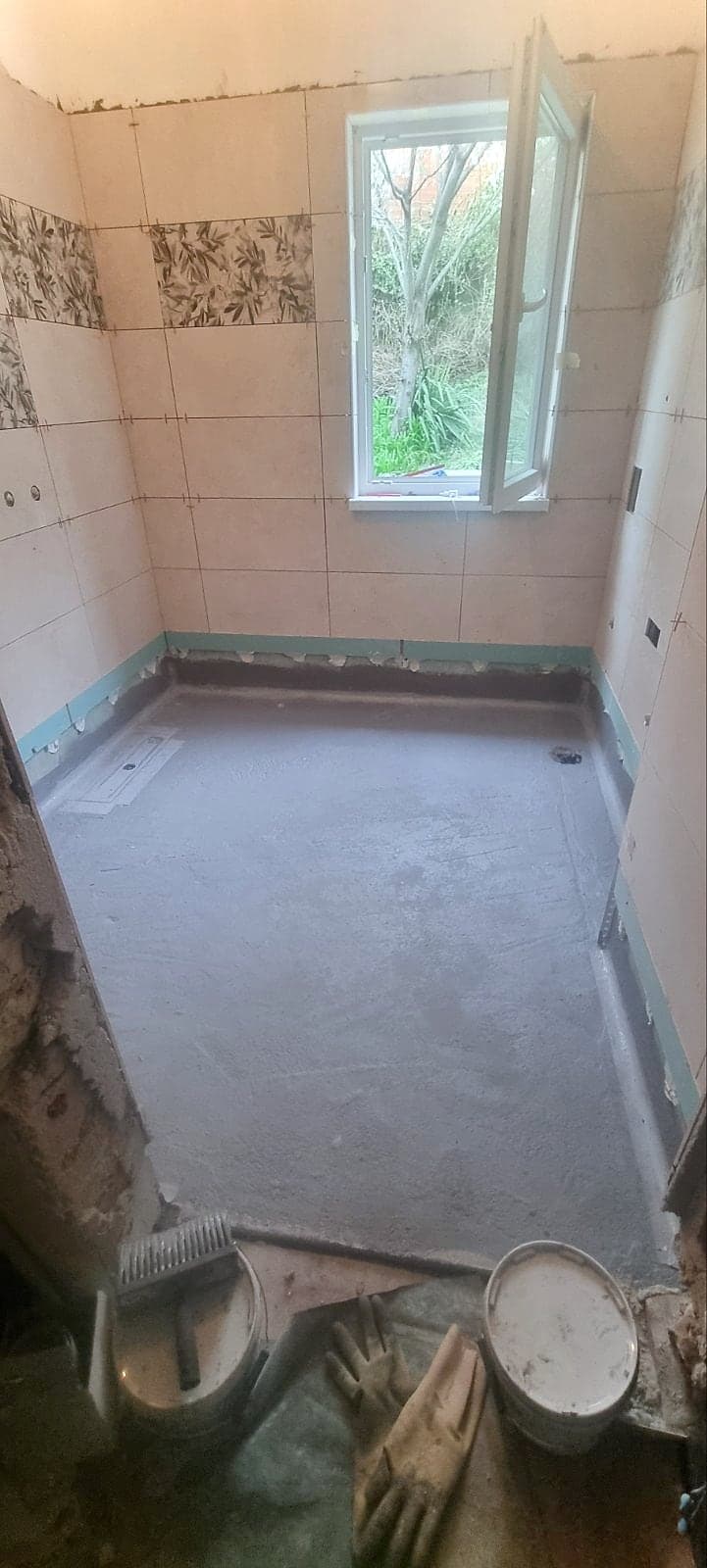 Waterproofing
Week three: floor, grouting, ceiling and fitting
The tiling finishes with the floor. The grouting is done once the adhesive has set. Then come the suspended ceiling and the lighting, usually in a day, although in some bathrooms the ceiling is done before the tiles.
Fitting comes last – the toilet, the vanity unit, the shower, the shower screen, the mirror and the accessories, usually in a day or two. Finally, the bathroom is cleaned, everything is checked and it is handed over to you with the written warranty: 24 months for the renovation, including the waterproofing, and 72 months for the plumbing and electrical installations.
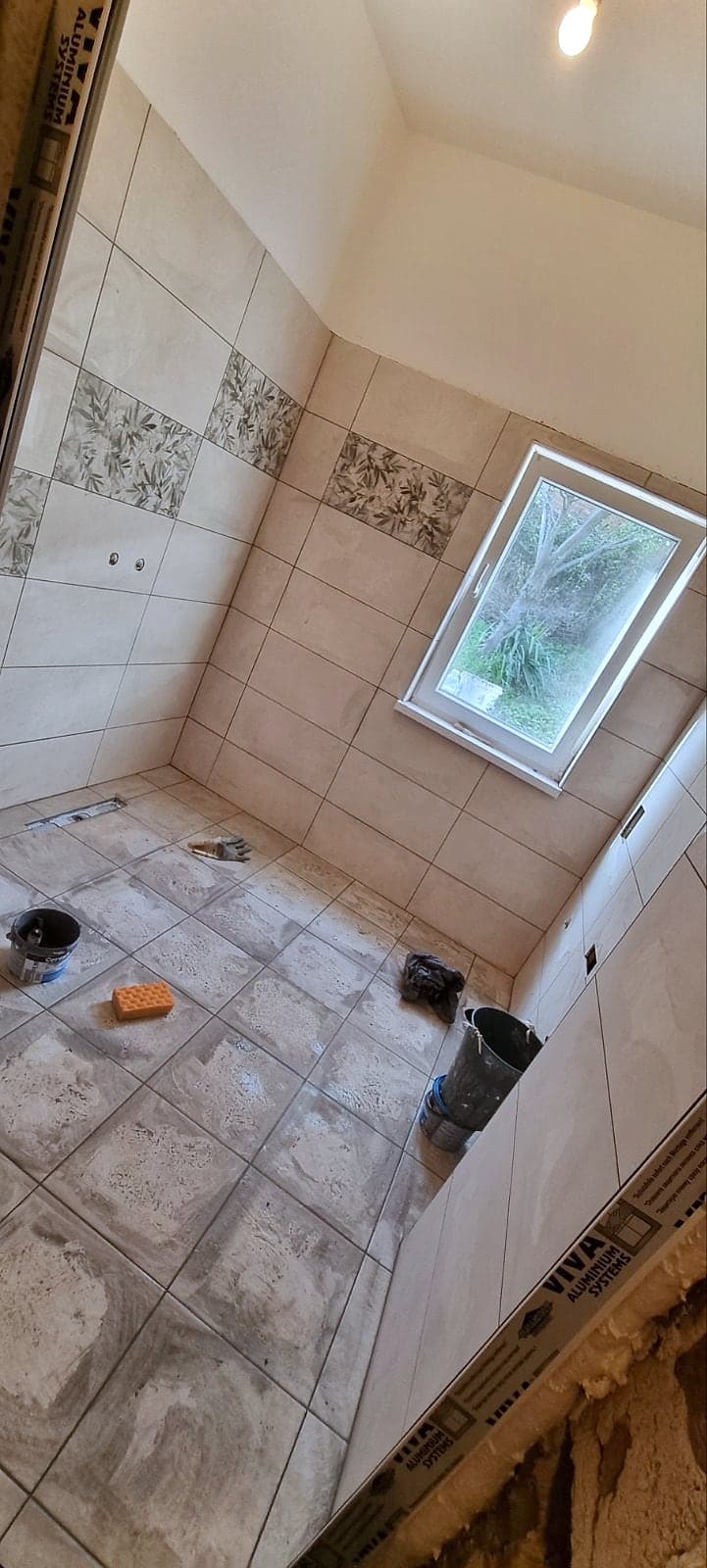 Floor tiles
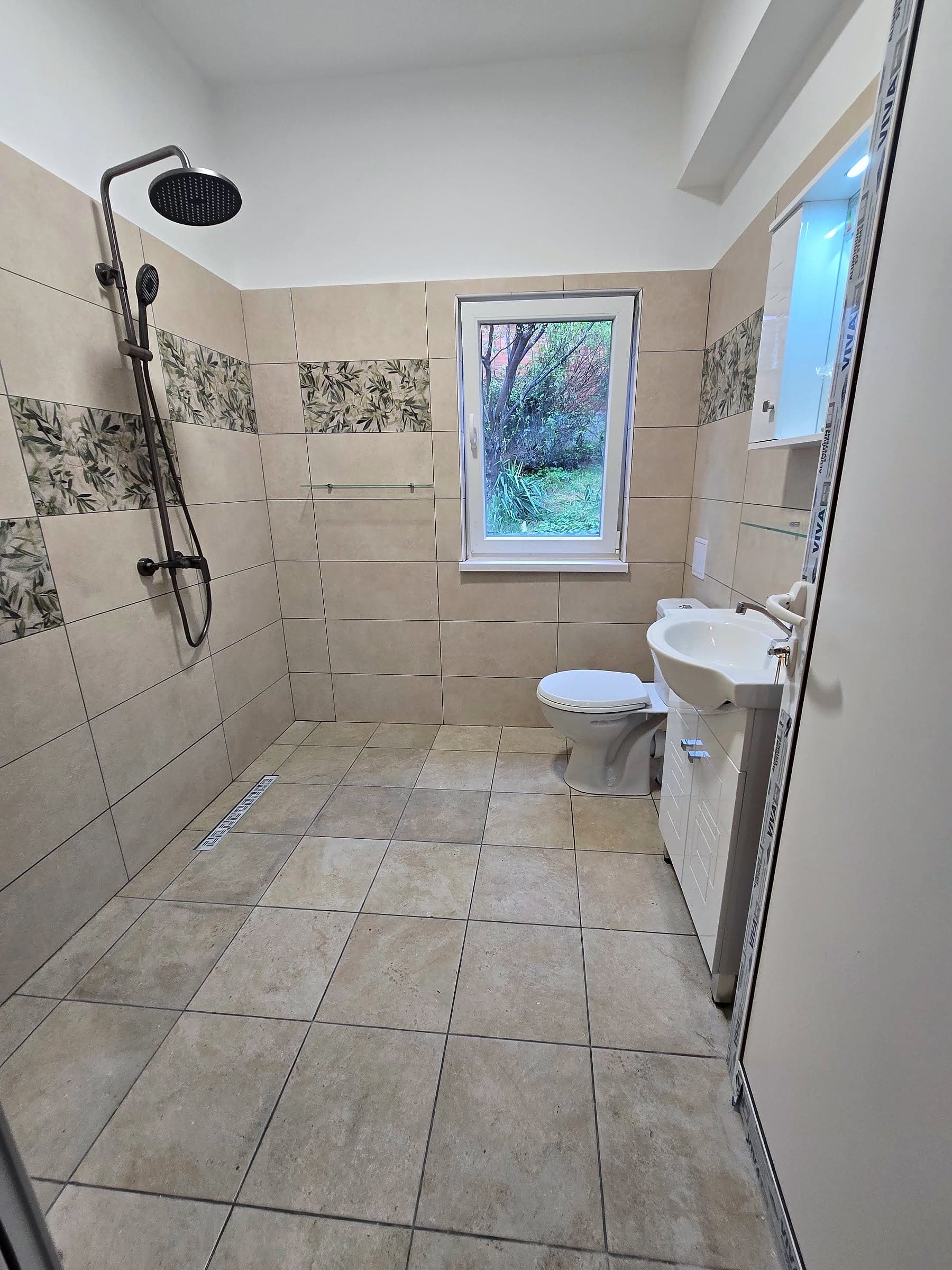 Finished
Why it cannot be rushed: the three drying periods
There are three waits in the schedule that should not be cut short, however much you want the bathroom back sooner. How long each one lasts depends on the material: the manufacturer states it in the instructions, and the schedule is made to fit them, not the other way round.
- The screed – before the waterproofing. If the waterproofing goes onto screed that has not fully dried, the moisture is trapped underneath it and the layer may not bond properly to the base.
- The waterproofing – before the tiles. Waterproofing that has not fully dried is not yet a watertight layer, and the tiles seal it in for good. If it lets water through, the leak shows up later, usually on the neighbours’ ceiling, and the repair means taking the tiles off.
- The adhesive – before the grout. If the grouting is done while the adhesive is still fresh, the tiles may shift and the grout may crack.
More people will not make anything dry faster, and in a 4 m² bathroom there is no room for many tradesmen to work at once anyway. If the schedule you are offered leaves no room for these pauses, one of them will be skipped.
What makes it take longer
Most delays come not from the work itself but from everything around it:
- Hidden problems after the strip-out – old pipes, crooked walls, a screed that needs replacing. They come to light in the first few days, and that is when the extension to the schedule is assessed.
- Changes along the way – a new niche, a different shower, herringbone instead of a standard layout. Any extra work is approved in writing, with a price, before it starts, and it usually shifts the schedule.
- The shared risers. If they are replaced along with the bathroom, the water is shut off for the whole vertical line of flats and the day is agreed with the neighbours – we describe how this is organised in the article on replacing the risers in an apartment block.
- Noisy work. Demolition and drilling are scheduled only within the hours allowed by the building and the municipality – see the renovation rules in apartment buildings with an owners’ association.
We explain why renovations overrun in the first place, and how to keep to your schedule, in the article ‘Why renovation deadlines slip’.
How to avoid delays: what is down to you
Many delays can be avoided before the renovation has even started. Make the decisions about the bathroom in advance: shower or bath, wall-hung or close-coupled toilet, niches, lighting, and where the water heater and the washing machine will go. That way there will be no need for changes along the way.
You choose and buy the tiles, sanitaryware and drains yourself, so what matters is not only what arrives on site but also when:
- in the first few days – the body of the concealed shower mixer, the concealed frame for the wall-hung toilet and the linear drain, because they go into the wall and floor before the tiles;
- before the waterproofing – the tiles, with some spare for cutting;
- for the last few days – the toilet, the vanity unit, the taps, the shower screen, the mirror and the accessories.
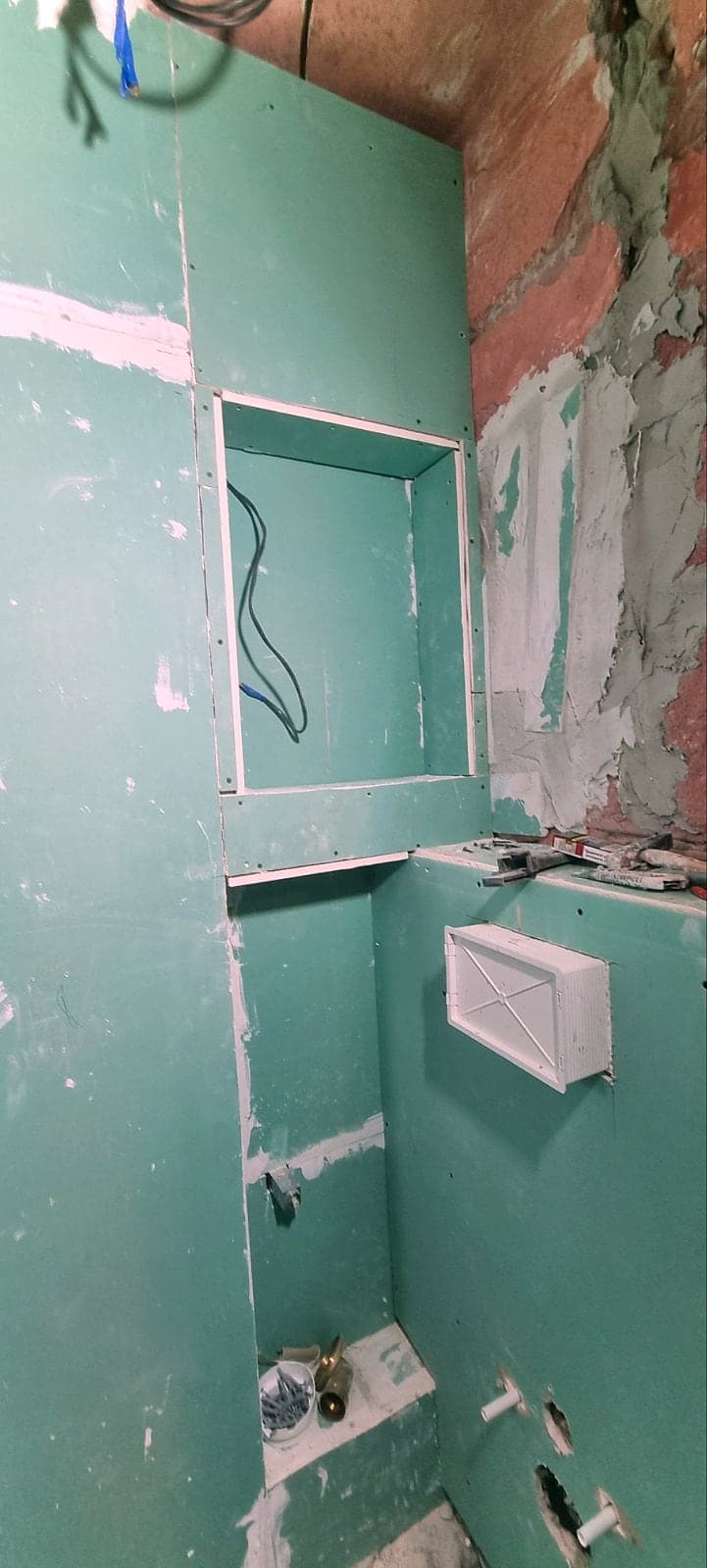 Plasterboard
 Tiling
Finally, ask for a stage-by-stage schedule in the quote, and ask which days you will be without water and from when you will be able to use the toilet. That way you plan your life around the renovation, not the other way round.
How to live without a bathroom
If it is the only bathroom in your home, plan for at least 2–3 weeks without it – staying with relatives, in a short-term rental nearby or with some other temporary arrangement. If you have a separate toilet, it can stay in use as long as the work on the pipes does not affect it – this is clarified at the site visit.
The first days are the hardest: the strip-out is noisy and dusty. The water in the home is usually shut off only for the hours when the connections are being made, and the rest of the time there is water in the kitchen.
While the renovation is under way, the bathroom is a building site: nobody goes in on the drying days or during the water test, and the toilet is not fitted until after the tiles. If there are small children or elderly people at home, it is sensible for them to spend at least the strip-out days elsewhere.
Frequently asked questions
Can a bathroom renovation be done in one week?
For a complete renovation, usually not. The drying of the screed and the waterproofing, together with the water test, takes a few days on its own, and the tiling another 3–5. A smaller job without new waterproofing, such as replacing the sanitaryware, can be done in a week.
When can the toilet be used again?
From the day it is fitted – usually in the last one or two days, after the tiles and the grouting. With a wall-hung toilet, the concealed frame goes in as early as the first week, but the toilet itself is only hung after the tiling.
Can work be done on a Saturday as well?
That depends on the building’s and the municipality’s rules on noisy work. Noisy stages such as the strip-out are scheduled only within the permitted hours. If working on Saturdays matters to you, mention it at the site visit so that it can be discussed when the schedule is drawn up.
How many days does the waterproofing take to dry?
It depends on the product – the time is given in the manufacturer’s instructions. Usually at least 24 hours before tiles are laid, and there is also a wait between the two coats. Then comes the water test, so the schedule allows two to three days for the waterproofing and the test.
What happens if the tiles arrive late?
Work stops just before the tiling: the waterproofing is done and tested, but there is nothing to lay. Every day of delay is added to the timeline, and the bathroom stays out of use. That is why the tiles need to be on site before the waterproofing at the latest – and ideally before work even starts.
Is a small bathroom quicker to renovate?
Quicker, but not in proportion. There are fewer tiles and the tiling takes less time, but the strip-out, the plumbing and wiring, and the drying take almost as long. That is why a 2–3 m² bathroom usually comes in around the lower end – two weeks, not one.
If you want to know how long your bathroom renovation will take, the most accurate answer comes after a site visit. It is free, and the quote is in writing – with the work described, the price and a stage-by-stage schedule. Book a site visit when you are ready – we reply within 24 hours.
More articles
All articles Process
4 min read
Major apartment renovation in Sofia: stages and timelines
The stages of a major apartment renovation in Sofia in order – from strip-out to handover – and what really determines the timeline. Plus why the exact schedule comes after a site visit.
Read Process
3 min read
Why renovation deadlines slip – and how to protect your schedule
Almost every renovation overruns its original deadline. We look at the real reasons, and at what YOU can do to minimise the risk.
Read Bathroom
12 min read
Bathroom renovation: labour costs in 2026, task by task
Bathroom labour prices task by task, a worked example for 4 m² and why an old bathroom usually comes to €4,500–5,500 with construction materials.
Read