Renovation company in Sofia: 12 questions before you sign
Before you choose a renovation company in Sofia, check its UIC for free in the Commercial Register and ask for a written, itemised quote. 12 questions, what good answers look like, red flags and our answers.
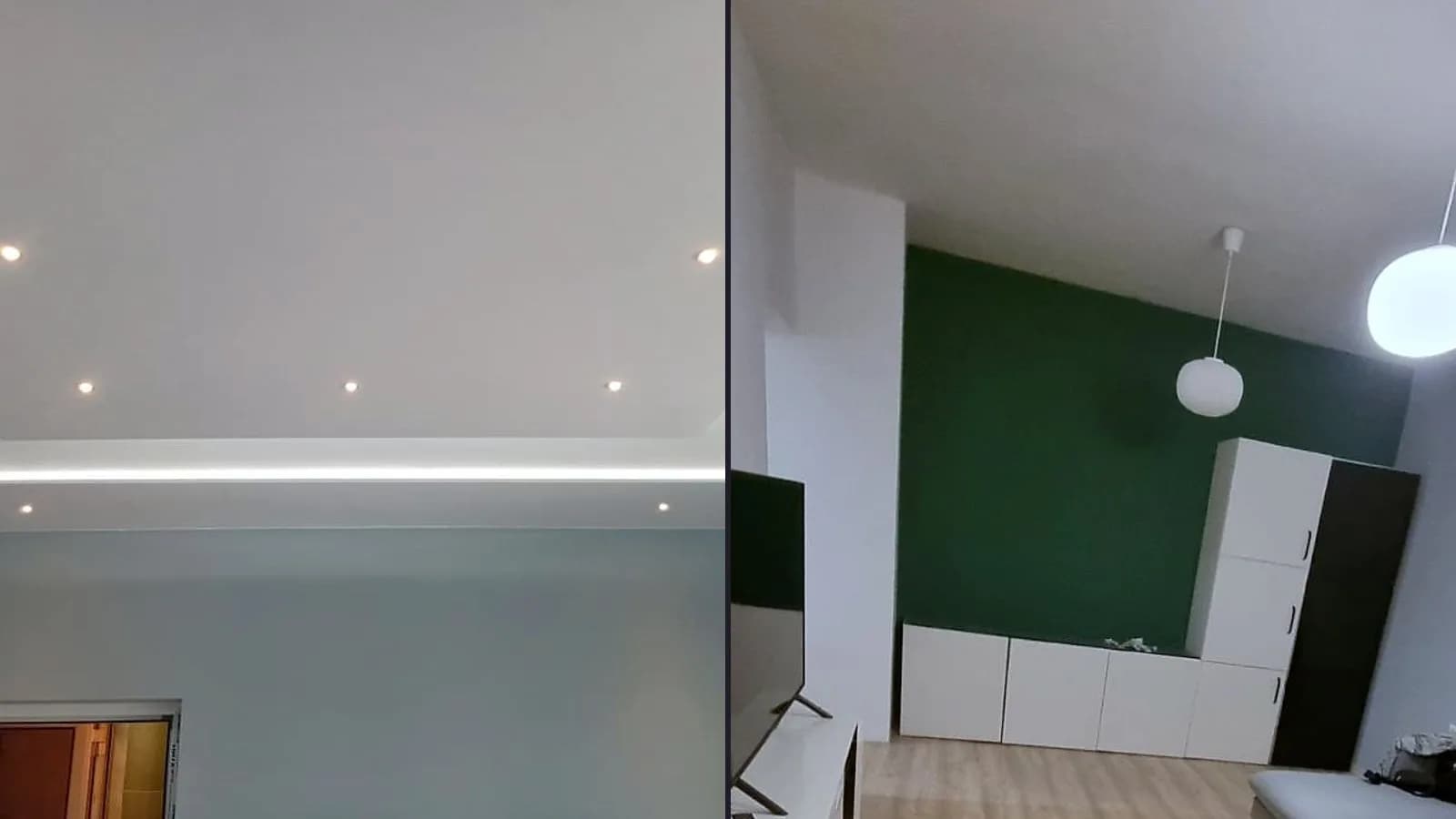
A good renovation company in Sofia is recognised by its paperwork, not by its promises. It has a registered company name and a UIC (in Bulgarian, ЕИК) that you can check for free in the Commercial Register. It visits the property before giving a price and provides a written quote with the work, the quantities and the unit prices. It signs a fixed-budget contract with a schedule by stages, tells you who runs the site, gives a written warranty and hands the work over with a protocol.
Below are 12 questions you can ask any company – at the site visit, on the phone or in an email. For each one, you will find what a good answer looks like and why it matters. When you hear ‘yes’, ask to see it in writing: in the quote, in the contract or in the warranty certificate. At the end there are the warning signs and, to be fair, our own answers in a table.
The 12 questions at a glance
- What is the company’s registered name and UIC?
- Which projects has it done, and are there photos of them?
- What do its clients say, and where?
- Will someone visit the property before giving a price?
- Is the quote in writing, and what does it include?
- Is the budget fixed, and how is extra work added?
- How and when do you pay?
- What is the schedule by stages?
- Who runs the site?
- How will the common areas and the neighbours be protected?
- How is the finished work handed over?
- What is the warranty, and which document is it in?
Who the company is
1. What is the company’s registered name and UIC?
A good answer is the registered name – ‘… EOOD’, ‘… OOD’ or another legal form – and the UIC, not just a brand, a website and a phone number. The same name and the same UIC should appear on the quote, on the contract and on the payment documents.
The check is free and takes a few minutes. The Commercial Register is kept by the Registry Agency and is public: anyone can search it, free of charge. On the agency’s portal, portal.registryagency.bg, open ‘Commercial register and register of NPLE’ and then ‘References’, and search for the company by UIC or by name. Check:
- The name and the legal form – do they match the quote and the contract?
- The registered office and address, the business activities and the manager, who represents the company.
- Whether a liquidation or insolvency has been entered.
- The documents the company has filed – such as its annual financial statements – and when it was registered.
If the company claims more years of experience than the register shows, ask what name it worked under before. A brand is sometimes older than the company behind it today. In that case the company can explain the difference and show you projects from those years.
Why it matters: the contract is with the company, not with the brand or with the tradesman you spoke to. If something goes wrong, you hold the party to the contract responsible – so you need to know exactly who that is.
2. Which projects has it done, and are there photos of them?
A good answer is finished projects with photos you can look through at your own pace: what was done, in what kind of building and, ideally, shots taken during the work as well as at the end. The most useful are projects similar to yours – a bathroom in a panel block, an old apartment, a new-build home.
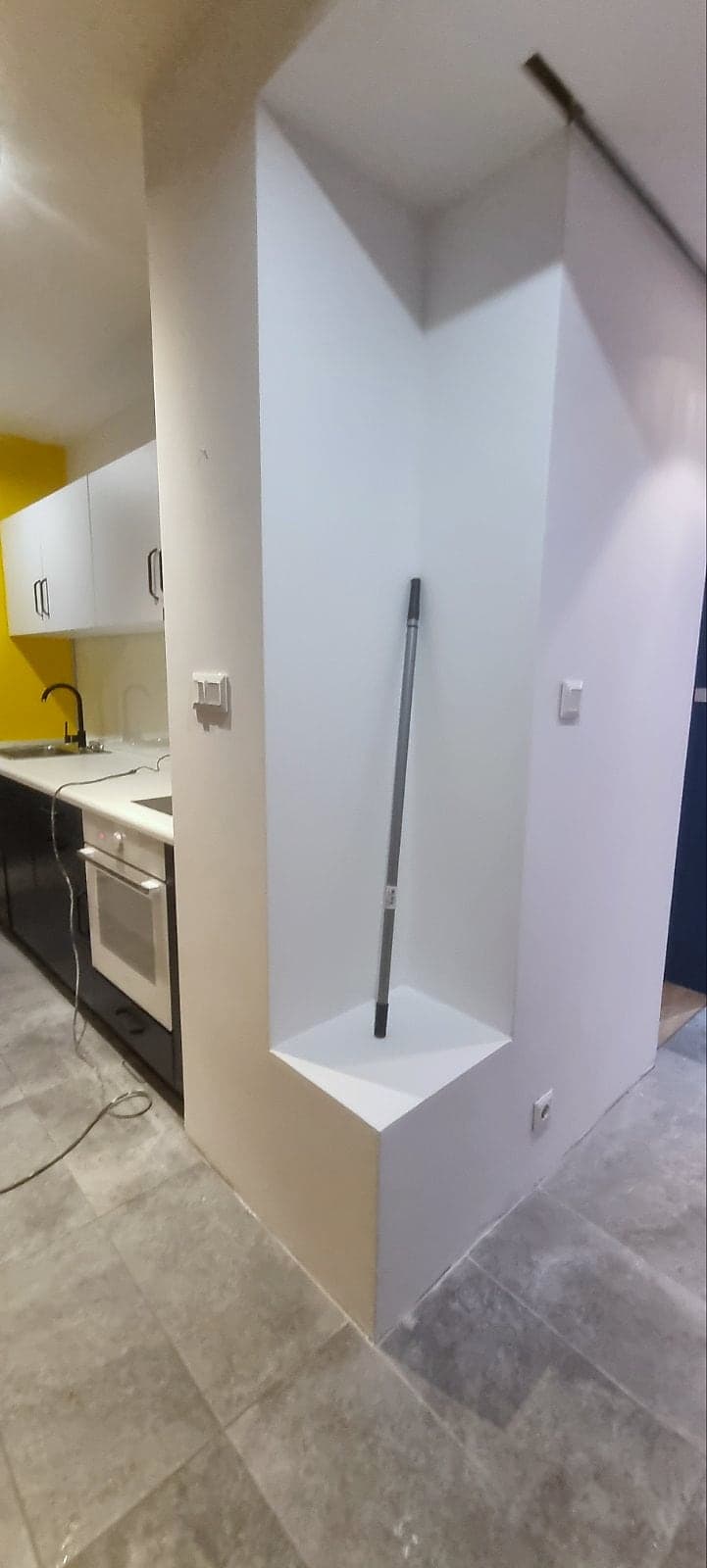 During
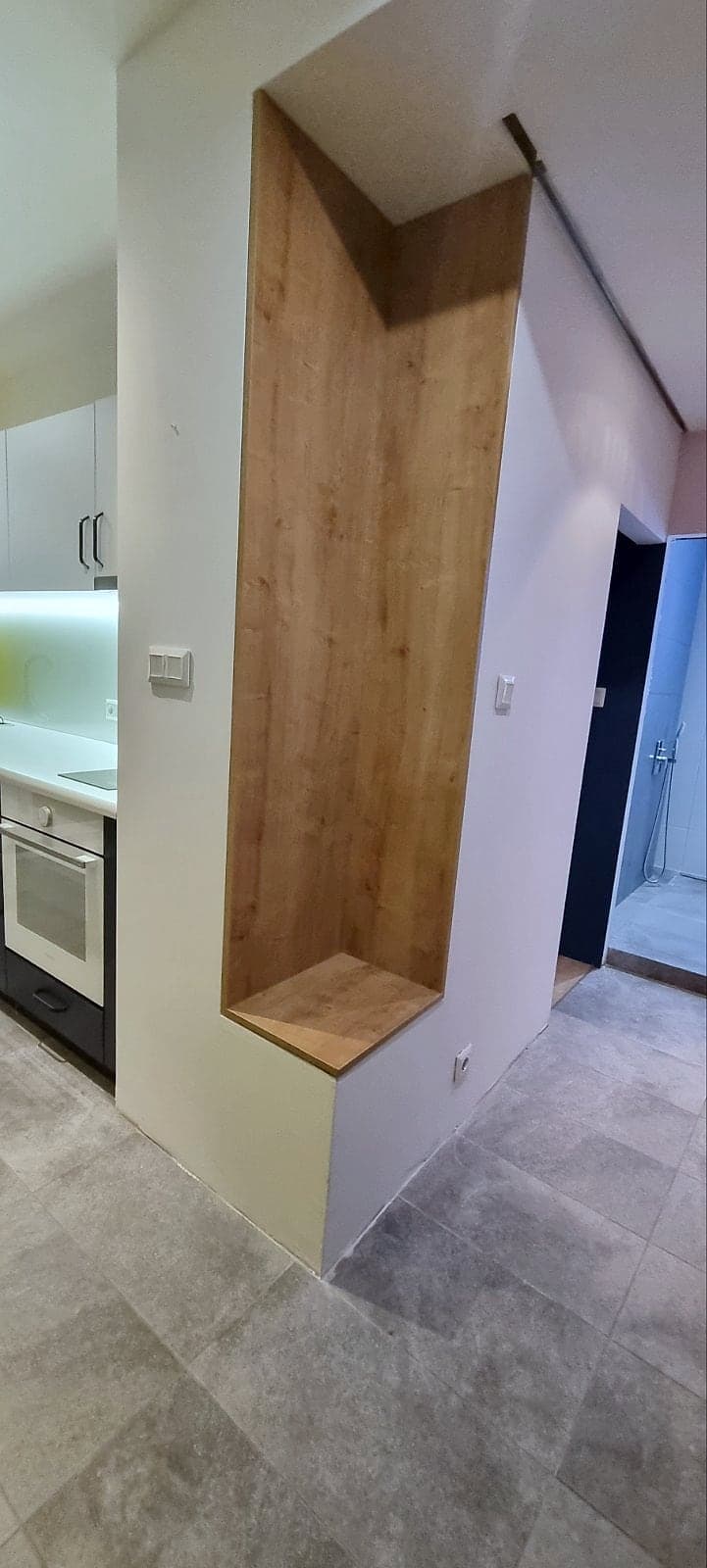 After
Why it matters: a single nice photo could be from any project. A series from the same project – during the work and after it – shows how a company works, including things you cannot see afterwards: the plumbing and wiring, the waterproofing, the frame of a suspended ceiling. You can find our projects with photos in the Projects section.
3. What do its clients say, and where?
A good answer is reviews you can read for yourself, not just the ones picked for the company’s website: on online maps, on social media, on forums. Look for reviews with details – what was done, when and how it went – and see how the company responds to criticism.
Why it matters: five general compliments tell you less than one detailed review. And a calm, specific reply to a complaint shows how the company will behave if something goes wrong on your job too.
The price: site visit, quote, contract
4. Will someone visit the property before giving a price?
A good answer is ‘yes’: a visit to the property before there is a price, with measurements and questions about what exactly you want. A price over the phone can be a guide, but it is not a quote. Ask in advance whether the visit is charged for – ours is free.
Why it matters: at the site visit you can see what you cannot hear over the phone – the condition of the plumbing and wiring, how crooked the walls are, whether there is damp, whether there is a lift and where the lorry for the waste will stop. Without a visit, the price is a guess, and the difference comes out during the renovation.
5. Is the quote in writing, and what does it include?
A good answer is a written, itemised quote. Each line is a separate job with a unit, a quantity, a unit price and a total, and labour and materials are shown separately. The quote should include:
- All the work – room by room or stage by stage, including the demolition and the waste removal.
- The quantities – m² of wall, linear metres of skirting, the number of doors – so that you can see how the total was worked out.
- Which materials the company supplies and which you buy yourself.
- What is not included – for example, furniture, appliances or a design project.
- How long the quote is valid for, and the schedule by stages.
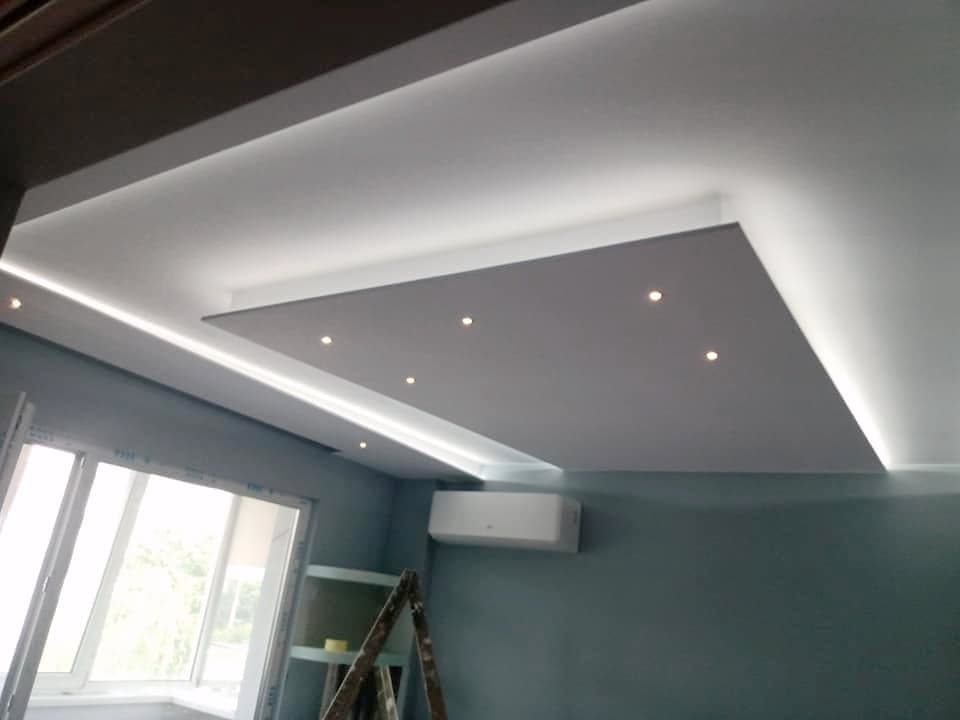
| Line in the price list | Unit | Labour price |
|---|---|---|
| Installing a two-level suspended plasterboard ceiling with concealed lighting | m² | €37.58 |
| Fitting an LED strip | lin. m | €13.42 |
| Running the wiring for an LED strip | lin. m | €8.05 |
| Fitting downlights | each | €10.74 |
| Running the wiring for downlights | each | €8.05 |
Why it matters: two quotes with different totals often describe different renovations. The lower one is sometimes lower because it is missing lines that the other one includes, and that only shows in an itemised quote. There is more on this in the article why a written quote matters more than a low price.
With us, the prices in the price list are for labour, and the materials we supply are shown separately in the quote. You choose and buy the tiles, sanitaryware and taps for the bathroom yourself.
6. Is the budget fixed, and how is extra work added?
A good answer is a contract in which the price for the described scope is fixed. It changes only if the scope changes – and only after you have approved the new work and its price in writing, before that work starts.
Why it matters: in a renovation, especially in an old building, something unexpected often turns up once the demolition is done – an old pipe, damp, an uneven base. The question is how it is handled. If the rule is ‘we’ll sort it out’, extra work can easily become a large part of the bill. So keep a reserve in your budget too – we explain why in the article 5 mistakes before starting a renovation.
7. How and when do you pay?
A good answer is written into the quote or the contract: how much you pay, when and for what – before the start, after a completed stage, at handover. Every payment goes to the company you have the contract with, against a document.
Why it matters: when payments follow the stages, you always know what you are paying for. A verbal arrangement – ‘you’ll give us a bit more for the materials’ – is a reason for a dispute later. Do not sign until the payment terms are on paper.
The work on site
8. What is the schedule by stages?
A good answer is a schedule by stages – demolition, plumbing and wiring, walls and ceilings, floors, finishing – with approximate dates and with time for the screeds and the skim coat to dry. It also says by when you need to choose the tiles, the sanitaryware and the doors so that work does not stop.
Why it matters: a single end date does not tell you whether the renovation is on track. With a schedule by stages, you see in time if something is falling behind. The stages of a full renovation and what to ask about each one are described in the article what a full renovation includes.
9. Who runs the site?
A good answer is the name and phone number of a person who is responsible for the whole renovation: they know the quote, come to the site and make decisions on the spot when something turns up. Also ask how they will keep you informed – photos, a short call every week, a written message for every change.
Why it matters: a renovation involves several trades – plumbing, electrics, plasterboard, tiling, painting. If nobody coordinates them, the coordinator becomes you.
10. How will the common areas and the neighbours be protected?
A good answer is specific: the stairwell and the lift are covered, the waste is taken out every day and is not left in the entrance, and noisy work is done only during the hours allowed by the rules of the municipality and the building. It helps if the company also tells you which days will be noisy, so that you can put them in your notice to the neighbours.
Why it matters: complaints stop the work and can sour relations with your neighbours for years. The hours for noisy work in Sofia and the rules on common areas are in the article on renovation rules in apartment buildings, and ready-made texts for the entrance and the building manager are in the renovation notice to neighbours.
The end: handover and warranty
11. How is the finished work handed over?
A good answer is a joint walk-through and a handover protocol. You go round the property together, any remarks are written down with a deadline for fixing them, and once they have been fixed, both sides sign.
Why it matters: the protocol is the list you use to check that the remarks have been dealt with. The contract or the certificate should also say from which date the warranty runs – the clearest is the date of the protocol. Without a protocol, ‘small finishing touches’ easily drag on.
12. What is the warranty, and which document is it in?
A good answer is a written warranty with periods for each type of work, set out in the contract or in a warranty certificate for the project. Also ask what it does not cover: with us, for example, fitted ready-made products – taps, light fittings, appliances – carry the manufacturer’s warranty.
Why it matters: defects in plumbing, wiring and roofs often appear late, when everything is already closed up, so that is where a long warranty is worth the most. Our warranty is 2 years (24 months) on all work and 6 years (72 months) on plumbing, electrical installations and roofs, with a written warranty certificate.
Warning signs
Each of these signs is a reason to ask more questions. Several together are a reason to look for another company.
- There is no written quote, or it is a single lump sum with no line items.
- ‘We’ll see on site’ is the answer to everything – the price, the timescale, the extra work.
- The price is far below the other quotes, but there is no breakdown and you cannot see what is missing.
- There is no registered name and UIC, or the name on the contract does not match the register.
- The payment terms are not written down, and payments are asked for in cash, with no document.
- The warranty is ‘just a promise’ – no periods and no document.
- Nobody can tell you who will run the site.
Our answers in brief
Here are our answers to the same questions. Check us as you would any other company – the UIC is in the second row.
| Question | RemontS |
|---|---|
| Company | REMONT EXPERTS EOOD |
| UIC (ЕИК) | 208637944 |
| The RemontS brand has worked since | 2019 |
| Completed projects | more than 180 |
| Team | full-time |
| Site visit before the price | free |
| Written quote with the work, quantities and prices | yes |
| Fixed-budget contract | yes |
| Extra work | only with written consent |
| Warranty on all work | 2 years |
| Warranty on plumbing, electrics and roofs | 6 years |
| Written warranty certificate | yes |
| Reply to enquiries | within 3–4 hours |
| Where we work | Sofia and up to 80 km |
| Phone | +359 888 802 618 |
You can see how a renovation works with us on the apartment renovation and bathroom renovation pages.
Frequently asked questions
How do I check a company by its UIC?
On the Registry Agency’s portal, portal.registryagency.bg, open ‘Commercial register and register of NPLE’ and then ‘References’, and search for the company by UIC or by name. The search is free. Check that the name and the UIC match the quote and the contract, who the manager is, and that no liquidation or insolvency has been entered.
How many quotes should I compare?
Two or three are enough if they come from companies that have seen the property. Compare them line by line: are the work and the quantities the same, which materials are included and what is not? A big difference in the total often comes from missing lines rather than cheaper labour.
What should a renovation contract include?
It should include the parties, with their names and UICs; the scope – ideally with the quote attached; the price; the schedule; the payment terms; how extra work is approved; how the work is handed over; and the warranty. If anything is missing, ask for it to be added before you sign, and for legal questions, talk to a lawyer.
How does a renovation warranty work?
With a warranty, the company undertakes to put right any defects in its work that appear during the warranty period. It should be in writing, with periods for each type of work. Ours is 2 years on all work and 6 years on plumbing, electrics and roofs, and we issue a written warranty certificate for every project.
How much does an apartment renovation by a company in Sofia cost?
With us, a full apartment renovation – including the bathroom, the kitchen and new plumbing and wiring – is usually €180–330 per m² for labour, excluding materials. A bathroom renovation is €4,000–6,000 including labour and construction materials, while you buy the tiles, sanitaryware and taps. The details are in the article how much an apartment renovation costs in 2026, and the calculator gives you a guide figure for your apartment.
If you sign a contract by 31 December 2026, the 10% discount applies to the whole quote – both the labour and the materials we supply – including quotes we have already sent.
If you want to ask us these 12 questions too, book a free site visit or call +359 888 802 618. We reply to enquiries within 3–4 hours and work in Sofia and up to 80 km around it.
More articles
All articles Budget
6 min read
Home renovation tax relief in Bulgaria: up to €102.26 less tax
Labour you pay for to renovate your own home in Bulgaria cuts your taxable income by up to €1,022.58 – up to €102.26 less income tax a year. The conditions, the documents and how not to lose the relief.
Read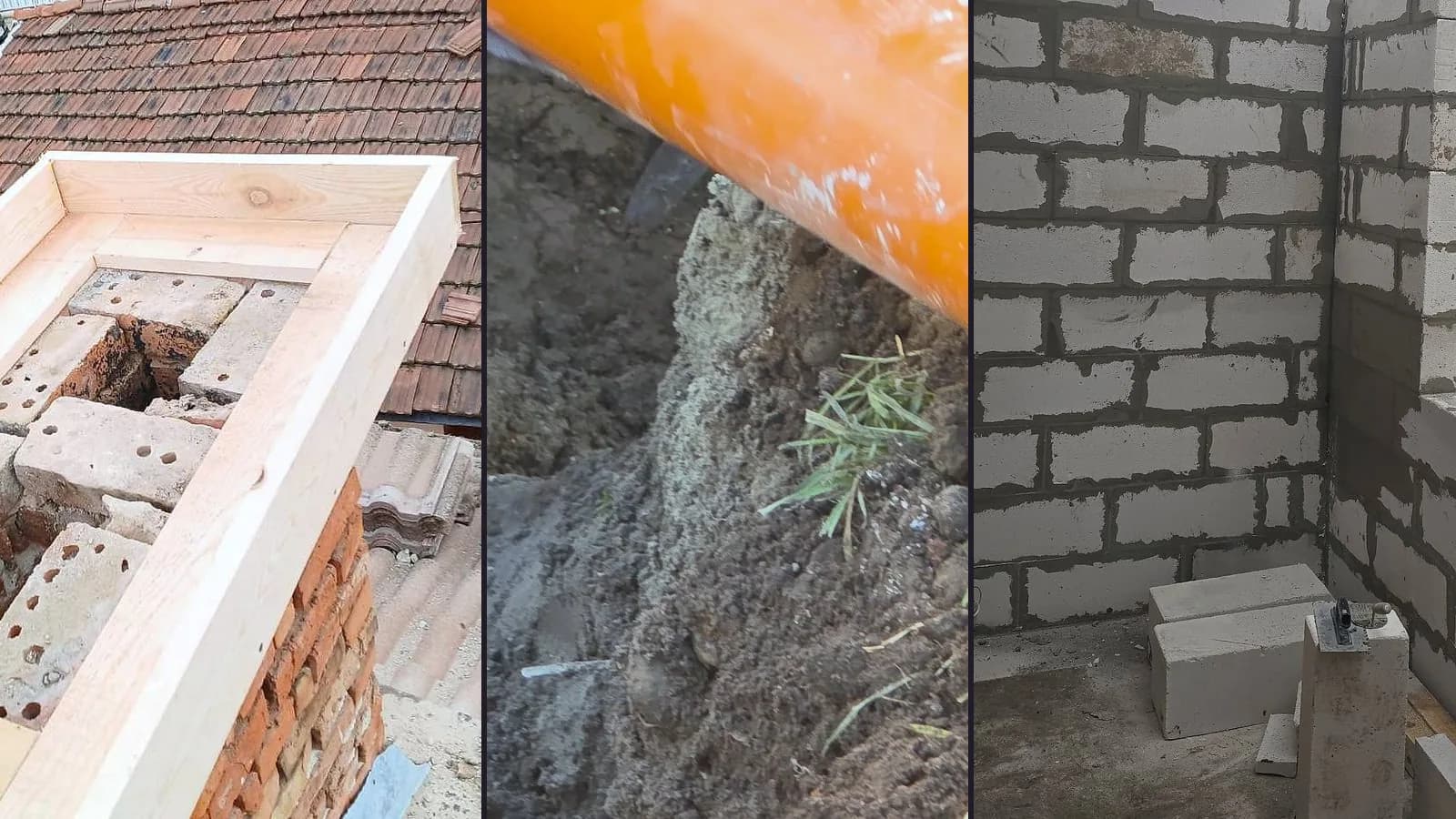 Projects
9 min read
House in Obelya: a new roof, chimney and drains in the garden
House renovation in Obelya, Sofia: a new tiled roof, a new chimney cap, new drains in the garden, aerated concrete walls and suspended ceilings, with prices.
Read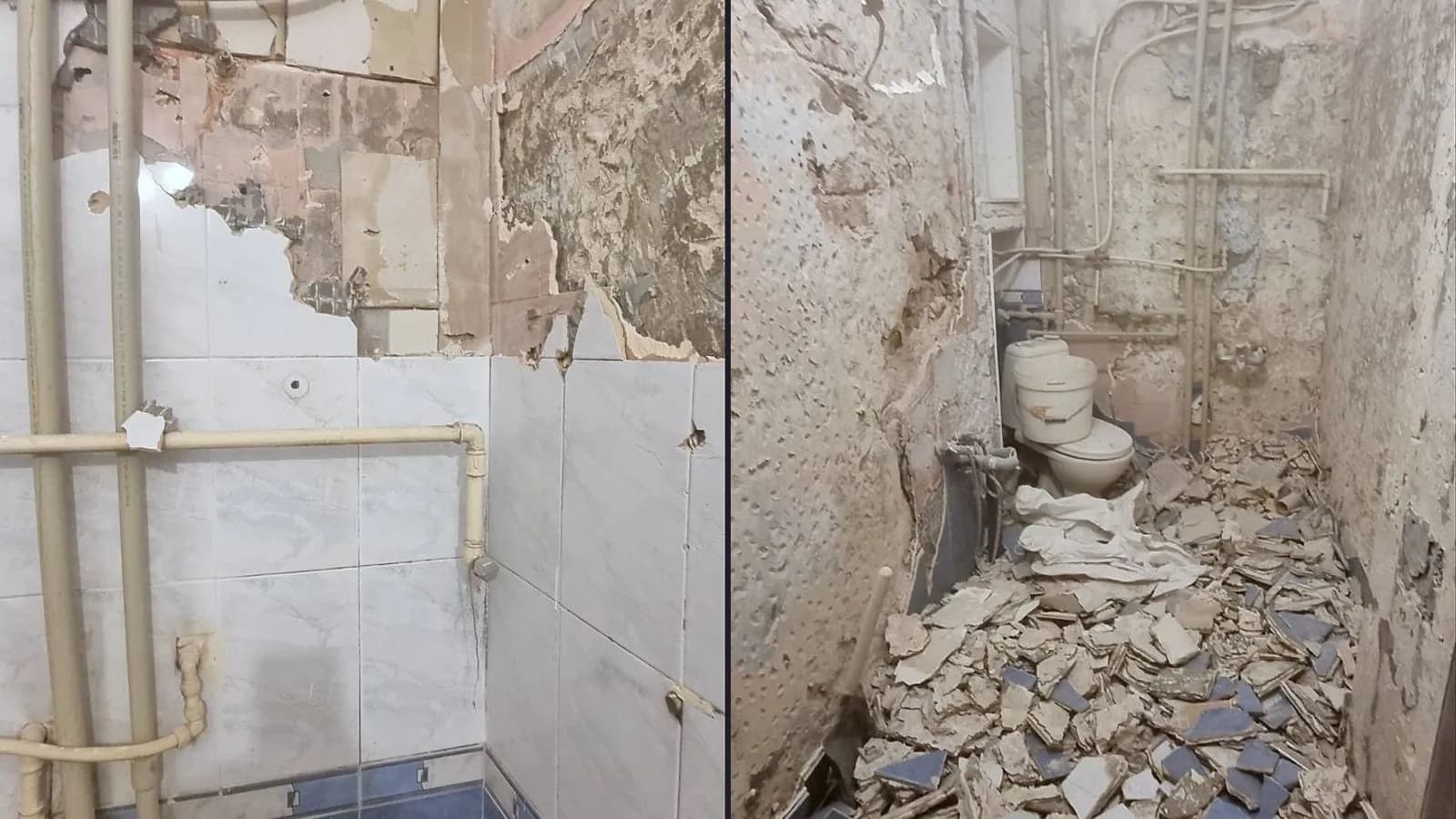 Process
10 min read
Bathroom and wall demolition: cost per m² and how it works
Price-list rates for breaking out tiles, plaster, screed and walls, a 4 m² bathroom example and the order of work – from water shut-off to waste removal.
Read