Bathroom and wall demolition: cost per m² and how it works
Price-list rates for breaking out tiles, plaster, screed and walls, a 4 m² bathroom example and the order of work – from water shut-off to waste removal.
Free site visit and quote
Leave your phone – we will call you
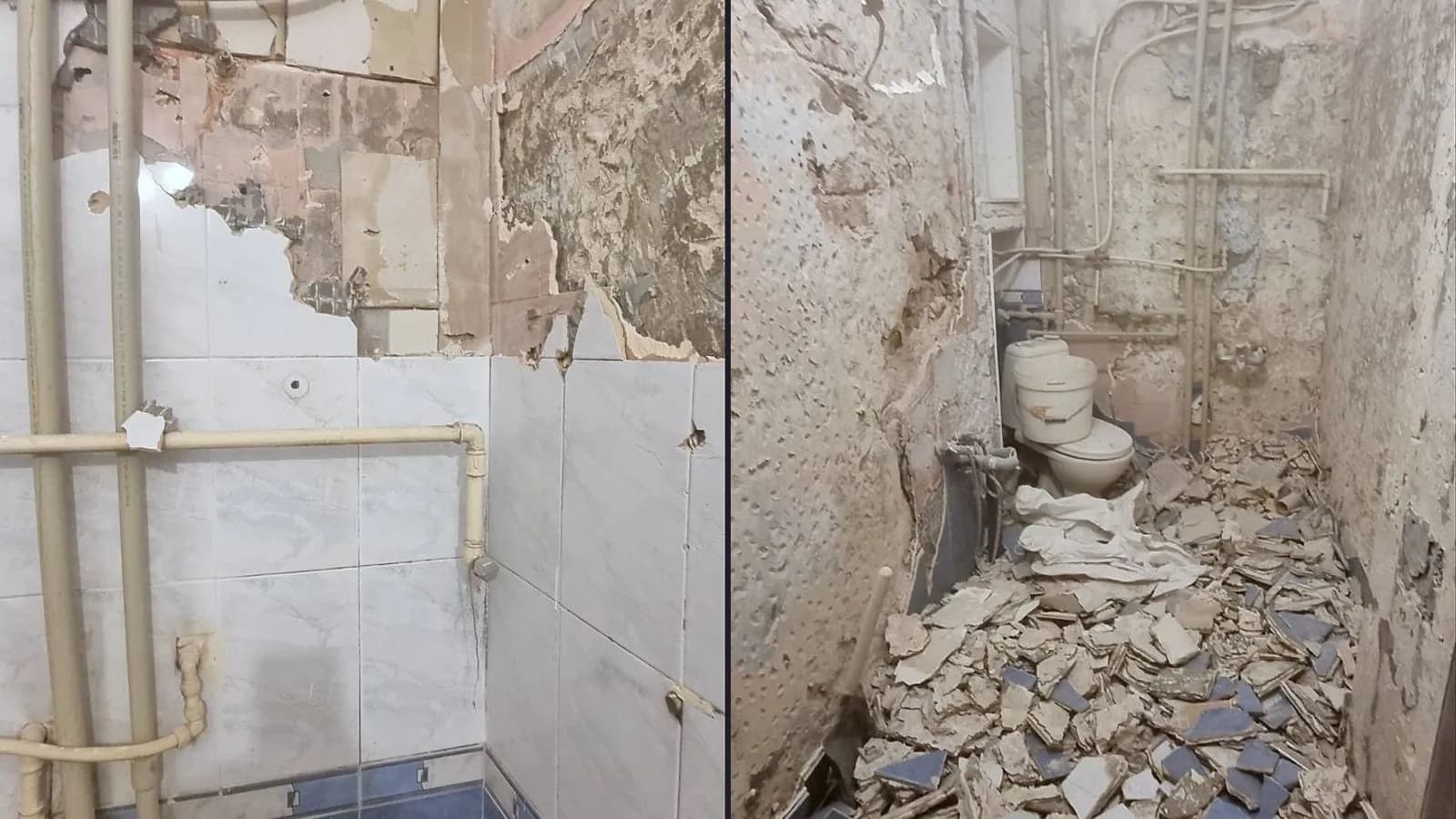
Removing the tiles from walls and floors costs €16.11 per m² for labour. Breaking out screed costs the same, hacking off plaster €10.00, and demolishing a wall €21.47 per m² for labour. For a 4 m² bathroom – wall and floor tiles, screed, an old bathtub, a toilet, a basin and one trip to take the waste away – the labour comes to €706.04.
Exactly how much it will cost you depends on what is under the old tiling. A thick mortar bed and a second layer of tiles mean more waste, while a terrazzo floor and reinforced screed take longer to break up. That is why the exact price is in the written quote after the free site visit.
Below are the item-by-item prices from our price list, the worked example for a bathroom, the order of work and what usually comes to light once the tiles are off. The prices are as of October 2026 and may change.
Prices for demolition and removal
Breaking out tiles, plaster, screed and walls is priced per square metre, while removing sanitaryware and doors is priced per item. All the prices in the tables are for labour.
Tiles, plaster, screed and floor coverings
| Task | Labour price |
|---|---|
| Removing tiles (walls + floor) | €16.11 per m² |
| Breaking up a terrazzo floor | €45.63 per m² |
| Breaking out floor screed | €16.11 per m² |
| Hacking off wall plaster | €10.00 per m² |
| Removing laminate flooring | €3.22 per m² |
| Removing floor covering/parquet | €6.98 per m² |
| Removing floor covering (carpet/vinyl) | €7.50 per m² |
| Removing floorboards | €16.00 per m² |
| Removing skirting boards | €2.68 per lin. m |
A terrazzo floor – a cement-based floor finish with stone chips, found in many old buildings – is a dense layer that takes longer to break up than tiles. That is why breaking it up costs almost three times as much: €45.63 per m² for labour.
Sanitaryware, doors, preparation and waste removal
| Task | Labour price |
|---|---|
| Removing a bathtub | €53.69 each |
| Removing a close-coupled toilet | €21.47 each |
| Removing a basin + mixer tap | €37.58 each |
| Removing a water heater | €26.84 each |
| Removing a shower screen | €37.58 each |
| Removing a door and frame | €37.58 each |
| Disconnecting and capping off the plumbing | €80.00 each |
| Disconnecting and capping off the power supply | €80.00 each |
| Masking/covering with plastic sheeting | €40.90 each |
| Taking construction waste to a disposal site (tipper lorry) | €110.00 each |
Worked example: stripping out a 4 m² bathroom
The example is a bathroom with a 4 m² floor and walls tiled up to the ceiling: 26 m² of tiles in total, as in the worked example for a complete bathroom renovation. The screed comes out too, and the sanitaryware is an old bathtub, a floor-standing (close-coupled) toilet and a basin.
| Task | Quantity | Labour price |
|---|---|---|
| Removing tiles (walls + floor): €16.11 per m² | 26 m² | €418.86 |
| Breaking out floor screed: €16.11 per m² | 4 m² | €64.44 |
| Removing a bathtub | 1 item | €53.69 |
| Removing a close-coupled toilet | 1 item | €21.47 |
| Removing a basin + mixer tap | 1 item | €37.58 |
| Taking construction waste to a disposal site (tipper lorry) | 1 trip | €110.00 |
| Total | €706.04 |
The screed comes out when it is cracked, hollow or has no fall towards the drain, and also when a bathtub is making way for a walk-in shower and the floor needs a new fall. If it is sound and the fall is right, it stays and the total goes down: €706.04 − €64.44 = €641.60 for labour.
Depending on the bathroom, further labour items may be added: removing a water heater (€26.84), shutting off and capping the water and the power (€80.00 each), and covering with polythene against the dust (€40.90). With all of these, the labour comes to €706.04 + €26.84 + €80.00 + €80.00 + €40.90 = €933.78.
When the old tiles only go halfway up the wall, there is less to break out. If the new ones will go up to the ceiling, the upper part of the wall has to be prepared too. If there is oil-based paint there, it is removed (‘Removing oil-based paint’ – €91.27 for labour) or hacked off together with the plaster, because it is not a good base for tile adhesive.
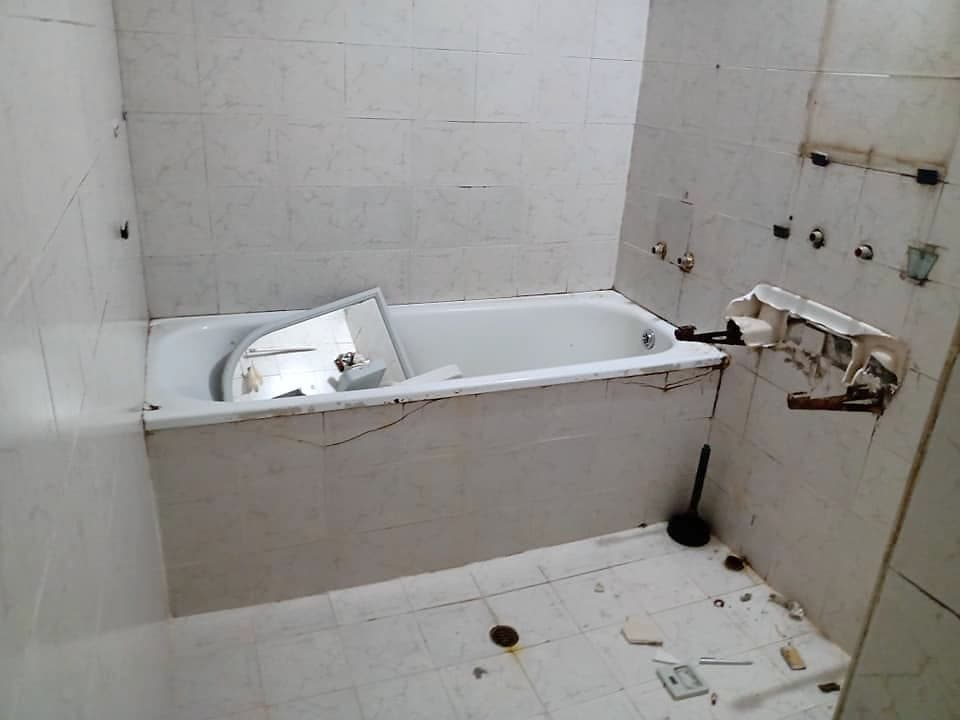
The photo is from the bathroom with a shower enclosure and a wall-hung toilet, where a shower enclosure with a linear drain now stands in place of the bathtub. The strip-out is only the start of a renovation like this: for an old 4 m² bathroom, the whole renovation usually comes to €4,500–5,500 including labour and construction materials.
How a bathroom strip-out works
Bathroom demolition is the first stage of a bathroom renovation. It usually goes in this order:
- Scope. At the site visit, we agree what comes out and what stays – just the tiling or the screed as well, which pipes are being replaced, which fittings you want to keep – and which way the waste will be carried out.
- Protection. The doors to the other rooms are sealed with polythene, and the floor along the route to the entrance, the stairwell and the lift are protected while the waste is carried out.
- Water and power. The water and power to the bathroom are shut off and the supply points capped, so that no pipe can leak and no cable is left live.
- Removal. The toilet, basin, bathtub, water heater and accessories are taken out.
- Breaking out. The wall and floor tiles are broken out down to a sound base, and the screed as well if necessary. Around the riser shaft the work is done carefully, because old cast-iron waste pipes are brittle.
- Waste. The rubble is bagged up and carried out every day, and the tipper lorry to the disposal site is arranged in advance.
- Inspection. The bathroom is cleaned, and the bare walls and floor are inspected – the next stages are planned on the basis of what they show.
Before the first day, clear the bathroom and the hallway to the front door, and cover your belongings in the adjoining rooms: a little dust gets through the polythene too.
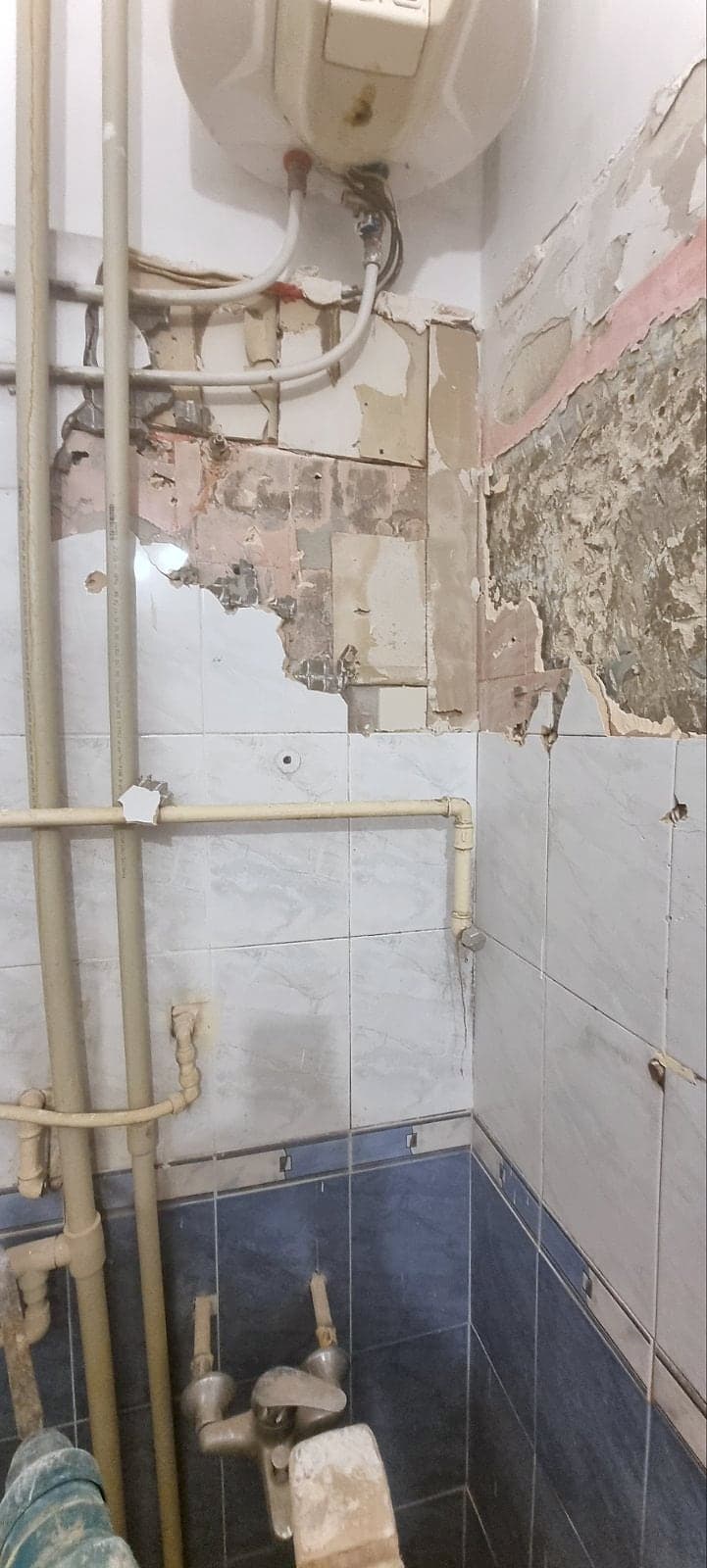
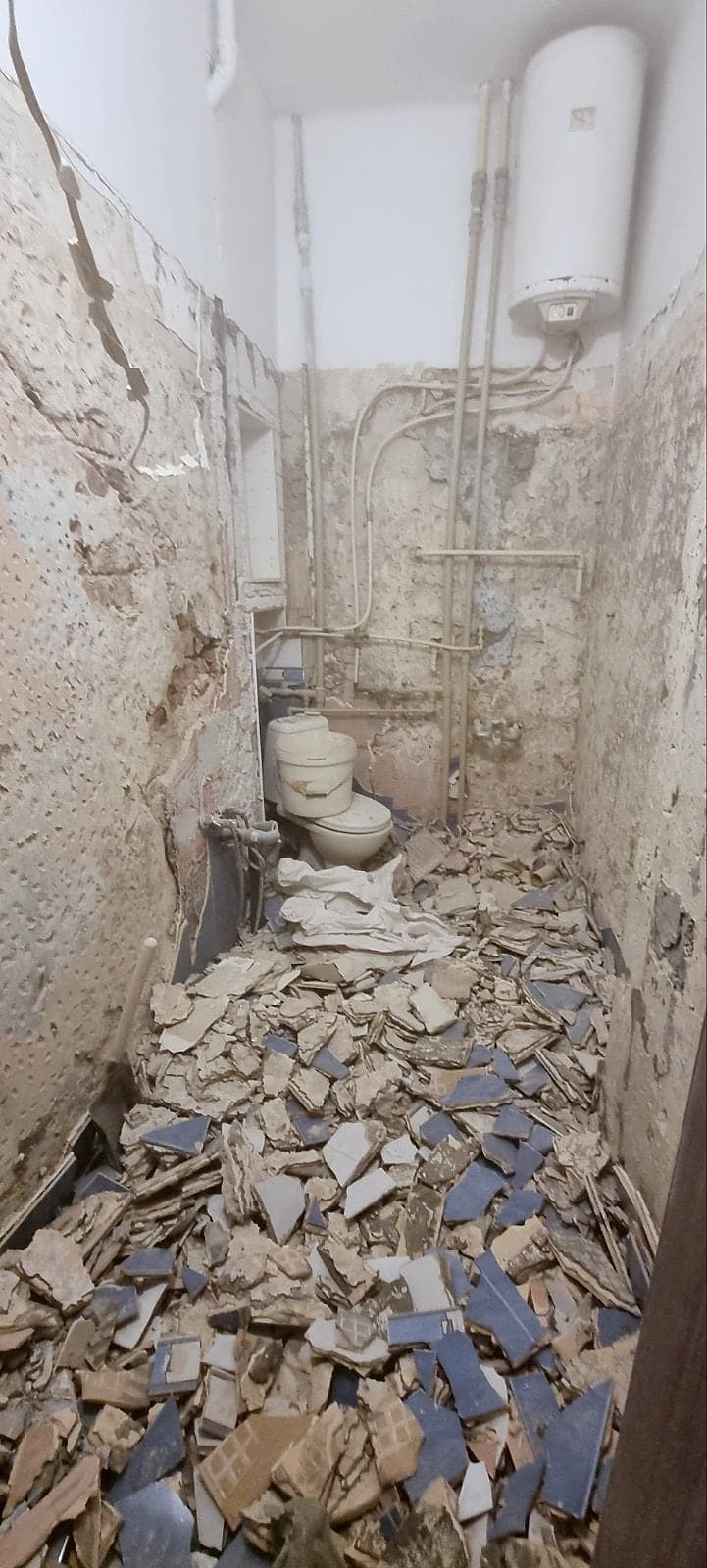
The photos are from the white and grey marble bathroom with black taps, which after the renovation has a walk-in shower and marble-effect tiles.
Demolition is the noisiest part of a renovation. Noisy work is done only during the hours allowed by the municipality and the building’s house rules; we explain what applies in the renovation rules for apartment buildings.
The impact reaches the neighbours too: a heavy demolition hammer sends vibrations through the floor slab and can crack tiles and plaster in neighbouring flats. That is why, in a residential building, the work is done with tools suited to the structure. It is best to let the neighbours know the demolition days in advance – there are ready-made texts in the article on the renovation notice to neighbours.
What comes to light after the strip-out
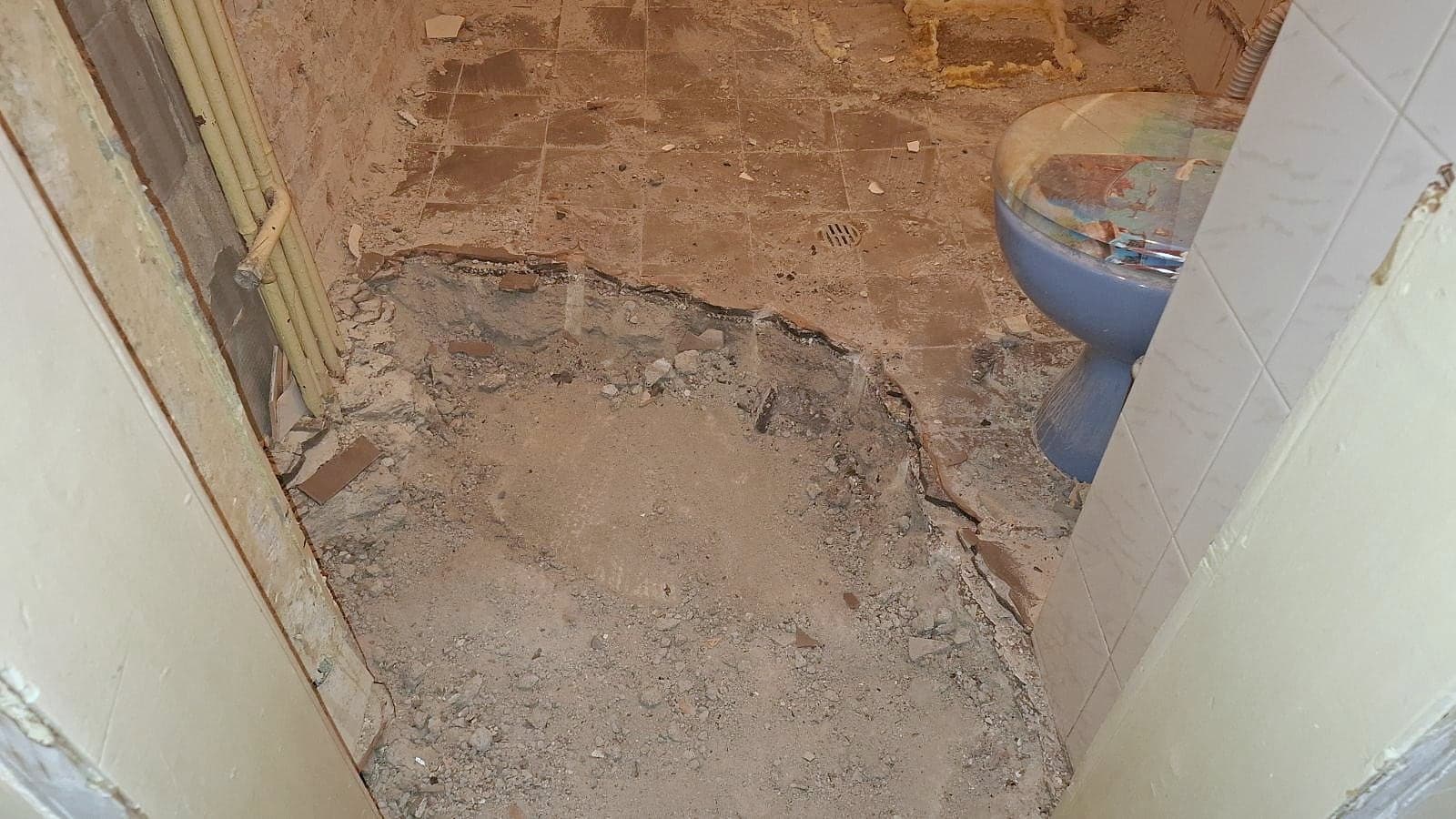
Once the tiles are off, the real condition of the bathroom becomes visible. The most common findings are:
- old pipes in the wall, which it makes sense to replace while the wall is open;
- a second layer of tiles, stuck over the first during an earlier renovation;
- cracked or hollow screed with no fall towards the drain;
- uneven walls that need straightening with plaster and mesh or lining with moisture-resistant plasterboard.
That is why it makes sense to keep a contingency in the budget. If the strip-out shows that work outside the quote is needed, it is approved in writing, with a price, before it starts.
In the article on renovating an old bathroom, we show what we find under old tiles and the decisions we make, using our own bathrooms before and after.
Demolishing walls and cutting openings: when it is allowed and what it costs
A non-load-bearing partition wall – brick, aerated concrete or plasterboard – can be taken down, for example to combine two rooms. Before that, the building plans or a structural engineer must confirm that it really is not load-bearing. A load-bearing wall is not touched without a structural engineer’s assessment: a new opening, a niche or a deep chase can weaken it, and it carries the floors above you.
In a prefabricated panel block, the load-bearing walls are reinforced-concrete panels, and no openings, niches or deep chases are cut into them. We explain where the pipes and the cistern go instead in the article on bathroom renovation in a panel block.
| Task | Labour price |
|---|---|
| Demolishing a wall | €21.47 per m² |
| Demolishing a plasterboard partition wall | €16.11 per m² |
| Cutting a door opening (brick) + making good | €177.17 each |
| Cutting a door opening (brick) + fitting a lintel | €310.00 each |
| Cutting an opening for a niche in a brick wall | €107.37 each |
| Cutting a chase for electrical wiring – brick | €6.98 per lin. m |
| Cutting a chase for electrical wiring (concrete) | €12.00 per lin. m |
Example: a non-load-bearing wall measuring 3 × 2.6 m is 7.8 m², and demolishing it costs 7.8 m² × €21.47 = €167.47 for labour. Waste removal comes on top; how many trips are needed depends on the volume and is assessed at the site visit.
A new door opening in a brick wall costs €177.17 for labour, including making good, and with a lintel – the load-bearing beam over the opening – €310.00 for labour. Whether a lintel is needed depends on the wall above the opening and is decided at the site visit. If you only need demolition, without the renovation that follows, see demolition in Sofia.
Frequently asked questions
How long does a bathroom strip-out take?
Usually one or two working days, including carrying out the waste. Several layers of tiles, a terrazzo floor or thick screed make it take longer. The exact schedule is in the quote.
Can we strip out the bathroom ourselves?
You can, but the risk is yours. There are pipes and cables in the walls, usually with no plan showing where they run; the old cast-iron riser is brittle; and a heavy demolition hammer can crack the plaster in the neighbours’ flats. If you do it yourself anyway, shut off the water and the power, leave the riser and the load-bearing walls alone, and plan for waste removal – construction waste does not go in the household waste bins.
Who takes the waste away?
If we do the demolition, we carry the waste out – in bags, every day – and take it to a disposal site by tipper lorry. In the quote, waste removal is on a separate line: €110.00 per trip for labour, and the number of trips is assessed at the site visit based on the volume. For how this is organised, see the page on construction waste removal.
Do I need a permit for demolition?
No permit is needed to break out tiles and screed inside your home. Before you take down a partition wall, the building plans or a structural engineer must confirm that it is not load-bearing, and a load-bearing wall is not touched without an engineer’s assessment. If the work affects common parts such as the riser, the facade or the terrace, or changes the layout, ask the manager of the owners’ association and the municipality before you start.
What happens to the riser?
The riser – the vertical water and waste pipes – is shared by all the flats stacked above and below, and it is not broken out with the bathroom. The tiling around the shaft is removed carefully. If the riser is old, it is best to replace it before the new tiles go on, by arrangement with the neighbours and the building manager – we describe how this is organised in the article on replacing risers in an apartment block.
If you would like to know what stripping out your bathroom will cost, send a few photos through our estimate from photos and you will get an indicative estimate. The site visit is free, and afterwards you receive a written quote with the work described and priced.
More articles
All articles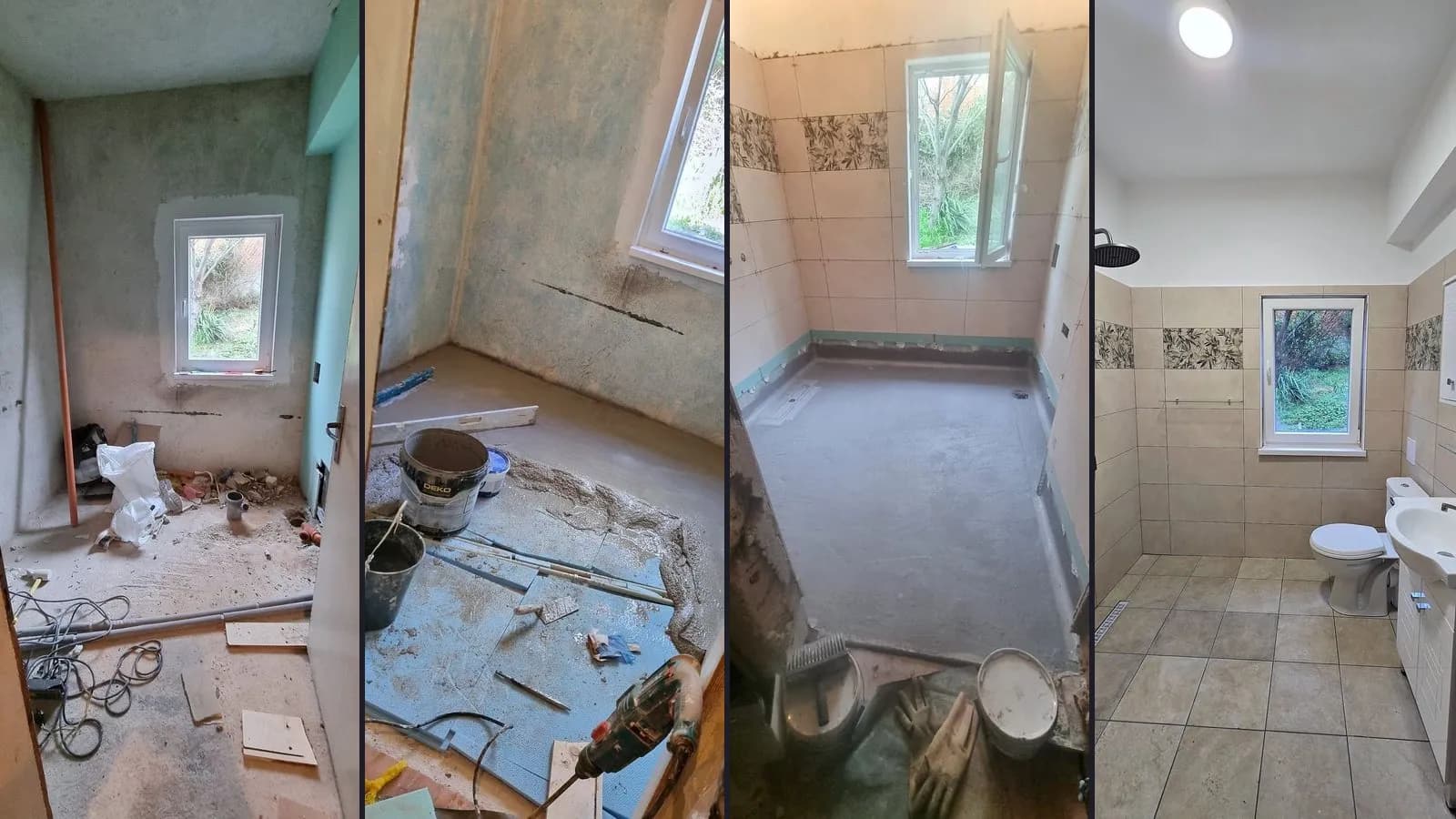 Process
11 min read
How long does a bathroom renovation take? A stage-by-stage timeline
A typical 3–5 m² bathroom takes 10–15 working days to renovate. The schedule stage by stage, the drying times you cannot skip and what causes delays.
Read Process
4 min read
Major apartment renovation in Sofia: stages and timelines
The stages of a major apartment renovation in Sofia in order – from strip-out to handover – and what really determines the timeline. Plus why the exact schedule comes after a site visit.
Read Process
3 min read
Why renovation deadlines slip – and how to protect your schedule
Almost every renovation overruns its original deadline. We look at the real reasons, and at what YOU can do to minimise the risk.
Read